
Ghost Research
When Retracted Science Keeps Shaping the Decisions Nobody Knows to Question
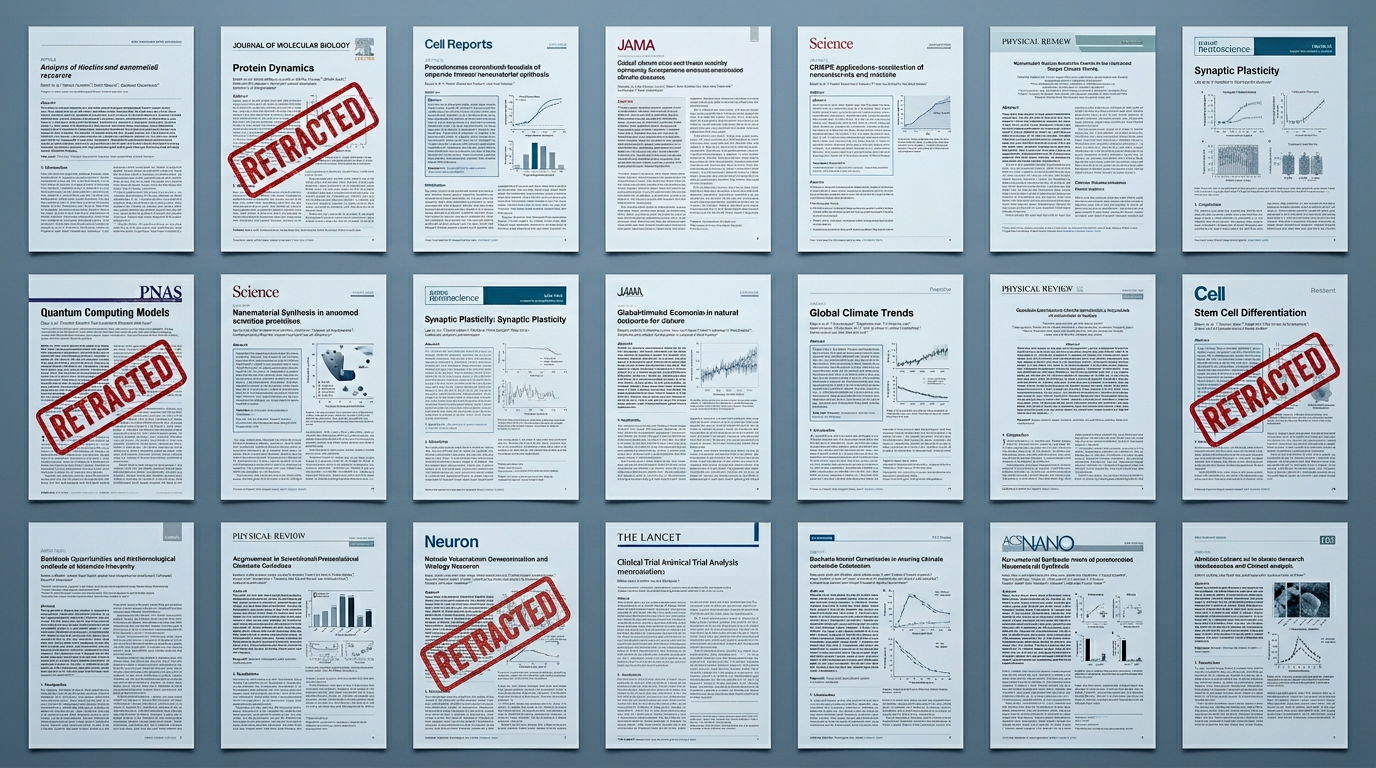
Ghost research is retracted science that continues to circulate, be cited, and inform decisions long after it has been officially removed from the scientific record. The journal pulls the paper. The decisions built on it stay standing.
The term was coined by Phil McKinney, former CTO of Hewlett-Packard, in April 2026, based on original analysis of over 62,000 retracted studies in the Retraction Watch Database.
Why This Matters Right Now
Scientific studies are currently being retracted at a rate of sixteen per day, and that rate is accelerating. More research has been pulled from the scientific record in the last five years than in the previous fifteen combined.
Most organizations have no process to find out which decisions they have already made were built on research that has since been retracted. The retraction system corrects the scientific record. It has no mechanism to reach the pipelines, products, regulations, and strategies that were built on the research before it was pulled.
That gap is ghost research. And it is growing faster than most people in a position to act on it realize.
What Ghost Research Actually Is
Ghost research is not disputed science. It is not science that experts disagree about. It is science that has been officially, formally, and permanently removed from the record. The people responsible for the record determined it should not be there.
The ghost is not in the retraction. The ghost is in everything the research touched before the retraction came.
A study gets published. Other researchers cite it. Companies build on it. Regulators depend on it. Courts rule by it. Strategic plans reference it. Product specifications include it. All of this happens during the retraction window: the gap between publication and the moment anyone officially pulls the paper.
Based on analysis of over 62,000 retracted studies, that window has a median of 492 days, nearly sixteen months. One in three retracted studies circulated for more than two years. Thirteen percent survived more than five years. The longest case in the database: a paper published in The Lancet in 1977, not retracted until March 2026. Forty-eight years of being cited, depended on, and built upon before anyone officially pulled it.
The retraction corrects the scientific record. It does not send a recall notice. It does not update the downstream decisions, the approved drugs, the written regulations, or the products still on the shelf.
The Case That Made It Visible
In November 2025, a scientific study that regulators worldwide had relied on for 25 years to confirm that glyphosate, the active ingredient in Roundup, was safe for humans was quietly retracted. The paper had been written by Monsanto employees, based almost entirely on unpublished Monsanto data, with undisclosed financial compensation to the listed authors.
For a quarter century, the EPA built policy on it. Regulators on four continents depended on it. Courts ruled by it. Nobody knew who actually wrote it.
Twenty-five years of regulations written, court cases decided, and products sold, on fake science.
Monsanto is not the exception. It is simply the one that made headlines. The database contains thousands of cases where research circulated for years or decades before retraction. The cases that generate press coverage represent a small fraction of the total.
The longer the retraction window, the deeper the ghost research penetrates into the decisions built on top of it. A paper retracted after two years may have generated dozens of citations. A paper retracted after twenty-five years may have shaped an entire regulatory framework.
The Scale of the Problem
Ghost research is not an edge case. It is a structural condition of the current research environment.
The growth is not uniform. The fields with the steepest retraction growth rates are precisely the fields feeding applied R&D:
- Data Science retractions grew over 5,500% from 2013-2015 to 2020-2023
- Computer Science retractions grew over 1,000% in the same period
- Biology, Genetics, and Cancer research retractions grew 250-400%
These are not peripheral fields. They are the upstream sources for AI development, biotech pipelines, pharmaceutical research, and materials science. When the basic research layer is compromised, the contamination does not stay in journals. It moves downstream.
The mechanism driving much of this growth is the paper mill: commercial operations that manufacture and sell fraudulent research at industrial scale. Over 11,700 retracted studies in the database are linked to paper mill activity. More than 86% of those are connected to China-affiliated research. Compromised peer review, which allows fraudulent papers to pass editorial gatekeeping, has grown from 38 retractions in 2012 to over 2,600 in 2023.
The problem is structural. It is accelerating. And it has no systematic downstream correction mechanism.
Why the Retraction Does Not Fix the Problem
The natural response to learning about ghost research is to assume the retraction system handles it. Science self-corrects. Bad research gets caught. The record gets fixed.
That is true, as far as it goes. And it does not go far enough.
The retraction is a publishing event. It happens in a journal. It updates a database. In the best cases, it generates press coverage. What it does not do is travel back through the citation network. It does not reach the hundreds or thousands of papers that cited the retracted work before the retraction came. It does not update the systematic reviews that included the retracted study. It does not reach the regulatory filings that cited the research. It does not find the product development team that built a specification on it three years ago.
Research from the University of Illinois found that 94.6% of post-retraction citations in biomedicine show no awareness of the retraction. The papers keep being cited. The ghost keeps walking.
For an organization running an R&D pipeline, the practical implication is this: there is no automated system that flags retracted research inside your existing literature base, your citation manager, your internal reports, or your strategic documents. The retraction happened. Your materials did not update.
Ghost Research and the Innovation Pipeline
For innovation leaders and R&D decision-makers, ghost research is not an abstract integrity concern. It is a supply chain problem.
The innovation pipeline runs on research. Basic research produces the findings. Applied research tests them. Development scales what works. Deployment delivers it. At every stage, decisions are made based on what the research says.
When the research layer is compromised, when foundational studies turn out to be fabricated, when the peer review that certified them was purchased, when the data underpinning the conclusions was manufactured, the contamination does not announce itself. It just sits inside the pipeline, invisible, shaping decisions that nobody thinks to question.
The specific risk for innovation decision-makers:
Literature reviews: The standard tool for understanding a field before committing R&D investment. Literature reviews surface the published research. They do not automatically filter for retracted papers. A literature review conducted in 2022 on a topic with significant retraction activity in 2023 is now partially based on ghost research, with no flag in the document to indicate which parts.
AI-assisted research tools: AI tools used for literature synthesis, research summarization, and competitive intelligence are trained on or connected to bodies of research that include papers published before their retraction. The tools have no systematic mechanism to update their knowledge when a paper is retracted. A confident AI summary of a research area may be drawing on ghost research without any indication.
Competitive benchmarking: If a competitor's product claims or research citations rest on retracted science, that is a material risk consideration. It is also an opportunity if the competitor built on a foundation that has since been pulled.
Regulatory submissions: Regulatory filings that cite retracted research may face challenge, delay, or rejection when the retraction is eventually identified. The earlier in the filing process this is caught, the lower the cost.
How to Identify Ghost Research in Your Pipeline
There is no perfect solution. There is a practical approach.
One thing I learned running R&D budgets at scale: the most dangerous research in any pipeline is not the research you questioned and accepted. It is the research you never thought to question because it arrived with the right credentials, from the right journal, at the right moment to confirm what you already believed. Ghost research exploits that blind spot. The steps below are designed to close it.
Step 1: Audit your foundational citations. For any major R&D investment, strategic plan, or product decision made in the last five years, identify the research studies most central to the decision. Run those titles and DOIs against the Retraction Watch Database (retractionwatch.com) and the Crossref retraction API.
Step 2: Check your literature review tools. Most citation managers now have some integration with retraction databases. Zotero and Endnote both have Retraction Watch integrations. If your team is not using a citation manager with retraction flagging, implement one.
Step 3: Apply field-level risk weighting. Not all research fields carry equal ghost research risk. Data Science, Computer Science, Genetics, Cancer Biology, and Cardiovascular Medicine have the highest retraction growth rates. Research from these fields warrants additional scrutiny.
Step 4: Date-window your literature reviews. Any literature review covering 2018-2023 in a high-retraction field should be considered potentially incomplete and re-screened. This is the period of maximum retraction activity in the database.
Step 5: Build a retraction check into your R&D intake process. Before committing significant resources to a research direction, make retraction screening a standard step alongside IP clearance and competitive analysis. If your legal team runs IP clearance before a major investment, your research team should run retraction clearance. The cost of finding ghost research before a decision is trivial. The cost of finding it after is not.
None of these steps eliminates ghost research risk entirely. What they do is ensure that your pipeline's exposure to retracted science is known rather than invisible.
Where the Term Comes From
The term ghost research was coined in the Noted micro essay "Ghost Research: The Hidden Risk Inside Every R&D Pipeline" (April 2026), based on original analysis of the Retraction Watch Database. Over 62,000 retracted studies were examined for volume, velocity, field distribution, retraction reasons, country of origin, and time-to-retraction patterns.
The analysis was conducted using the April 9, 2026 export of the Retraction Watch Database, maintained by Retraction Watch and made publicly available by Crossref.
Ghost research is distinct from several related concepts:
Zombie studies: A term used in academic literature to describe retracted papers that continue to be cited after retraction. Ghost research is broader: it describes the entire downstream consequence of retracted science in decision-making pipelines, not just the citation behavior in academic literature.
Junk science: A colloquial term for research that is poor quality, biased, or methodologically weak but has not been formally retracted. Ghost research refers specifically to formally retracted studies.
Research misconduct: The act of fabricating, falsifying, or plagiarizing research. Ghost research describes the downstream consequence of misconduct that has been detected and retracted, not the misconduct itself.
Further Reading
Noted: Ghost Research The micro essay that introduced the term. The observation that started it. Read it here →
Retraction Watch Database: The primary data source for ghost research analysis. Maintained by Retraction Watch, made publicly available by Crossref. Updated every working day. Access the database →
Innovation Signal Index™: My framework for measuring whether a company's innovation investment is building or eroding competitive advantage. Ghost research is one of the upstream risks the ISI is designed to surface before it shows up in financial results. Explore the ISI →
Innovation Laundering: The related concept describing how optimization and infrastructure spending gets relabeled as innovation through corporate communication. Ghost research and innovation laundering often operate in the same pipeline. One corrupts the research input. The other misrepresents the output. Explore Innovation Laundering →
Phil McKinney is the former CTO of Hewlett-Packard, former CEO of CableLabs, and host of the Killer Innovations podcast. He writes weekly at Studio Notes and publishes the periodic micro essay Noted.
Data source: Retraction Watch Database, April 9, 2026 export. Analysis of 62,552 retractions with valid publication and retraction dates. The Retraction Watch Database is maintained by Retraction Watch and made publicly available by Crossref. Updated daily, the database currently contains over 64,000 retraction records spanning more than 100 countries and disciplines.