
Innovation Glossary
A practical glossary of 40+ innovation terms, decision-making frameworks, and thinking tools. Definitions from innovation practitioners, not a textbook.
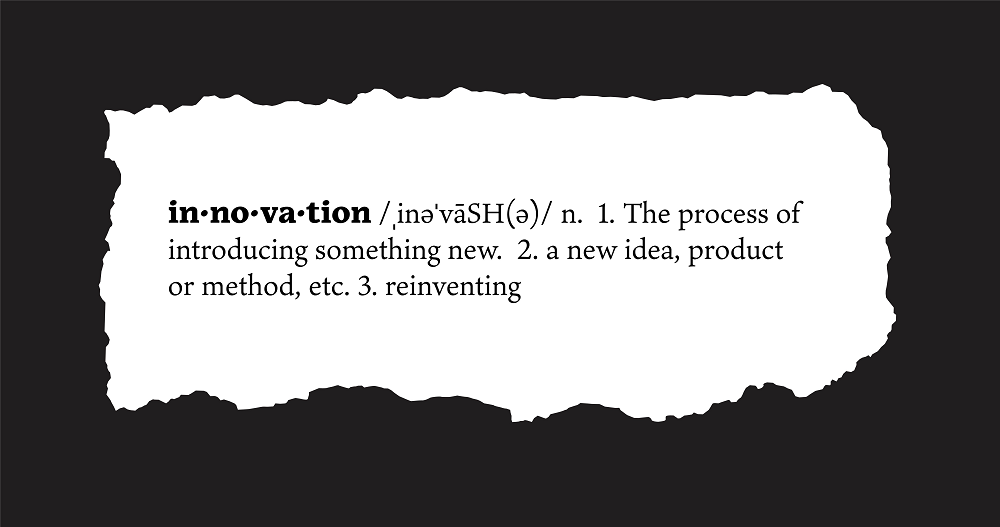
Innovation has a language problem. The same words mean different things to different people, and that ambiguity kills good ideas. This glossary defines terms precisely so your team can think and decide together.
Quick Navigation
Thinking & Creativity | Thinking & Decision-Making | Innovation Types | Frameworks & Methods | Culture & Leadership | Strategy & Execution
Thinking & Creativity
Brainstorm
Brainstorm — A structured ideation session where a team generates potential solutions to a clearly defined problem.
Most brainstorms fail. Not because the team lacks creativity, but because no one bothered to define the problem sharply enough. I've watched brilliant teams waste hours generating answers to the wrong question.
Before any brainstorm, invest time in crafting a tight problem statement. The quality of your questions determines the quality of your answers. This is why I developed the Killer Questions framework, to force clarity before ideation begins.
Related: Problem Statement | Ideation | Killer Questions
Apply it: Killer Questions Card Deck | Beyond the Obvious
Creativity
Creativity — The ability to generate ideas, alternatives, or possibilities that didn't exist before you thought of them.
Here's what most people get wrong: they think creativity is a gift. Something you're born with or you're not. That's nonsense.
Creativity is a skill. It can be developed, practiced, and sharpened. I've seen engineers who thought they weren't creative become some of the most innovative thinkers in their organizations, once they learned the right frameworks and gave themselves permission to think differently.
The enemy of creativity isn't lack of talent. It's fear. Fear of being wrong, fear of looking stupid, fear of challenging the status quo.
Related: Ideation | Inspiration | Ingenuity
Ideation
Ideation — The process of generating, developing, and communicating new ideas.
Ideation is not brainstorming. Brainstorming is one tool within ideation. Ideation is the broader discipline. It includes how you frame problems, how you generate possibilities, how you build on concepts, and how you communicate them to others.
Good ideation requires structure. Unstructured "blue sky thinking" sounds romantic but rarely produces breakthrough results. The best ideation sessions I've run combined creative freedom with disciplined constraints. Constraints force ingenuity.
Related: Brainstorm | Design Thinking | Problem Statement
Apply it: Beyond the Obvious
Design Thinking
Design Thinking — A problem-solving approach that starts with human needs, not technical capabilities.
Design thinking flips the traditional innovation process. Instead of asking "what can we build?" it asks "what do people actually need?" Then it works backward to find solutions.
The process is iterative: empathize, define, ideate, prototype, test. Repeat until you get it right.
I've seen design thinking transform how organizations approach problems. But I've also seen it become theater, sticky notes on walls, no real decisions made. The method only works if leadership commits to acting on what they learn. Otherwise, it's expensive decoration.
Related: Ideation | Problem Statement | Ethnographic Innovation
Inspiration
Inspiration — The spark that triggers new thinking. It can come from anywhere: observation, conversation, failure, or simply paying attention.
Most people wait for inspiration to strike. That's backward. Inspiration is a result of preparation. The more inputs you expose yourself to, different industries, different perspectives, different problems, the more raw material your brain has to work with.
I keep a journal specifically for capturing sparks. An observation at an airport. A frustration with a product. A question someone asked that I couldn't answer. These become the seeds for future ideas.
Inspiration isn't lightning from the sky. It's the reward for staying curious.
Related: Creativity | Ideation | Weak Signals
Thinking & Decision-Making
Analogical Thinking
Analogical Thinking — The practice of solving problems by finding parallels in unrelated domains and applying those insights to your situation.
Most people look for solutions within their own industry. They benchmark competitors, attend industry conferences, read trade publications. They end up with the same ideas as everyone else.
Analogical thinking breaks that trap. Instead of asking "how do other tech companies handle this?" you ask "who else has solved a problem with similar characteristics?" The answer might come from biology, architecture, military strategy, or restaurant operations.
When I was working on a supply chain problem at HP, the breakthrough came from studying how hospitals manage organ transplants. Completely different context, similar underlying challenge. The analogy unlocked solutions we never would have found by studying other electronics manufacturers.
The skill is recognizing structural similarities beneath surface differences. Train yourself to ask: where else has this problem been solved?
Related: Mental Models | First Principles Thinking | Box Think
Causation Error
Causation Error — Mistaking correlation for causation, or misidentifying why something actually succeeded or failed.
This kills more innovation efforts than bad ideas do.
A product succeeds. Leadership reverse-engineers the reasons: great marketing, perfect timing, strong team. They codify those factors into a playbook. They apply the playbook to the next product. It fails.
What went wrong? They misidentified the cause. Maybe the first product succeeded despite the marketing, not because of it. Maybe it was network effects they didn't notice, or a competitor stumbling at the right moment, or pure luck.
Causation errors show up everywhere in innovation. "We won because of our culture." Maybe. Or maybe you won despite it. "That failed because the market wasn't ready." Or your execution was poor. "Innovation requires failure." No. Learning requires reflection. Failure without learning is just waste.
The fix is intellectual humility. Hold your explanations loosely. Look for disconfirming evidence. Ask "what else could explain this outcome?" before committing to a narrative.
Related: Second-Order Thinking | Confirmation Bias
Mental Models
Mental Models — Frameworks for understanding how the world works that help you make better decisions faster.
Your brain can't process every situation from scratch. It relies on shortcuts, patterns, and frameworks built from past experience. These are mental models.
Good mental models compress wisdom. "Opportunity cost" reminds you that every choice has tradeoffs. "Map is not the territory" warns you that your understanding is always incomplete. "Circle of competence" tells you to stay in your lane unless you're willing to do the work to expand it.
The goal isn't to memorize a list. It's to build a latticework of models that you can apply across situations. The more models you have, the more angles you can see a problem from.
Most people have three or four mental models they apply to everything. They're using a hammer for every problem. Expand your toolkit. Read widely. Study disciplines outside your own. Collect frameworks like tools, then practice using them until they become instinct.
Related: Analogical Thinking | First Principles Thinking | Second-Order Thinking
First Principles Thinking
First Principles Thinking — Breaking a problem down to its most fundamental truths and building up from there, rather than reasoning by analogy or convention.
Most thinking is incremental. You start with what exists and make adjustments. "Our competitors charge $100, so we should charge $95." "The standard process takes six steps, let's see if we can do it in five."
First principles thinking throws out the reference points. You ask: what is actually true here? What are the fundamental constraints? What would we do if we were starting from zero?
Elon Musk famously applied this to battery costs. Industry assumption: batteries are expensive because they've always been expensive. First principles question: what are batteries made of? What do those raw materials cost? Turns out the materials are cheap. The cost was in manufacturing conventions and supply chain inefficiencies, not physics.
First principles thinking is hard. It requires ignoring social proof, questioning experts, and tolerating the discomfort of uncertainty. Most people default to "how is this usually done?" because it's safer.
Use first principles when the stakes are high and conventional approaches aren't working. Use analogical thinking when speed matters more than reinvention.
Related: Mental Models | Analogical Thinking | Box Think
Second-Order Thinking
Second-Order Thinking — The practice of considering the consequences of consequences, not just immediate outcomes.
First-order thinking asks: what happens if we do this?
Second-order thinking asks: and then what? And what happens after that?
Most bad decisions aren't stupid. They're incomplete. Someone optimized for the immediate outcome without considering what that outcome would trigger.
Example: A company cuts R&D spending to hit quarterly earnings. First-order result: earnings improve, stock price rises. Second-order result: product pipeline weakens. Third-order result: competitors leap ahead, market share erodes. Fourth-order result: company is acquired or goes bankrupt.
Every decision has ripple effects. Second-order thinkers trace those ripples before they commit. It takes more time upfront but prevents catastrophic surprises later.
This is one of the core skills in Thinking 101. It's learnable. It just requires slowing down long enough to ask "and then what?" repeatedly.
Related: Disruptive Shock | Mental Models | Causation Error
Confirmation Bias
Confirmation Bias — The tendency to seek, interpret, and remember information that confirms what you already believe.
This is the silent killer of good innovation decisions.
You believe your product idea is strong. So you notice the customer comments that support it and discount the ones that don't. You remember the successful case study and forget the three failures. You interpret ambiguous data as validation.
Everyone does this. Smart people. Experienced people. People who know confirmation bias exists. Knowing about it doesn't make you immune.
In innovation, confirmation bias shows up as falling in love with your own idea, dismissing competitive threats because they don't fit your worldview, over-weighting early positive signals, and building business cases that justify decisions already made.
The countermeasure is active disconfirmation. Assign someone to argue the opposite case. Seek out people who disagree. Ask "what would have to be true for this idea to fail?" and then look for evidence of those conditions.
The best innovators I know are ruthless with their own ideas. They want to find the flaws before the market does.
Related: Causation Error | Idea Ranking | Innovation Antibodies
Innovation Types
Breakthrough Innovation
Breakthrough Innovation — An innovation that creates entirely new markets or fundamentally transforms existing ones.
Not every innovation is a breakthrough. Most are incremental, small improvements to existing products or processes. That's fine. Incremental innovation keeps the lights on.
But breakthrough innovation changes the game. It makes the old way obsolete. Think smartphone replacing the flip phone, or streaming replacing DVDs.
The challenge is that breakthrough innovations often look like bad ideas at first. They don't fit existing business models. Customers don't ask for them. The numbers don't work until suddenly they do.
This is why smart leaders kill breakthrough ideas. They apply the wrong evaluation frameworks. They ask "does this fit our current strategy?" instead of "could this become our future strategy?"
Related: Disruptive Innovation | Incremental Innovation | Killer Innovation
Incremental Innovation
Incremental Innovation — Small, continuous improvements to existing products, services, or processes.
Incremental innovation doesn't make headlines, but it's the backbone of sustained competitive advantage. A 5% improvement in efficiency. A feature that reduces customer complaints. A process tweak that saves two hours per week.
The danger is getting stuck here. Organizations that only do incremental innovation eventually get disrupted by someone willing to make bigger bets. The goal is balance: incremental innovation funds the breakthrough bets.
Related: Breakthrough Innovation | 70/20/10 Model | Innovation Portfolio
Disruptive Innovation
Disruptive Innovation — An innovation that starts in a niche or low-end market and eventually displaces established competitors.
Clayton Christensen coined this term, and it's been misused ever since. Not every new thing is "disruptive." True disruption follows a specific pattern: it starts by serving customers that incumbents ignore, then improves until it captures the mainstream market.
The classic example is digital photography. Early digital cameras were terrible compared to film. No professional would touch them. But they were good enough for casual users who wanted convenience over quality. Then they got better. And better. Until Kodak was bankrupt.
The lesson for leaders: pay attention to the products you dismiss as "not good enough." That's where disruption hides.
Related: Breakthrough Innovation | Disruptive Shock | Exponential Innovation
Exponential Innovation
Exponential Innovation — An innovation that doubles in capability or performance with each successive period, often while costs decrease at a similar rate.
Linear thinking is the default. We expect tomorrow to be roughly like today, with incremental improvements. Exponential innovation breaks that assumption.
Moore's Law is the classic example. Processing power doubled every 18-24 months for decades. What cost millions in the 1970s now fits in your pocket and costs hundreds.
The pattern repeats across technologies: genomic sequencing, solar energy, AI capabilities. Each follows its own curve, but the shape is similar. Slow progress that barely registers, then sudden acceleration that disrupts everything.
Leaders who think linearly get blindsided. They dismiss emerging technologies as "not ready" or "too expensive" without recognizing the curve. By the time the technology is obviously good enough, the window to adapt has closed.
Watch for technologies at the knee of the curve. That's where "not ready" becomes "everywhere" faster than anyone expects.
Related: Disruptive Innovation | Disruptive Shock | Weak Signals
Killer Innovation
Killer Innovation — A significant, highly profitable departure from current offerings that competitors find difficult to duplicate.
Not every innovation is a killer. Most are incremental improvements or feature additions that competitors can copy within months.
A killer innovation changes the basis of competition. It's not just better; it redefines what "better" means. Competitors can't respond by tweaking their existing products. They have to fundamentally rethink their approach.
Three characteristics separate killer innovations from ordinary ones. Significance: it matters to customers in ways they feel immediately. Profitability: it creates margins that fund further innovation. Defensibility: it's hard to replicate because of patents, network effects, capabilities, or brand.
I've evaluated over 30,000 innovation ideas in my career. Most weren't killers. They were fine. Useful. Incremental. The killers were rare, and they often looked strange at first. They didn't fit the existing business model. They challenged assumptions. That's why they got killed before they could prove themselves.
Related: Breakthrough Innovation | Innovation Antibodies | Killer Questions
Apply it: Beyond the Obvious
Frameworks & Methods
Killer Questions
Killer Questions — A framework for generating breakthrough ideas by systematically challenging assumptions about your product, customers, and market.
I developed this framework at HP after realizing that most innovation efforts fail at the starting line. Teams jump to solutions before understanding the problem. They generate ideas within invisible constraints they've never examined.
Killer Questions forces you to slow down and interrogate your assumptions. What do we assume about our customers that might be wrong? What would we do if our biggest constraint disappeared? What are we afraid to try?
The quality of your innovation output is directly proportional to the quality of your questions. Most organizations have an idea problem because they have a question problem.
Related: Problem Statement | Ideation | FIRE Method
Apply it: Killer Questions Card Deck | Beyond the Obvious
FIRE Method
FIRE — A four-stage innovation framework: Focus, Ideation, Ranking, Execution.
Most innovation frameworks focus on generating ideas. That's the easy part. The hard parts are everything else: making sure you're solving the right problem (Focus), separating good ideas from great ones (Ranking), and actually bringing ideas to life (Execution).
FIRE provides a complete system. Focus defines the problem with precision. A vague problem produces vague solutions. Ideation generates diverse possibilities. Quantity enables quality. Ranking evaluates ideas against clear criteria. Kill your darlings. Execution turns concepts into reality. Ideas without execution are hallucinations.
The stages are sequential but not linear. You'll often loop back as you learn. That's not failure. That's the process working.
Related: Problem Statement | Idea Ranking | Killer Questions
Apply it: Beyond the Obvious
Box Think
Box Think — A framework for breaking free from conventional thinking by systematically working inside, outside, and without the box.
Everyone talks about "thinking outside the box." It's become meaningless. What box? Whose box? And why is outside automatically better?
Box Think makes the metaphor useful. First, identify the box. What constraints, assumptions, and mental boundaries are you operating within? Most people can't answer this because they've never examined it.
Then work the framework. Inside the box asks: given our current constraints, what's the best we can do? Outside the box asks: what if we removed one or two key constraints? Without the box asks: what if we started from scratch with no constraints at all?
Each mode produces different ideas. The magic happens when you combine insights from all three. Sometimes the breakthrough is inside the box, hidden in plain sight. Sometimes it requires blowing up your assumptions entirely.
The box isn't the enemy. Unconscious boxes are.
Related: Creativity | Killer Questions | First Principles Thinking
Disruptive Shock
Disruptive Shock — A sudden event or shift that fundamentally disrupts how an industry, market, or organization operates.
Disruptive innovation is gradual. Disruptive shock is sudden. COVID-19 was a disruptive shock. So was the iPhone launch. So was ChatGPT.
The difference matters because the response is different. With gradual disruption, you have time to adapt. With a shock, you don't. Organizations that survive shocks are the ones that built flexibility into their strategy before the shock hit.
I use this framework to help leaders stress-test their assumptions. What shocks could hit your industry? What would you do if your primary revenue stream disappeared in six months? Not because you should panic, but because thinking through the scenarios builds the mental muscle to respond when something unexpected actually happens.
The goal isn't prediction. It's preparation.
Related: Disruptive Innovation | Second-Order Thinking | Weak Signals
Problem Statement
Problem Statement — A clear, specific articulation of the problem you're trying to solve.
This sounds basic. It's not. I've watched teams burn months on innovation projects that failed because no one agreed on the problem they were solving.
A good problem statement is specific enough to be actionable, broad enough to allow creative solutions, and neutral about the solution so it doesn't smuggle in assumptions.
Bad example: "We need a mobile app for our customers." That's not a problem statement. That's a solution looking for a problem.
Better: "Our customers can't access their account information outside business hours, which creates frustration and increases support calls."
Now you have a problem. The solution might be a mobile app. Or extended hours. Or automated phone support. Or something nobody's thought of yet.
The problem statement is the foundation. Get it wrong and everything built on top of it crumbles.
Related: Killer Questions | FIRE Method | Ideation
Idea Ranking
Idea Ranking — A systematic process for evaluating and prioritizing ideas based on defined criteria.
Generating ideas is fun. Killing them is hard. But you can't pursue everything, and gut instinct isn't a strategy.
Idea ranking forces discipline. You define criteria upfront: strategic fit, feasibility, resource requirements, potential impact, time to market. Then you evaluate each idea against those criteria.
The criteria matter more than the scoring. Before you rank anything, get alignment on what success looks like. Is speed more important than scale? Is margin more important than market share? These tradeoffs should be explicit, not hidden.
One warning: don't let ranking become a way to avoid decisions. I've seen organizations create elaborate scoring systems that produce inconclusive results. The spreadsheet becomes an excuse to defer. At some point, someone has to make a call.
Related: FIRE Method | Problem Statement | Confirmation Bias
Weak Signals
Weak Signals — Early indicators of emerging change that are easy to dismiss but may represent significant future shifts.
By the time a trend is obvious, it's too late to capitalize on it. The companies that win are the ones that spotted it early, when the signal was faint and most people were ignoring it.
Weak signals show up in unexpected places. A small customer segment using your product in a way you didn't intend. A startup in an adjacent market getting unusual traction. A technology that's laughably bad today but improving fast. A regulatory proposal that hasn't passed yet. A cultural shift among young people that older executives dismiss.
The challenge is distinguishing weak signals from noise. Most faint blips are nothing. But some are the early tremors of an earthquake.
Build a practice of scanning for weak signals. Talk to people outside your industry. Pay attention to what teenagers are doing. Read about technologies that seem irrelevant to your business. Keep a log of anomalies. Review it quarterly. Some will fade away. A few will grow into something you need to act on.
Related: Disruptive Shock | Exponential Innovation | Ethnographic Innovation
Innovation Storytelling
Innovation Storytelling — The practice of communicating ideas through narrative to build understanding, emotional connection, and support.
Facts don't move people. Stories do.
You can have the best idea in the company, backed by data and logic, and still watch it die because you couldn't get anyone to care. The leaders who consistently get their innovations funded and supported are the ones who know how to tell the story.
A good innovation story includes the problem that people feel emotionally, not just intellectually. The insight that makes your solution inevitable. The outcome that shows what success looks like. The stakes that make action urgent.
I've seen mediocre ideas win resources because the story was compelling, and brilliant ideas get killed because the pitch was a spreadsheet. That's not fair. But it's reality.
Learn to tell stories. Practice it. Study how great communicators do it. Your ideas deserve the chance to be understood.
Related: Problem Statement | Innovation Culture | BHAG
Constraint-Based Innovation
Constraint-Based Innovation — Using limitations as creative fuel rather than obstacles to overcome.
Give a team unlimited budget and time and they'll produce something bloated and late. Give them half the resources and a hard deadline and they'll find solutions they never would have considered otherwise.
Constraints force creativity. They eliminate the easy paths and require you to find new ones.
Some of the best innovations in history came from severe constraints. Apollo 13 engineers had to build a CO2 filter from materials already on the spacecraft. They couldn't order parts. They couldn't run simulations. They had to solve it now, with what they had. And they did.
When I'm running innovation projects, I impose constraints intentionally. What if we had to launch in six months instead of eighteen? What if the budget was cut in half? What if we couldn't use our existing technology stack?
These questions aren't hypothetical torture. They reveal possibilities that abundance obscures.
Related: Ingenuity | Box Think | First Principles Thinking
Ethnographic Innovation
Ethnographic Innovation — Using direct observation of people in their natural environment to uncover unmet needs and inspire new solutions.
Surveys tell you what people say they want. Ethnography shows you what they actually do.
The gap between those two things is where breakthrough opportunities hide. People can't articulate needs they don't know they have. They've adapted to friction so completely they no longer notice it. But spend a day watching how they actually work, live, or use products, and the friction becomes obvious.
I've seen ethnographic research transform innovation projects. Engineers who were convinced they understood the customer came back from field observation with completely different perspectives. The product they thought they should build wasn't the product customers needed.
This takes time. You can't do it from a conference room. But the insights are worth the investment, especially when you're trying to create something genuinely new rather than iterating on something that already exists.
Related: Design Thinking | Problem Statement | Inspiration
Culture & Leadership
Innovation Culture
Innovation Culture — An organizational environment where new ideas are encouraged, tested, and implemented rather than suffocated.
Culture isn't posters on walls or values in the employee handbook. Culture is what actually happens when someone proposes something new.
Does the organization reward experimentation or punish failure? Do leaders ask questions or give orders? Can a junior employee challenge a senior executive's idea? Is "I don't know" an acceptable answer?
Building an innovation culture requires consistent behavior from leadership over time. One "innovation day" won't fix a culture that kills ideas the other 364 days. And culture can't be delegated. If the CEO doesn't model curiosity, risk-taking, and openness to being wrong, no one else will either.
The good news: culture can change. The bad news: it takes years, not months.
Related: Innovation Antibodies | Chief Innovation Officer | Plus It
Innovation Antibodies
Innovation Antibodies — The organizational forces that attack and kill new ideas before they can develop.
Every organization has an immune system. It protects the company from bad ideas, reckless spending, and distractions. That's necessary.
But the same immune system can't distinguish between genuinely bad ideas and breakthrough ideas that just look unfamiliar. Both get attacked. Both get killed.
Innovation antibodies show up as phrases like "We tried that before and it didn't work." Or "That's not how we do things here." Or "The numbers don't support it." Or "Legal will never approve it." Or "Let's table this for next quarter."
The antibodies aren't malicious. They're people doing their jobs, protecting the organization from risk. But if you don't learn to navigate them, your best ideas will die in committee.
Surviving the antibodies requires strategy: building coalitions, finding executive sponsors, running small experiments that generate evidence, and knowing when to ask for forgiveness rather than permission.
Related: Innovation Culture | Idea Ranking | Killer Innovation
Glitchers
Glitchers — People who reflexively oppose new technologies based on fear rather than evidence, defaulting to worst-case scenarios instead of engaging with what the technology actually does.
Every organization has them. Every industry has them. They're not stupid or malicious. They're pattern-matching to risk without doing the work of analysis. The pattern they're matching to is usually fiction — the AI that turns on its creators, the automation that eliminates all jobs, the platform that destroys society. Real concerns get laundered through cultural anxiety until they're indistinguishable from sci-fi plot summaries.
The problem isn't skepticism. Skepticism is healthy. The problem is that Glitchers have made up their minds before the evidence is in. They show up to the conversation to confirm what they already believe, not to evaluate what's actually in front of them. That's confirmation bias wearing the costume of caution.
Inside organizations, Glitchers slow decisions that need to be made, redirect resources toward managing optics instead of building capability, and give risk-aversion a vocabulary it doesn't deserve. When their anxiety gets mistaken for strategic judgment, companies sit out cycles they can't recover.
The historical record is not on their side. Every technology that was going to end civilization eventually became infrastructure. That doesn't mean every new technology is without risk. It means the risk assessment has to be grounded in evidence, not in the last disaster movie anyone watched.
Related: Innovation Antibodies | Confirmation Bias | Second-Order Thinking | Disruptive Shock
Chief Innovation Officer
Chief Innovation Officer — The senior executive responsible for driving innovation strategy across an organization.
The title sounds impressive. The reality is complicated.
A CIO without authority is a mascot. They host brainstorming sessions, run innovation theater, and take the blame when nothing changes. A CIO with authority can transform an organization, but only if the CEO genuinely supports the mandate.
The role works best when it includes ownership of innovation process and frameworks, budget authority for experimental initiatives, direct line to the CEO, and permission to challenge existing business units.
The role fails when it's a political appointment, a parking spot for someone being transitioned out, or a PR move with no real power.
If you're considering creating this role, ask yourself: are we serious about this, or do we just want to look innovative?
Related: Innovation Culture | Innovation Rate | 70/20/10 Model
Innovation Rate
Innovation Rate — The percentage of revenue generated from products or services introduced within a defined time period, typically three to five years.
This is one of the few innovation metrics that actually means something. It answers a simple question: how much of our business comes from new stuff versus old stuff?
The formula: Revenue from new products divided by total revenue equals innovation rate.
What counts as "new" varies by industry. In tech, three years is common. In pharmaceuticals, it might be five or seven.
A healthy innovation rate depends on your market. Fast-moving industries need higher rates. Stable industries can sustain lower ones. But if your innovation rate is trending down over time, that's a warning sign. You're living off past success while the future slips away.
Track it. Report it. Hold leaders accountable for it.
Related: Incremental Innovation | Breakthrough Innovation | Innovation Portfolio
BHAG
BHAG — Big Hairy Audacious Goal. A long-term, visionary objective that feels almost impossible but inspires action.
Jim Collins and Jerry Porras coined the term in "Built to Last." The idea is simple: incremental goals produce incremental effort. Audacious goals unlock energy and creativity that safe targets never will.
Kennedy's moon shot is the classic example. "Before this decade is out, landing a man on the moon and returning him safely to the earth." Specific. Time-bound. Terrifying. And it worked.
A good BHAG has three qualities. Clear enough that everyone understands it without explanation. Ambitious enough that success isn't guaranteed. Meaningful enough that people care about achieving it.
The danger is setting BHAGs without providing the resources, strategy, or leadership to pursue them. An audacious goal without commitment is just a slogan. It breeds cynicism rather than inspiration.
If you're going to set a BHAG, mean it. Fund it. Talk about it constantly. Hold yourself accountable to it. Otherwise, stick with realistic targets and spare everyone the theater.
Related: Innovation Culture | Breakthrough Innovation | Innovation Storytelling
Ingenuity
Ingenuity — The ability to solve difficult problems through clever, resourceful, and original approaches.
Ingenuity is what happens when you can't buy your way out of a problem. You don't have the budget, the team, or the time to do things the obvious way. So you find another way.
Some of the best innovations I've seen came from constraints. Teams that had everything they needed produced competent, predictable work. Teams that were under-resourced and under pressure produced breakthroughs. They had to.
Ingenuity can be cultivated. Give people problems that can't be solved with brute force. Limit their resources intentionally. Ask "what would you do if you had half the budget and twice the deadline?" The answers reveal creative capacity that comfort never unlocks.
This is why startups often out-innovate large corporations. Not because they have more talent or better ideas, but because they have no choice but to be ingenious.
Related: Creativity | Box Think | Constraint-Based Innovation
Plus It
Plus It — A technique for building on ideas rather than tearing them down during ideation.
Walt Disney developed this approach. When reviewing ideas, his teams were trained to find what was good about an idea first, then build on it. "I like this because... and what if we also..."
The opposite is what happens in most organizations. Someone shares an idea. Others immediately point out flaws. The idea dies, and so does the willingness to share the next one.
Plus It doesn't mean every idea is good. It means you explore the potential before you critique the problems. Often, the kernel of a great idea is buried inside a flawed one. Plus It gives that kernel room to grow.
Try it in your next brainstorm. When someone shares an idea, the first response must start with "what I like about that is..." Watch how the energy in the room changes.
Related: Brainstorm | Ideation | Innovation Culture
Lightbulb
Lightbulb — The overused metaphor for the moment when an idea suddenly appears.
I include this term specifically to challenge it.
The lightbulb myth suggests that innovation happens in a flash. One moment you're in the dark, the next moment you have the answer. Genius strikes like lightning.
It almost never works that way.
What looks like a sudden insight is usually the result of preparation, observation, failed attempts, and slow accumulation of understanding. The "aha moment" is real, but it's the output of a process, not a substitute for one.
Waiting for lightbulbs is a losing strategy. Building systematic practices that generate insights consistently is how innovation actually happens.
When someone tells me they're waiting for inspiration to strike, I ask what they're doing to earn it.
Related: Inspiration | Creativity | Mental Models
Bauhaus
Bauhaus — A design philosophy emphasizing the unity of form and function, where beauty emerges from purpose.
The Bauhaus was a German art school that operated from 1919 to 1933. Its influence extends far beyond that brief existence. The core idea was simple but radical: stop separating art from craft, form from function, beauty from utility.
In innovation, Bauhaus thinking means refusing to accept the tradeoff between "it works" and "it's elegant." The best innovations do both. They solve problems in ways that feel inevitable, where the design itself communicates how the thing works and why it matters.
Apple under Steve Jobs embodied Bauhaus principles. The products weren't beautiful despite being functional. They were beautiful because the function was expressed so clearly.
When evaluating innovations, ask: is this elegant? Does the solution feel like the obvious answer in retrospect? If it feels complicated or forced, the thinking probably isn't done yet.
Related: Design Thinking | Creativity | Ingenuity
Strategy & Execution
70/20/10 Model
70/20/10 Model — A resource allocation framework that balances core, adjacent, and transformational innovation investments.
The model is simple. 70% goes to core innovation, improving existing products for existing customers. 20% goes to adjacent innovation, extending into related markets or offerings. 10% goes to transformational innovation, creating entirely new businesses.
The percentages aren't magic. Some companies run 60/25/15 or 80/15/5. The point is intentionality. Without a framework, most organizations default to 95/5/0. All the money goes to safe bets. Nothing funds the future.
The 10% is where breakthroughs come from. It's also where most failures happen. That's fine. You're not expecting a 100% success rate on transformational bets. You're expecting one or two winners that change the trajectory of the company.
Protect the 10%. When budgets get tight, that's the first thing to get cut. And cutting it is how companies slowly become irrelevant.
Related: Incremental Innovation | Breakthrough Innovation | Innovation Portfolio
Innovation Portfolio
Innovation Portfolio — The collection of innovation initiatives an organization is pursuing, managed like an investment portfolio for risk and return.
No single innovation bet should make or break your company. You need a portfolio of bets across different time horizons, risk levels, and opportunity types.
Managing an innovation portfolio means diversification so all eggs aren't in one basket. It means balance with a mix of safe bets and long shots. It means active management where you kill losers early and double down on winners. And it means alignment so the portfolio supports overall strategy.
Most organizations don't manage innovation as a portfolio. They fund projects one at a time, based on whoever makes the best pitch or has the most political power. The result is an accidental portfolio that's usually too conservative and poorly balanced.
Review your innovation investments as a whole. What percentage is incremental versus breakthrough? Short-term versus long-term? Core versus adjacent? If the mix doesn't match your strategic needs, rebalance.
Related: 70/20/10 Model | Idea Ranking | Innovation Rate
Horizon Planning
Horizon Planning — A framework for organizing innovation initiatives by time horizon: Horizon 1 (now), Horizon 2 (near-term), and Horizon 3 (future).
McKinsey developed this model, and it's still useful for thinking about how to allocate innovation effort across time.
Horizon 1 is your current business. The products and services generating revenue today. Innovation here is incremental: improvements, extensions, cost reductions. Time frame: 0-12 months.
Horizon 2 is emerging opportunities. New products or markets that are starting to gain traction but aren't yet at scale. Innovation here is about scaling and proving the business model. Time frame: 12-36 months.
Horizon 3 is the future. Early-stage bets on technologies, markets, or business models that may pay off years from now. Innovation here is experimental: high uncertainty, high potential upside. Time frame: 36+ months.
The framework helps diagnose imbalance. Most companies over-invest in Horizon 1 because the returns are predictable. They under-invest in Horizon 3 because the returns are distant and uncertain. Then they wonder why they got disrupted.
Each horizon requires different metrics, different management approaches, and different risk tolerance. Evaluate them separately.
Related: 70/20/10 Model | Innovation Portfolio | Breakthrough Innovation
Pivot
Pivot — A structured course correction where you change strategy while keeping one foot planted in what you've learned.
Pivot has become a euphemism for "our first idea failed." That's not what it means.
A true pivot preserves something from your original approach while changing something else significant. You might keep your technology but pursue a different market. Keep your customer but solve a different problem. Keep your team's expertise but build a different product.
What makes a pivot different from starting over is the learning you carry forward. If you learned nothing from the first attempt, it's not a pivot. It's just a new idea.
The hard part is knowing when to pivot versus when to persevere. Pivot too early and you abandon ideas before they had a chance. Pivot too late and you waste resources on something that will never work.
There's no formula. But a useful question is: are we making progress on the metrics that matter? If the core thesis is proving out but execution is struggling, persevere. If the thesis itself looks wrong despite good execution, pivot.
Related: Idea Ranking | Confirmation Bias | FIRE Method
Minimum Viable Product (MVP)
Minimum Viable Product (MVP) — The simplest version of a product that can generate real learning from real customers.
MVP is one of the most misunderstood concepts in innovation.
It's not "the crappy first version." It's not "launch something unfinished and see what happens." The key word is viable. The product must actually work well enough that customers can use it and you can learn from their behavior.
The purpose of an MVP is to test assumptions with minimal investment. You have hypotheses about what customers want, what they'll pay, and how they'll use your product. The MVP lets you validate or invalidate those hypotheses before you've spent millions on a full build.
The mistake most teams make is building too much. They're afraid to show customers anything less than polished. So they spend a year building features based on assumptions that turn out to be wrong.
Start smaller. What's the cheapest, fastest way to learn whether your core hypothesis is true? That's your MVP.
Related: FIRE Method | Pivot | Constraint-Based Innovation
Open Innovation
Open Innovation — The practice of combining internal capabilities with external ideas, resources, and partnerships to accelerate innovation.
The old model was closed. Ideas were developed internally, protected fiercely, and commercialized through proprietary channels. If it wasn't invented here, it didn't matter.
Open innovation flips that assumption. No organization has a monopoly on good ideas. The smartest people in your field probably don't work for you. Partnerships, licensing, acquisitions, and collaborations can accelerate what internal R&D alone cannot.
This doesn't mean giving away your secrets. It means being strategic about what you build versus buy versus partner on. It means scanning the landscape for startups, universities, and competitors who've solved problems you're still working on.
The risk is coordination. Open innovation requires managing relationships, aligning incentives, and sharing credit. That's harder than keeping everything in-house. But the speed advantage often outweighs the complexity.
Related: Innovation Culture | Innovation Rate | Innovation Portfolio
This glossary is a living document. Terms will be added and refined as the vocabulary of innovation evolves. For frameworks you can apply immediately, visit Studio Sessions. For the stories behind these concepts, read Studio Notes.