
Innovation Storytelling
Storytelling that lets audiences live inside innovations that don't exist yet—experiencing the future before a single prototype is built.
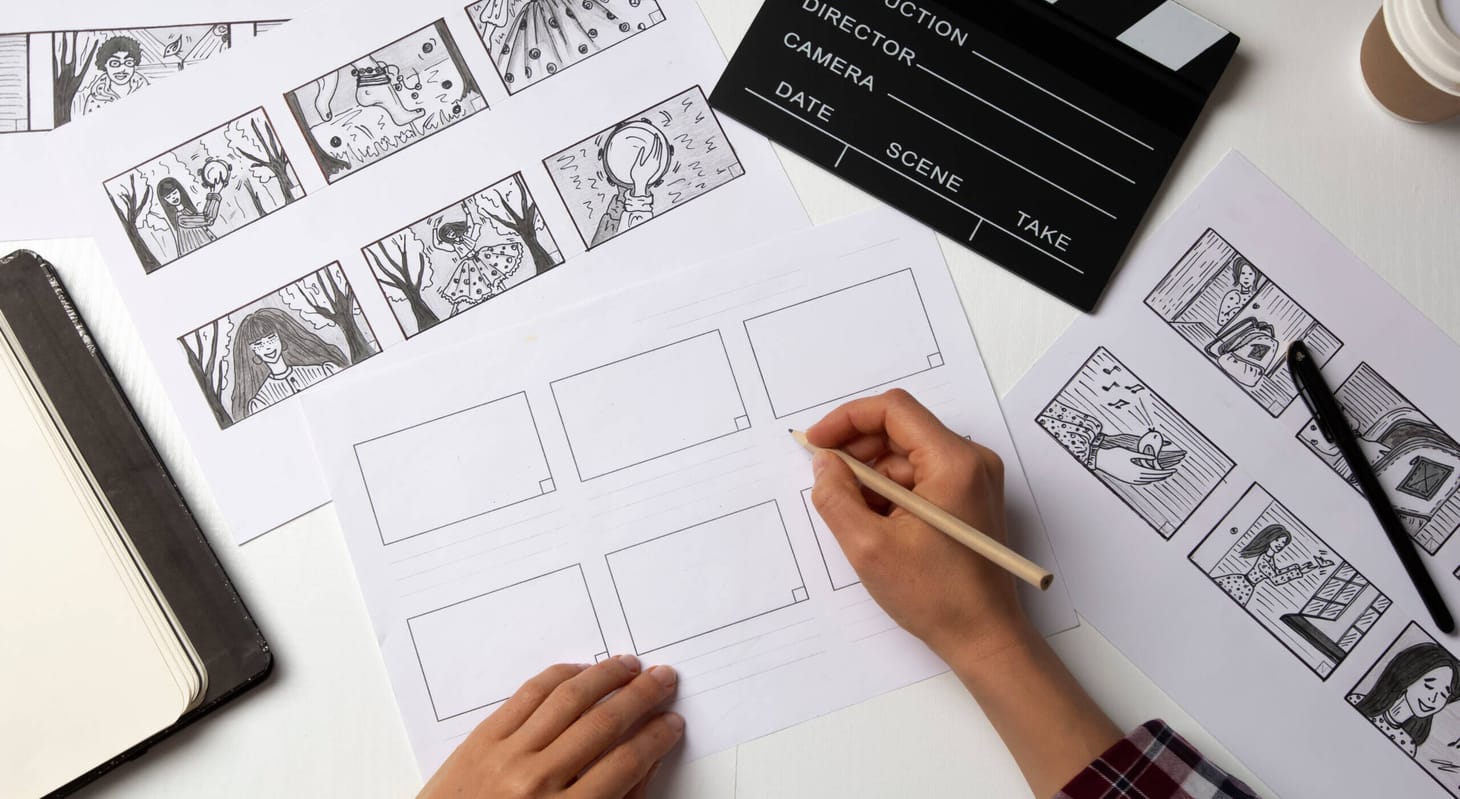
The hardest part of innovation isn't building it. It's getting people to see it.
I've spent two decades creating innovation stories—short films, concept videos, and visual narratives that let audiences step inside a future that doesn't exist yet. This work spans organizations from HP to CableLabs, with films that have collectively reached millions of viewers and shaped how entire industries think about emerging technology.
When I was CTO at HP, I learned that the innovations most likely to die weren't the weak ideas. They were the ones no one could visualize. Executives couldn't see the opportunity. Customers couldn't imagine the experience. Teams couldn't align around a shared picture of success.
Data and specifications don't move people. Stories do.
Why Innovation Stories Work When Slide Decks Don't
When you're trying to get buy-in for something that doesn't exist yet, you're fighting an uphill battle. Executives want certainty. Customers want familiarity. Boards want comparables. Your innovation offers none of these.
A well-crafted innovation story does what a business case can't: it lets people experience the future you're building before a single line of code is written or a single prototype is assembled. It transforms abstract possibility into felt reality.
This isn't about making a slick marketing video. It's about using narrative structure to do the heavy lifting of communication—helping stakeholders understand not just what you're building, but why it matters and what the world looks like once it exists.
I've used this approach to:
- Secure executive commitment for projects that seemed too speculative on paper
- Align distributed teams around a shared vision when technical requirements were still fluid
- Communicate complex emerging technologies to audiences who would never read a white paper
- Inspire entire industries to pursue innovation directions they hadn't previously considered
How Innovation Stories Are Different
Innovation storytelling isn't corporate video production. It's not the same as a product demo, an origin story, or a case study. It has its own purpose and its own structure.
It's Not Science Fiction
The goal isn't to imagine a distant utopia or dystopia. It's to show a plausible near future—typically 3 to 10 years out—grounded in technologies that are already in development. The audience should leave thinking "I can see how we get there" rather than "that's a nice fantasy."
It's Not a Product Demo
We're not showing what a product does. We're showing what life looks like when the underlying innovation exists. The technology fades into the background while the human experience takes center stage.
It's Not an Origin Story
Origin stories explain how something came to be. Innovation stories explain where something is going. They're forward-looking by design—helping audiences understand a future they'll want to be part of creating.
The Story Arc for Innovation
The structure that works for innovation storytelling follows a specific pattern:
Beginning: The World Today
Establish the friction, frustration, or limitation your audience already experiences. This isn't about manufacturing problems—it's about connecting to something real and recognizable. The audience needs to see themselves in the opening.
Middle: The Transformation
Show what changes when the innovation exists. Not features. Not specifications. The human experience of the innovation at work. This is where the audience steps inside the future and sees what becomes possible.
End: The New Normal
Land on the changed world. What's now possible that wasn't before? How does this shift expectations going forward? The audience should leave with a felt sense of the innovation's impact, not just an intellectual understanding.
The goal isn't to explain your innovation. It's to let people live in it for a few minutes.
My Approach: From Concept to Screen
After producing ten of these films across multiple organizations, I've developed a methodology that consistently delivers results.
Technology Research and Selection
Every film begins with deep research into emerging technologies—what's actually in development, what the realistic timelines look like, and what problems these technologies might solve. I work with technologists, researchers, and industry experts to identify innovations that are far enough along to be credible but not yet visible to general audiences.
For The Near Future film series, this meant cataloging dozens of emerging technologies—from autonomous vehicles and holographic displays to nanobots and edge computing—and understanding not just what they do, but how they might intersect with everyday human experience.
Scenario Development
Once the technology landscape is mapped, I develop scenarios that show these technologies in use. The key is finding situations that feel ordinary—a morning routine, a family gathering, a workday—and revealing how they're transformed by innovations that don't yet exist.
This requires thinking through second and third-order effects. If homes have holographic displays, what does that mean for how families communicate across distance? If vehicles are autonomous, what does that mean for how we use commute time? The richest stories emerge from following these threads.
Narrative Construction
With scenarios in hand, I build narratives that follow real characters through recognizable situations. These aren't actors delivering exposition about technology—they're people living their lives in a world where certain problems have been solved and certain capabilities have emerged.
The technology should feel invisible. If characters are explaining how things work, the story has failed. The goal is immersion, not education.
Production and Distribution
The final films are produced at broadcast quality, designed to work in settings ranging from keynote presentations to online distribution. I work with directors, cinematographers, and post-production teams who understand the specific demands of innovation storytelling—creating visuals that feel real without being misleading, showing technology that's plausible without being available.
The Near Future Film Series
The most sustained example of this work is The Near Future film series, which I've produced for CableLabs over multiple years. Each film explores how high-speed networks will transform everyday life in the 3-10 year horizon.
The following is a subset of the films series.
The Near Future: Bring It On (2016)
This film shows what home life could look like with multi-gigabit network speeds—not through technical specifications, but through the experience of a family going about their day.
A father arrives home and steps into a mixed-reality environment. A mother collaborates with colleagues through a life-sized video wall that makes remote work feel like shared space. A daughter and grandmother play games together through VR, despite being physically distant. An autonomous vehicle in the driveway updates its systems through the home network.
The film premiered at industry events and has been used to help network operators, policymakers, and innovators understand what high-speed connectivity actually enables at a human level.
The Near Future: A Better Place (2017)
This film tackles one of the most pressing questions of our time: how will technology help an aging population live independently and on their own terms?
The story follows a day in the life of an elderly woman living alone, showing technologies that allow her to age in place safely and comfortably—smart drug delivery systems that optimize medication timing, portable brain scanning for early disease detection, AI companions that provide both social connection and health monitoring, and networked healthcare systems that keep her connected to caregivers without surrendering her independence.
Every technology shown in the film is grounded in real research. We worked with healthcare innovators, medical device developers, and network engineers to ensure what we depicted was not just desirable but achievable.
The Near Future: Step Inside (2022)
The most recent film in the series asks a broader question: in a world where innovation is accelerating, how do we prepare for technologies we can't yet fully imagine?
Rather than focusing on a single domain, this film surveys the landscape of near-term possibility—inviting viewers to step inside a future that's closer than they think and consider their role in shaping it.
Earlier Work: Where This Started
My innovation storytelling work began at HP, where I was charged with helping one of the world's largest technology companies see around corners.
Roku's Reward (2006)
Before augmented reality was a household term, I produced a concept film showing what mobile AR gaming could look like. The film follows a teenager running through San Francisco, using a handheld device to interact with virtual elements overlaid on real buildings, streets, and landmarks—collecting points and competing with other players in a city-wide game.
We had to design the game rules, the mechanics, the competitive dynamics, and the narrative—all for a technology that barely existed. The film was posted online and immediately drew over 200,000 views. For years afterward, people would ask me when HP was releasing the game. They'd forgotten (or never realized) it was a concept film from 2006.
That response taught me something important: when innovation stories work, people stop seeing them as fiction. They start expecting them as reality.
When Innovation Storytelling Matters Most
This approach is most valuable in specific situations:
When you need executive buy-in for something without precedent.
If your innovation doesn't have obvious comparables, a story can provide the shared reference point that financial models can't.
When technical complexity is obscuring human value.
Engineers often understand what they're building better than anyone—and struggle to communicate why it matters. A story shifts the conversation from features to impact.
When you're trying to align a team around a vision that's still forming.
Early-stage innovations are full of ambiguity. A story creates a shared picture of success that everyone can work toward, even when specifications are still in flux.
When you want to inspire an industry or attract partners.
The Near Future films weren't just internal tools—they shaped how telecom operators, content creators, and technology companies thought about network investment. Stories can move markets.
When you want to attract funding or talent.
Investors and potential team members aren't buying your product. They're buying your vision. A story lets them see that vision as lived reality.
What This Looks Like in Practice
Innovation stories can take several forms depending on the context and audience:
Short Films (3-8 minutes)
Broadcast-quality productions designed for keynote presentations, industry events, and online distribution. These are the highest-impact format and require the most investment, but they also have the longest shelf life and broadest reach.
Concept Videos (1-3 minutes)
Focused explorations of a single innovation or scenario. These work well for internal alignment, board presentations, or social media distribution.
Narrative Presentations
Story-driven content integrated into keynote presentations or pitch decks. Rather than showing a film, the story is told through a combination of visuals, narration, and demonstration.
Interactive Experiences
For physical installations or trade shows, innovation stories can be delivered through interactive environments that let audiences explore the future at their own pace.
Working Together
If you're facing a communication challenge around innovation—getting buy-in for something unprecedented, aligning a team around an emerging vision, or inspiring an industry to move in a new direction—I may be able to help.
This work isn't for every situation. It requires real investment and works best when there's a significant strategic objective at stake. But when the challenge is right, an innovation story can accomplish what no amount of data and specifications ever could.
Let's talk about your challenge