The Military Ignored His Brain Injury. So He Built What Could Have Saved His Brothers.
A Navy SEAL's fight against the invisible wounds killing America's elite warriors.
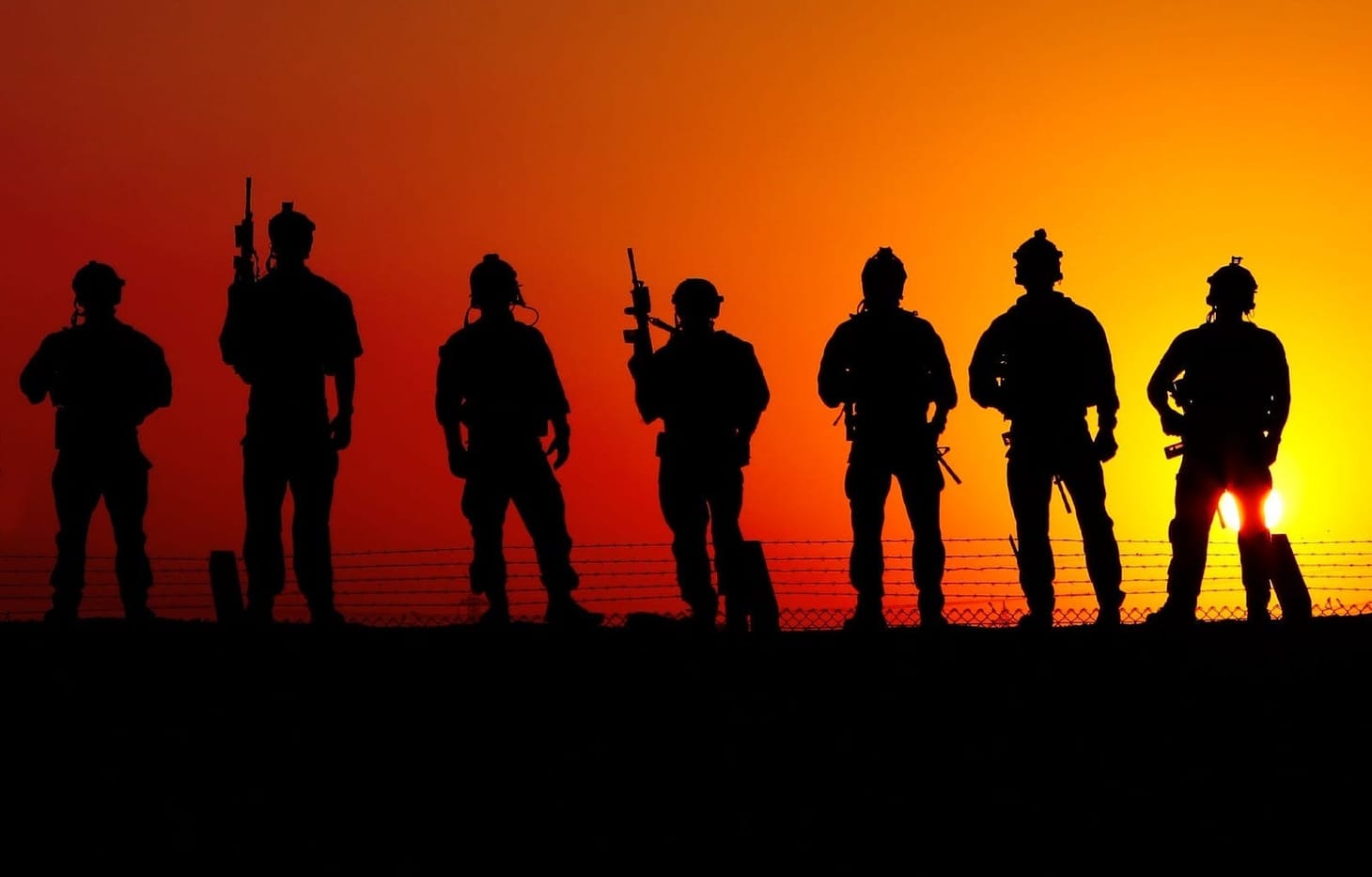
Zach Paschall doesn’t remember being unconscious.
He remembers the white. The world going silent. His vision dissolving into nothing. Then, somehow, he was standing again in the middle of an Afghanistan compound, a sun-up to sun-down firefight raging around him, and there was no time to wonder what had just happened to his brain.
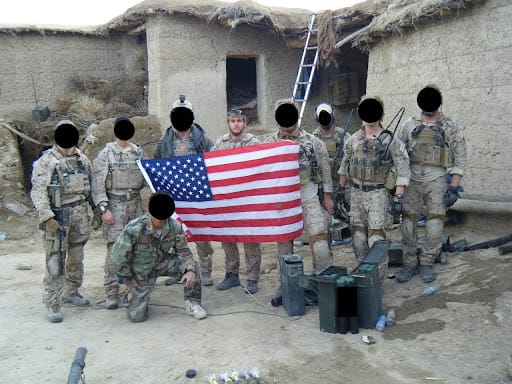
It was 2010. His SEAL Team had stumbled into an al-Qaeda and Taliban meeting in a region so dangerous that an Army intelligence officer had marked it black on the map. “Even Special Forces don’t go there,” the officer had warned them.
The SEALs looked at each other. Then they went anyway.
What followed was unlike anything Zach had experienced in his career—wave after wave of enemy fire, rockets, mortars, ammunition in quantities that seemed endless. Nine Americans. Eight Afghan allies. Fighting for their lives.
Then the RPG hit.
It struck the wall maybe a foot from Zach’s head. A foot lower and it would have killed everyone in the room. A foot higher and it would have killed the three men on the roof. Six of them took the blast.
“The last thing I remember is my buddy flying across the room,” Zach says. “Next thing I know, I’m standing.”
His medic was knocked out. Others were dazed, their memories of that day still fractured and fuzzy. But the fight wasn’t over, so they kept fighting.
They never reported the blast. In 2010, the military’s TBI (traumatic brain injury/concussion) protocols only required documentation if you were medevacked. No shrapnel meant no paperwork. No paperwork meant no record. No record meant, for the next decade, Zach would slowly watch his body and mind unravel—and have no idea why.
“They told me I was going crazy.”
By 2016, six years after that explosion, Zach Paschall was disappearing.
He stands six-foot-one. He had wasted down to 130 pounds. He was bleeding internally—upper intestines, lower intestines. Hiatal hernia. Ulcers. His body was systematically shutting down, and his mind was following close behind.
“There was this fog that never lifted,” he says. “I felt like I was moving through life in molasses.”
When he finally asked a military doctor if his symptoms might be connected to the 2010 blast, the doctor looked at him, asked what blast, and then wrote in Zach’s medical record that he suspected the SEAL was lying to get disability benefits.
Let that sink in.
A decorated Navy SEAL Chief and sniper, nine and a half years in the Teams, multiple combat deployments, asks for help understanding why his body is destroying itself—and gets accused of faking it.
“He told me I qualified for medical retirement with my physical symptoms,” Zach recalls, “but to just let the VA take care of me.”
It wasn’t until Zach got out and the VA was forced to investigate his brain that they found what that doctor had dismissed: a significant traumatic brain injury. Cognitive processing disorder. Real, measurable damage from a blast that officially never happened.
And it wasn’t until Zach tracked down his teammates for witness statements—years after that firefight—that he learned the truth about that day.
He hadn’t just been dazed. He’d been unconscious for a significant amount of time.
His brothers had never mentioned it. None of them had ever talked about that day.
“When I read their statements, I called them,” Zach says. “I asked, ‘Why didn’t you ever tell me?’ They said, ‘I don’t know. We just never talked about it.’”
The One He Couldn’t Save
Zach wasn’t alone. He just didn’t know it yet.
A buddy from SEAL training—a guy who’d made it through the same crucible, worn the same Trident—had been fighting the same invisible war. His name was Ryan Larkin. He was the kind of operator who never complained, never made excuses. Smart. Capable. The guy you wanted on your team.
Then he started to change in ways that didn’t make sense. Forgetting things. Getting confused by simple tasks. His personality shifting in subtle but undeniable ways.
Severe TBI, it turned out. The VA gave him medication for PTSD symptoms—standard protocol. But what they didn’t understand then was that those medications can make brain injuries catastrophically worse.
Zach watched him unravel. He made phone calls. Wrote emails. Showed up in person.
“I begged the military not to kick him out,” Zach says. “I told them we needed to figure out what was going on. At that time, there wasn’t an understanding.”
They kicked him out anyway.
In 2017, Ryan took his own life.
The autopsy revealed what no one had diagnosed while he was alive: his brain had been profoundly damaged. The physical evidence was right there—it had just never been found. Ryan’s father, Frank Larkin—a former Navy SEAL himself—donated his son’s brain to research. What they discovered was scarring invisible to standard MRIs, damage caused not by enemy fire but by the weapons and demolitions Ryan had trained with for years.⁴
Zach carries that. The phone calls he made that didn’t change anything. The system that couldn’t see what was breaking right in front of it. A brother who shouldn’t have died.
The Evidence Was There All Along
When Zach and others started digging into the research, they discovered a pattern that went far beyond what anyone could have imagined.
In 2024, Harvard Medical School researchers examined 30 active-duty Special Operations Forces personnel—men with at least a decade of service and extensive blast exposure. Using advanced brain imaging that standard scans don’t capture, they found direct associations between cumulative blast exposure and measurable changes in brain structure and function. The more blasts, the worse the damage. The worse the damage, the lower their quality of life.¹
A 2025 study went further, analyzing over 200 Special Operations Forces members. Even when traditional imaging appeared completely normal, those with higher blast exposure showed significant differences in brain connectivity—weaker signals in key areas, more symptoms including memory problems, emotional difficulties, and signs of PTSD.²
But the most haunting evidence came from the dead.
The Defense Department’s own Brain Tissue Repository examined the brains of eight Navy SEALs who died by suicide. All eight showed a distinctive pattern of damage, seen only in people repeatedly exposed to blast waves. And the vast majority of that exposure came not from enemy fire, but from their own weapons in training.³
The very preparation designed to make them exceptional warriors was leaving some barely able to function.
Zach thought about his buddy. About himself. About all the men still serving who have no idea what’s happening inside their skulls.
There’s more understanding now than there was. But not enough action. Not enough protection. Not enough innovation flowing to the people who need it most.
A Dream in a Cabin
After separating from the Navy, Zach faced a question that had no easy answer.
For nearly a decade, being a SEAL had been his identity. The teams. The missions. The brotherhood. Now his body was broken, his brain was damaged, and the institution he’d given everything to had called him a liar on his way out the door.
What do you do when the thing that defined you is gone?
Zach did what warriors have done for centuries when they need answers: he went into the wilderness alone.
Ten days in a cabin. Phone off. World shut out. Just him and the silence and the question that demanded an answer: *What now?*
The wilderness had always been his place of healing. His father had taken him backpacking in the mountains as a kid—a 55-pound boy carrying a 50-pound pack, because if you wanted to go on the big adventures, you had to carry your own weight. The high-altitude fishing trips. The hunts. Every time life had shattered him, the outdoors had put him back together.
But this time was different. This wasn’t a setback. This was an ending.
His brain still fights him. Some things are getting better through treatment. Other things, he admits quietly, are getting worse. That’s the reality he carried into that cabin—the knowledge that some of what was taken can’t be given back.
The answer came in a dream.
He saw a word: FOREST. But it was broken apart—FOR REST—using the same R. The wilderness wasn’t just where he healed. It was what he was supposed to build. A place where warriors could find refuge. Where the broken could become whole again.
He woke up knowing what came next.
Adullam: A Place of Refuge
When it came time to name what he was building, Zach’s wife threw out the name of an ancient cave.
In the Bible, Adullam was where David hid before he became king—not with his future mighty men, but with the broken ones. The disgraced. The indebted. The angry. Four hundred men who had nothing left. It was in that cave, through hardship and time, that they were forged into something legendary.
The name means “a place of refuge and justice for the people.”
The wilderness vision that came in the dream. The cave where the broken become warriors. Both truths, woven together.
“Our entire mission as a company is to bring innovation that saves lives,” Zach says. Not disrupt markets. Not chase valuations. Save lives.
And he means it literally.
The Adullam Company and its R&D arm, Adullam Technologies, are developing innovations that could fundamentally change how we protect the men and women who protect us.
Nanotechnology that can make armor double the strength at half the weight.
AI-driven concealment systems that hide soldiers not just from eyes, but from thermal imaging, infrared sensors, and detection technologies that didn’t exist when Zach was in the field.
Blast overpressure reducing materials—the kind of protection that could have changed everything about that day in 2010. Not just for Zach, but for the brothers who still carry invisible wounds from that same explosion.
“If I had armor that reduced even 25% of that blast,” Zach says, “I don’t think my decline would have been as severe. I think I would have been able to stay in the military.”
Building What Should Already Exist
Every product starts with a problem Zach, or someone who serves, has actually faced.
Two SEALs drowned last year when their gear wouldn’t release underwater. Standard quick-release systems failed. Adullam is now developing breakaway vests that actually work—because the current options clearly don’t.
Combat medics lose precious seconds fumbling with gear attachment systems while warriors bleed out. Adullam is creating modular medical carriers with magnetic quick-release systems so medics can move faster between wounded.
Shooters absorb blast overpressure every time they fire heavy weapons—thousands of rounds over a career, each one sending an invisible shockwave through the brain. Adullam is developing weapons systems that reduce that exposure for the shooter.
The work comes to life through the TRIBE brand—TRIBE Equipment for military and first responders. Built on the foundation of real-world experience from the most unforgiving environments, TRIBE is more than tactical gear—it’s a brotherhood of operators, designers, and innovators engineering equipment that meets the highest standards of performance, durability, and precision. Every piece is designed with direct input from the professionals who will stake their lives on it, ensuring the gear reflects the evolving needs of today’s modern operator.
Every decision comes back to one question: How do we bring them home?
Not just alive. Home to their families. Home to their futures. Home whole.
Before the Next Fight
The next conflict isn’t a matter of if. It’s when.
And the technology on that battlefield is advancing faster than the protection we give our people. AI systems that can see through walls. Drones that hunt autonomously. Detection capabilities that make yesterday’s camouflage obsolete.
The gap between threat and protection is widening. Zach and his team are working to close it.
Innovation at this level requires resources, partnership, and people who believe the mission is worth backing. Right now, The Adullam Company is opening a small number of spots for investors who understand that some opportunities aren’t measured solely in returns—they’re measured in lives.
This isn’t about a pitch deck or projected market share. It’s about standing with the people who’ve lived the cost of inadequate protection and are building what should have existed all along.
If you believe that the warriors who protect us deserve technology that protects them—and you want to be part of bringing them home—this is how you join that mission.
Limited spots available for qualified investors.
About Zach Paschall
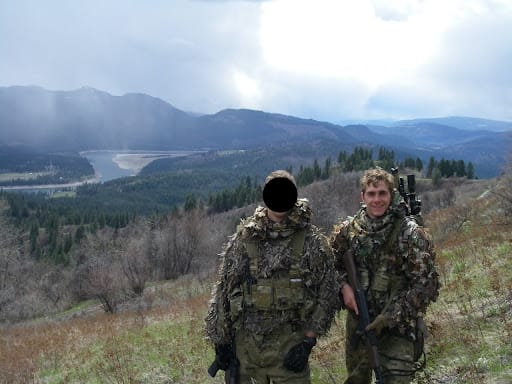
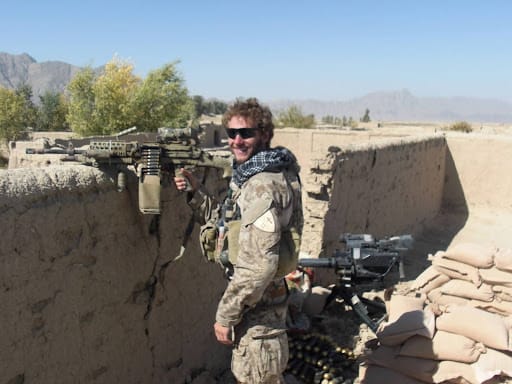
Zachary Paschall is the Founder and Chief Executive Officer of The Adullam Company, a service-disabled, veteran-owned platform focused on “Innovation That Saves Lives.” A former U.S. Navy SEAL Chief and sniper with multiple combat deployments, including Afghanistan, he brings an operator’s view of risk, load, and survivability to every product decision. His leadership sits at the intersection of survivability, advanced technology, and U.S. manufacturing, where he drives operator-led solutions for warfighters, first responders, hunters, and serious outdoor professionals.
About Adullam Company
What began as a mission to protect warriors has grown into a family of brands serving those who operate in demanding environments—from the battlefield to the backcountry.
The Adullam Company is a U.S.-based, multi-brand survivability platform dedicated to “Innovation That Saves Lives,” integrating advanced AI, quantum, and nanotechnology-driven materials to mission-critical gear and concealment systems. Adullam operates a family of synergistic brands driven by discovery of gaps in markets, innovating solutions and combining next-generation R&D, agile engineering and manufacturing lifecycle all sourced and produced in the US. Each brand from tactical gear (Tribe Equipment), precision hunting (Hyde Hunting), outdoor and mountaineering (Forest Outfitters), lifestyle and heritage apparel (The Real Bigfoot), focuses on performance, preservation, and protection to deliver field-proven systems designed and tested by operators for real-world survivability needs.
This article is dedicated to the honor and memory of fallen Navy SEAL Ryan F. Larkin.
Endnotes
1. Harvard Medical School / Massachusetts General Hospital Study on Blast Exposure and Brain Injury Gilmore N, Tseng CJ, Maffei C, et al. “Impact of repeated blast exposure on active-duty United States Special Operations Forces.” Proceedings of the National Academy of Sciences, April 2024. DOI: 10.1073/pnas.2313568121.
Read the full study
The study examined 30 active-duty U.S. Special Operations Forces with at least a decade of military service and extensive blast exposure, finding associations between cumulative blast exposure and alterations in brain structure, function, and health-related quality of life using advanced MRI and PET imaging techniques.
2. Radiology Study on Brain Connectivity and Blast Exposure Diociasi A, et al. “Distinct Functional MRI Connectivity Patterns and Cortical Volume Variations Associated with Repetitive Blast Exposure in Special Operations Forces Members.” Radiology, April 2025.
Read coverage of the findings
The study analyzed over 200 Special Operations Forces members, finding that those with higher blast exposure showed weaker brain connectivity in key areas and more severe symptoms including memory problems, emotional difficulties, and signs of post-traumatic stress disorder—even when standard MRI exams appeared normal.
3. The New York Times Investigation on Navy SEAL Brain Damage Philipps D. “Pattern of Brain Damage Is Pervasive in Navy SEALs Who Died by Suicide.” The New York Times, June 30, 2024.
Read the full investigation
The investigation found that the Defense Department Brain Tissue Repository examined the brains of eight Navy SEALs who died by suicide, all of whom showed an unusual pattern of damage seen only in people exposed repeatedly to blast waves—primarily from firing their own weapons during training, not enemy action. The findings had not been communicated to Navy SEAL leadership until the Times investigation revealed them.
4. 60 Minutes: A Father’s Mission After His Son’s Suicide “Veterans Suicide Puts Father on Mission.” 60 Minutes, CBS News.
Watch the segment
Read the transcript
Former Navy SEAL Frank Larkin donated his son Ryan’s brain to research after Ryan’s suicide. The postmortem study revealed a pattern of scarring invisible to standard MRIs—damage caused by blast exposure from weapons and demolitions during training, not combat.
Disclosure
Phil McKinney serves on The Adullam Company’s Advisory Board and holds a small equity position (<1%) in the company. Phil McKinney is not a financial advisor. This article is for informational purposes only and does not constitute financial, investment, or legal advice. Prospective investors should consult with their own qualified financial advisors before making any investment decisions.