The Near Future. Step Inside
A family walks with tigers, redirects ships through hurricanes, and lives alongside AI avatars. No one explains it. They just live with it.

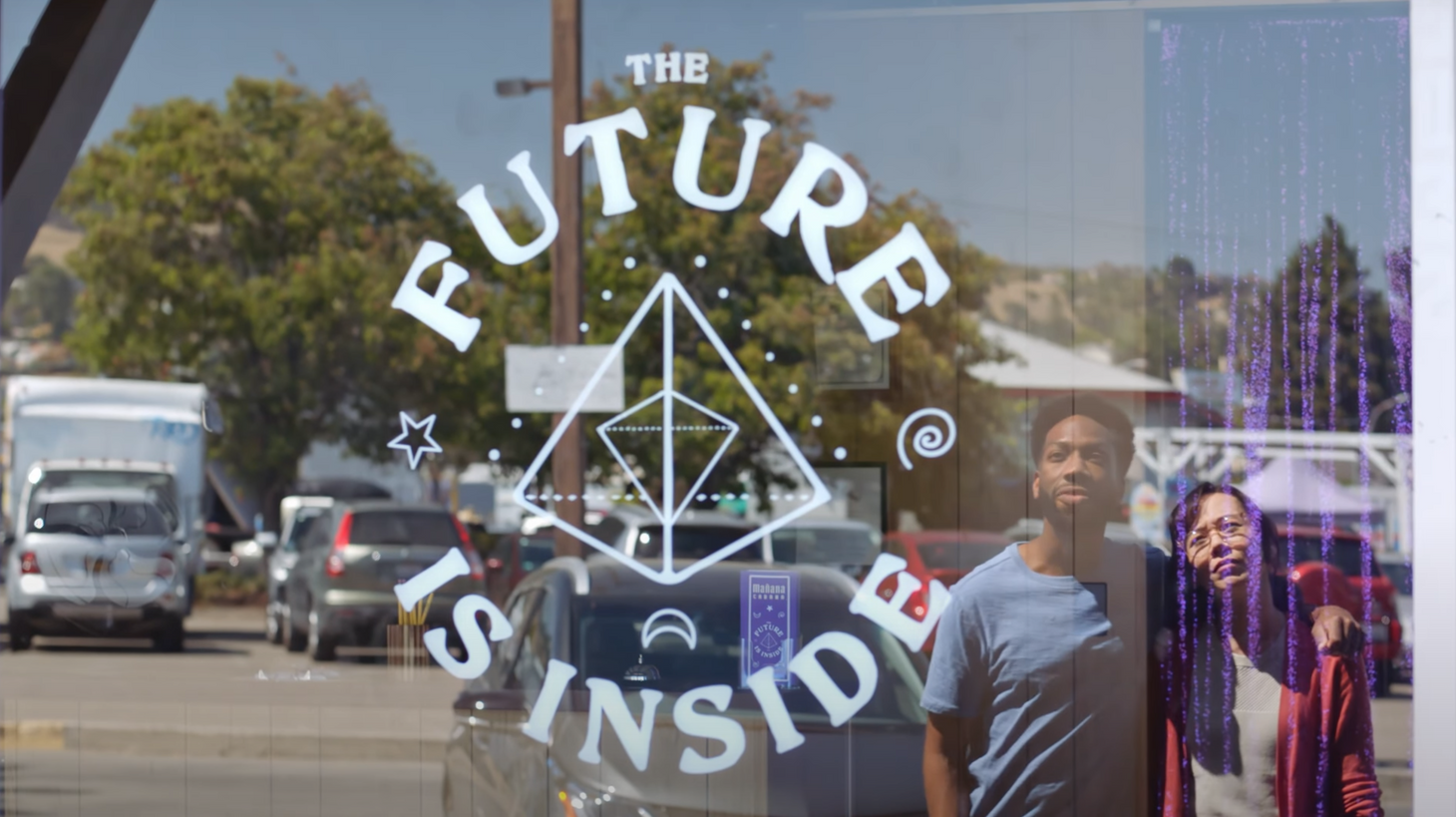
What does daily life look like when immersive technology becomes invisible?
This is the latest film in The Near Future series I produce for CableLabs—an ongoing body of work using innovation storytelling to help the broadband industry see what they're actually building toward. Not bandwidth specs. Not latency numbers. The human experience those capabilities enable.
The series launched in 2016 with a simple question: What if? What if we could change healthcare around the world? What if we could transform education? What if the networks we're building today could fundamentally reshape how we live, work, learn, and play?
This film series answers those questions—not with data, but by letting audiences experience a possible future firsthand.
The Story
Clara and Ben are parents navigating a busy day. Clara is a CEO preparing for a high-stakes investor presentation. Ben works from home while managing the kids. Their children are learning, playing, and exploring.
What makes this day different is how technology weaves through every moment—not as something they use, but as something they live inside.
The kids walk alongside a prowling tiger during a lesson, the animal so real they could reach out and touch it. Ben's cartoon avatar cracks jokes while helping him prepare for his day. Clara rehearses her presentation with a photorealistic AI assistant who notices her nervousness and offers guidance to calm her. When a hurricane threatens shipping lanes, Clara's team gathers around a quantum-powered simulation to redirect vessels to safety—manipulating a storm system in real-time volumetric space.
Throughout it all, Ben and Clara stay connected to their digital lives through AR glasses that look like ordinary eyewear. No headsets. No special equipment. Just a seamless bridge between physical and digital reality.
No one stops to explain how any of this works. They just live with it.
Technologies in the Film
Each innovation shown is grounded in real research—technology already in development that high-speed, low-latency networks will enable at scale.
Light field displays — The film shows wall-sized displays that project 3D imagery without requiring glasses or headsets. When Ben first interacts with his avatar, when the kids encounter the tiger, when Clara presents to investors—these scenes showcase light field technology that creates realistic depth viewable by multiple people simultaneously from different angles. This isn't 3D cinema. It's holographic media that makes the virtual feel present.
AI avatars — Clara's photorealistic assistant and Ben's cartoon companion represent the future of AI interaction. These aren't chatbots with faces—they're emotive digital beings capable of authentic communication, reading body language and context to provide genuinely helpful guidance. They appear however users want: cartoon figures, lifelike humans, or anything in between.
AR smart glasses — Ben and Clara wear glasses that look like ordinary eyewear but bridge their physical and digital lives. Unlike today's bulky headsets, these allow interaction with digital objects and information overlays directly within their field of vision. Their avatars travel with them, accessible anywhere.
Quantum computing — The hurricane simulation scene exists specifically to demonstrate what quantum computing makes possible. The dataset size and real-time processing required to model a storm system at that level of detail—then manipulate it to reroute ships—could only happen with quantum computing power. Today's computers simply can't handle computations that complex.
Holographic telepresence — When Clara gives her CEO presentation, she's not on a video call. She's present in the room with investors who can see her from any angle, make eye contact, read her body language. Light field panels on adjacent surfaces create something approaching the holodeck—a space where remote participants share volumetric reality.
Why This Film Exists
The technologies in this film are under development today. They're coming—the question is whether the infrastructure will be ready for them.
Cable operators and network builders often struggle to articulate why they're investing billions in network upgrades. Faster speeds sound good in the abstract, but abstractions don't move boards or policymakers or investors. They need to see what faster actually means for human experience.
That's what this film provides. When industry leaders watch Clara's team manipulate a hurricane simulation in real-time, they stop thinking about latency specifications and start thinking about what their networks will enable. When they see kids learning alongside a photorealistic tiger, education stops being a talking point and becomes a felt possibility.
That shift—from technical capability to human possibility—is what innovation storytelling is designed to create.
Client: CableLabs
Year: 2022
Capability: Innovation Storytelling
Innovation Storytelling
If you’re looking for help with your innovation storytelling in a powerful and impactful way, visit the Work With Me page. I would be happy to discuss your specific needs and see how I can help.