What Half of 13 Reveals About Your Thinking
The power of questions comes down to how your brain works: it answers a question the moment you hear it, whether or not you want it to.

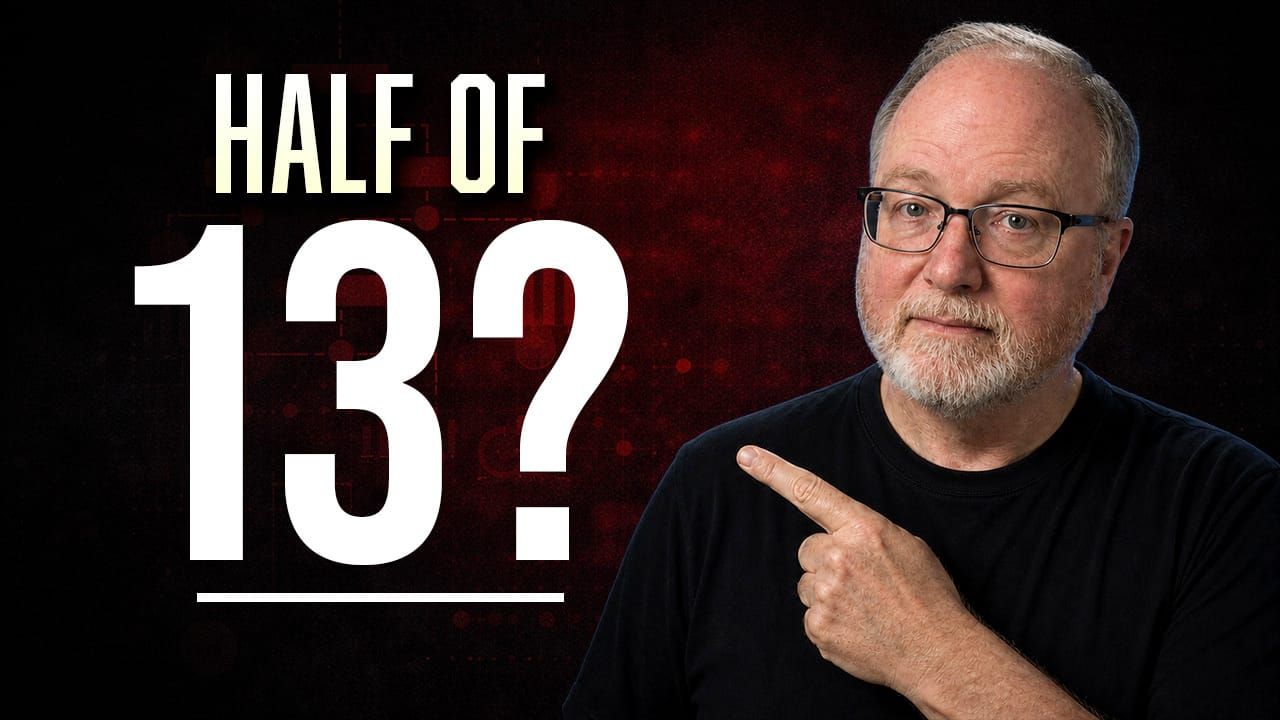
What is half of thirteen?
Stop. Answer it. Don't think ahead, just answer.
You said 6.5. I know you did, because everyone does.
Nobody chose to answer that question. Your brain solved it before you decided whether you even wanted to play along. That's the power of a question: whoever hears it cannot stop themselves from answering. Ask a person something, and their mind starts working on it right away, whether they wanted to or not.
If you gave that answer on a math test, it would be marked correct. Give that same answer on a test of innovation, and you're average, because that's where everyone stops. Push beyond the obvious answer, and that's what puts you top of the class.
... or listen to the podcast
Here's the version of the question that changes everything: How many ways could you answer "What is half of thirteen?"
Sit with that for a second, because the honest reaction most people have is mild panic. There's the obvious one. Then what?
Split the number down the middle and you get a 1 and a 3.
Split the word into syllables, and you get "thir" and "teen."
Every one of those is a real answer. None of them occurred to you the first time, because the first time, your brain wasn't looking for options. It was looking for an answer to the question.
I've run this exercise for years in the Innovation Boot Camp and the Innovation Essentials Workshops. One professor who uses my book in their class now opens every semester of her course with it. The class brainstorms as many answers to the question as possible. The record so far is thirty-two different ways to answer that one question. And remember, asked the first way, that same question only gives you one answer.
This isn't just a classroom trick. Researchers have measured this exact mental muscle since the 1960s, asking people how many uses they could find for a brick. Some people list four. Some list forty. The gap between those two people has nothing to do with intelligence. It's whether their mind treats the first answer as the end of the search or the beginning of one.
Practice Exercise: Take one recurring question: a decision at work, a plan for the weekend, even "what should I make for dinner." Before you settle for the obvious answer, ask "how many ways could I answer this?" and write down at least ten. Not ten good ones, just ten. See where the eleventh one takes you.
This is part 1 of a three-part series on how to use questions as the skill behind better thinking, better ideas, and better innovation. Next week, we get into what actually separates an average question from a great one.
Subscribe now so you don't miss it.
Further reading:
- Bluma Zeigarnik's research on why unfinished tasks and open questions stay active in memory until resolved (the "Zeigarnik effect," 1920s).
- Elizabeth Loftus and John Palmer's 1974 study showing that the specific word used in a question ("hit" versus "smashed") changed both people's speed estimates and their memory of a car accident. We'll pick this up properly in Episode 2, when we get into how the wording of a question shapes the answer.