
Adjacent Innovations – How to use adjacencies to create killer innovations

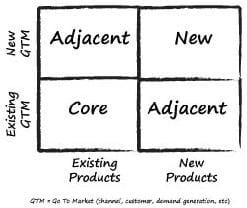
How do you improve the success rate of your innovation programs? Everyone wants to focus on the “new/new” (new product/service with a new “go to market”). These kinds of project are high risk and hard to convince management that the project will be successful.
One way to de-risk the project is the take a “new/new” and break it down into a series of adjacent innovations (“rules of two”). Adjacent innovations keeps one area stable (e.g. Go To Market) while focusing on creating a new killer something (e.g. product or service). The benefits of this approach is:
- Focus – By minimizing the number of “new” areas for a program, you can focus on what is truly important and leverage what already exists.
- Scale — Adjacent innovations tend to scale faster than new/new since you are leveraging some area (channel, supply chain, customer, etc) that already exists within your organization.
- Management buy-in — Management can get their heads around adjacent innovations. Not to mention they will see early impact/success which ties into their typical quarterly focus.
Adjacent innovations are NOT incremental innovations. Adjacent innovations is about focusing your “killer efforts” around one area (e.g. product or service) to ensure success.