From Teligent Disaster to HP Success: A Second-Order Thinking Story
Kevin Allodi thought three moves ahead when I wasn't thinking past the first. His decision saved my family—and taught me the framework I use for billion-dollar calls.

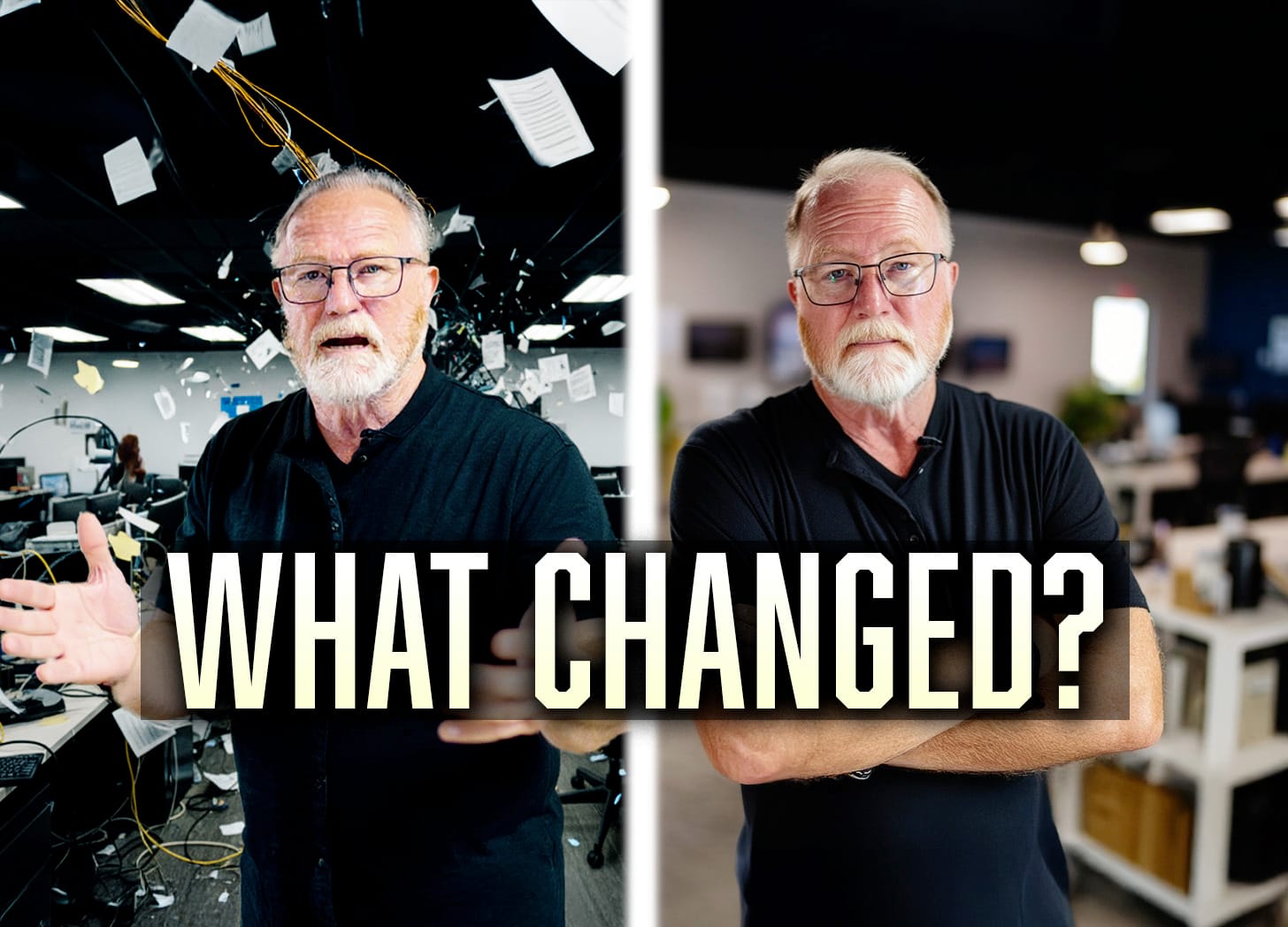
I’ve made a lot of decisions in my career. Thousands, probably. Most turned out fine. Some didn’t. But I’m realizing now, looking back, that I wasn’t actually deciding most of the time. I was reacting. Moving fast. Trusting my gut. Assuming things would work out.
And they did work out—until the day I sat in a car in front of a horse farm I couldn’t afford and got a phone call that revealed something uncomfortable: I’d been succeeding despite myself. I’d been making first-order decisions my entire career, never asking what came next, never thinking past the immediate problem.
I’d been lucky. And luck, I was about to learn, is a terrible strategy.
I was sitting in my car in front of that horse farm in rural Virginia, staring at a house I couldn’t afford, when my phone rang.
“Mr. McKinney? This is about your Portal Software shares.”
“What shares?”
It was April 1999. The broker calling me was prepping for Portal’s IPO in three weeks. He needed to know what I wanted to do with my position.
I had no idea what he was talking about.
This was the last day of our contract contingency on the farm. In four hours, we either committed to buying it or walked away. We’d already put money down on a property we desperately needed but couldn’t rationally afford. Our log house in the mountains—the one we were trying to sell—wasn’t going to move fast. We were facing two mortgages and a financial situation that kept me up at night.
But the house wasn’t really about the house.
Two months earlier, six firemen had carried my father 1.5 miles down a snowy mountain because an ambulance couldn’t reach our home. He’d had a cardiac event. My mother’s health was failing too. We’d moved them in with us thinking we were helping, but our mountain paradise had become a medical liability.
When you watch firemen struggle with your father’s stretcher through snow in the dark, unable to get emergency vehicles to your door, you realize some decisions aren’t actually decisions anymore.
We needed to move. Fast. The horse farm was less than 10 minutes from the hospital. It was perfect for what we needed and terrible for what we could afford.
And now this broker was asking me about shares I didn’t know I had.
Two Years Earlier: The Favor
The call from Kevin Allodi came in 1997.
Kevin had been VP of Sales at Computer Sciences Corporation (CSC)—one of the big six consulting companies in Washington, DC. At CSC, I’d run technology and operations for billing systems that produced 91% of all mobile phone bills worldwide. Kevin understood enterprise sales in telecom. I understood the technology platforms. We’d worked together on deals that shaped how carriers operated their businesses.
Kevin had just joined Portal Software as Corporate Vice President. Portal was making a hard pivot—transitioning from being an internet service provider (ISP) to building back-office systems for ISPs. Specifically, billing and operational platforms.
“We’re rethinking how billing works for ISPs and eventually other services,” Kevin said. “I need your brain on this. Can you come to Cupertino?”
“What’s the engagement look like?”
“That’s the thing,” Kevin said. “We can’t pay you. Not yet. We’re pre-revenue on this platform. But I’ll take care of you once we start generating revenue.”
This is where most people hang up.
I’d recently co-founded Teligent, a telecommunications startup based in Washington, DC. I knew what “pre-revenue” meant. I knew what “I’ll take care of you” could mean—which ranged from “I’ll make it up to you on the next ask” to “a nice dinner and some war stories.”
But I trusted Kevin. We’d been in the trenches together at CSC. When someone you trust asks for help on something you’re genuinely interested in, you say yes.
I didn’t ask “and then what?” I just said yes.
I flew to Cupertino.
The Work Nobody Saw
The Portal team was sharp. We spent weeks redesigning their approach to billing—not just copying what telecom companies did, but rethinking it for the internet age. Usage-based billing. Real-time rating. Subscription management. The architecture needed to handle volume and complexity that didn’t exist yet but would soon.
I’d fly out, work with the team, fly back to Virginia. Nobody outside Portal knew I was involved. No press releases. No advisory board announcement. Just me helping Kevin’s team build something I found intellectually interesting, getting paid in trust and the possibility of “we’ll figure something out later.”
The platform they built was excellent. It launched. It gained traction. ISPs started buying it. Portal started generating real revenue.
Kevin was taking care of things behind the scenes—I just didn’t know it yet.
Years later—sometime after 2012—Kevin reached out about my coming to Chicago. He wanted me to meet with his entire staff at Philo Media for lunch, host a Q&A, and do a book signing for Beyond the Obvious.
We caught up before the event. I’d never actually asked him how the Portal equity came together. It had always felt like this mysterious gift that appeared exactly when I needed it. So I asked.
I also told him something I’d never shared before: the timing. The phone call from the broker. The last day of our contract contingency. My parents. The horse farm. How the shares covered almost exactly what we needed. How it had literally saved my family.
Kevin looked at me and smiled. “The day you agreed to help,” he told me. “I knew we couldn’t pay you. So I asked myself: If this works, what happens to Phil? And then what? If we go public and Phil gets nothing, what happens to our relationship? What happens to my reputation in the industry? What happens when the next person I ask for help finds out I didn’t take care of the last guy?”
He paused. “And I also thought: What if I don’t stay at Portal? What if I leave before we go public? I wanted to make sure you were taken care of regardless of what happened to me.”
“I gave you the shares before we even had product-market fit because I was thinking three moves ahead—including the scenarios where I wasn’t even there anymore.”
Kevin was running a decision framework I didn’t even know existed at the time we worked together on Portal. While I was saying yes based on trust and interest, he was mapping out consequences two years into the future, accounting for scenarios where he might not even be around to execute on his promise.
I wouldn’t understand what that meant until much later.
The Distraction of Success
But honestly, I wasn’t paying attention to what Kevin and Portal were doing. I had my own explosion to manage.
Teligent had gone public in November 1997—just months after I’d started helping Portal. We were growing like crazy. I mean crazy. At one point, I was hiring eight people per day, seven days a week, for six months straight. Just in my group.
Think about that math: 56 people per week. More than 200 people per month. Over a thousand employees in six months—and that was only my department.
When you’re scaling that fast, you’re not thinking strategically. You’re triaging. You’re interviewing candidates in the morning, onboarding teams in the afternoon, and trying to build infrastructure for people who started yesterday while recruiting for positions you’ll need filled tomorrow.
Hiring 56 people per week felt like success. What I didn’t ask was: “And then what?”
What happens when you scale infrastructure faster than culture? What happens when new hires don’t know the mission? What happens when you’re rewarding speed over quality, urgency over fit?
We learned the answer:
We suffered from an accidental culture—a mish-mash of whatever everyone brought with them from their previous organizations. No coherent identity. No shared values. Just a collision of dozens of different company cultures smashed together.
We had the strangest, most outrageous HR issues I have ever seen in my entire career. And I mean ever. I make bar bets on having the weirdest HR stories of anyone—and after I tell the tales, I always win the bet. (That’s a future Studio Notes story.)
We had massive misalignment of objectives and roles. People didn’t know what they were supposed to be doing or why it mattered. Teams were working against each other without realizing it.
Teams were dysfunctional because they’d been hired too fast to learn how we worked—or more accurately, because we hadn’t figured out how we worked before we brought them on.
It was a major disaster that I caused. I spent the rest of my time at Teligent trying to fix it. But here’s the thing about second-order consequences: once you miss them, the problem grows, and grows, and grows. You can’t unwind a broken culture as fast as you created it.
But I didn’t see it then. I just kept hiring.
I wasn’t tracking what Portal was doing. I wasn’t following up with Kevin. I barely remembered I’d helped them two years ago. You know that favor you do for someone where you think “that was interesting” and then life happens and it falls completely off your radar?
That was Portal for me.
Kevin, meanwhile, was building. The platform was generating revenue. Portal was preparing to go public. And Kevin hadn’t forgotten about me—even though I’d completely forgotten about him.
The Mountain House
My parents’ health had been declining. My mother needed care. My father’s heart was becoming unreliable. The decision to move them in with us felt obvious at the time—we had space, they needed help, this is what you do for family.
Our log house in the mountains was beautiful. Remote. Quiet. Exactly what you want when you’re thinking about nature and space and getting away from everything.
Exactly wrong when you need emergency medical response.
But I didn’t ask “and then what?”
I saw the first-order problem: They need care. I solved it: Move them in with us. I stopped there.
I never got to the second question: And then what happens when there’s a medical emergency? What happens in winter when the roads are impassable? What happens when minutes matter and we’re an hour from help?
The night the ambulance couldn’t reach us, everything changed. My father was in distress. We called 911. The dispatcher asked our address and then there was a pause.
“Sir, we can’t get an ambulance to your location. The roads are snowed in. We’re sending the volunteer fire department.”
Six volunteers showed up with a stretcher. They carried my father 1.5 miles through snow, down a mountain, to where the ambulance could meet them. It took over an hour. My father survived, but the message was clear: we couldn’t stay here.
I’d solved one problem and created another. A more dangerous one. One I should have seen coming.
My wife and I started looking for properties immediately. We needed something accessible, somewhere an ambulance could reach us in minutes not hours, somewhere my parents wouldn’t be at risk every time Virginia got weather.
We found the horse farm. Less than 10 minutes from the hospital. It checked every box. It was also significantly more expensive than what we’d planned for.
Our log house would sell eventually—it was a beautiful property for the right buyer—but “eventually” and “immediately” are very different timelines when you’re trying to protect your parents.
We made an offer on the farm with a contract contingency. Standard practice. It gave us a window to get our financing sorted out, to make sure we weren’t making a catastrophic financial mistake.
But as the contingency deadline approached, nothing about our financial situation improved. We were staring at two mortgages and a math problem that didn’t work.
Once again, I hadn’t thought past the first move. We need a new house. Make an offer. Figure out the money later.
I was running the same pattern over and over.
The Call
Which brings us back to the car. The horse farm. The last day of the contingency. The broker on the phone.
“How many shares do I have?”
He told me the number. I asked him the IPO pricing range. I did the math in my head while sitting in that car, looking at the house where my parents would be safe.
This was Kevin’s way of “taking care of me.” Not cash. Equity. He’d given me shares for the work I’d done when Portal couldn’t pay me. He’d done it quietly, without fanfare, exactly the way Kevin would do anything.
“What do you want to do with your position?” the broker asked.
I didn’t hesitate.
“Sell. At the IPO. All of it.”
Three weeks later, Portal went public under ticker symbol PSFT on the Nasdaq. My shares sold. The proceeds covered nearly 100% of the horse farm purchase price.
We moved. My parents were safe. The ambulances could reach us.
The Wake-Up Call
Some people would call this luck. I’d chalk it up to being a God thing. The timing was too perfect—the broker’s call on the last day of our contingency, the shares covering exactly what we needed, my parents’ safety hanging in the balance while an answer I didn’t know existed materialized in a phone call.
But grace isn’t a business strategy.
And sitting in that car, doing math on a broker’s IPO numbers while staring at a house my parents needed, I had a darker thought: What if the timing had been different? What if Kevin had left Portal before setting up the equity? What if they’d gone public six months earlier or later? What if Kevin hadn’t been the kind of person who thought three moves ahead—even planning for scenarios where he wasn’t around?
My parents’ safety was hanging on a coincidence I’d done nothing to create.
That’s when it hit me: I’d been playing Russian roulette with consequences my entire career.
Episode 6 drops this week: This article reveals the moment I realized I’d been ignoring second-order consequences my entire career—and how someone else’s strategic thinking saved my family. Episode 6 shows you the complete framework for second-order thinking—including how to map ripple effects, question invisible incentives, and run the “and then what?” drill before decisions blow up in your face. Subscribe to the series here.
The Teligent hiring disaster. The mountain house that nearly cost my father his life. The financial bind I’d put my family in. These weren’t isolated mistakes. They were a pattern.
I’d been solving first-order problems—we need people, they need care, we need a house—and walking away. Never asking what came next. Never thinking past the immediate fix.
I’d been succeeding despite this blindness, not because of any strategic thinking. I’d just been lucky that the second-order consequences hadn’t been catastrophic.
Until they almost were.
What Kevin Was Actually Doing
While I was winging it, Kevin was thinking systematically.
He’d asked himself: “If Phil helps us now and we succeed later, what happens if we don’t take care of him?” That’s mapping ripple effects—tracing the decision forward through the entire system.
He’d anticipated the invisible incentive he was creating. If he didn’t compensate me fairly, he’d be signaling to everyone watching: “Help me out and you’ll get nothing.” That destroys trust, damages reputation, and makes the next ask impossible.
He’d run the drill: First order—Phil helps us. Second order—we owe him something. Third order—if we handle this right, we build a network of people who trust us and will help again. If we handle it wrong, we burn bridges we’ll need later.
Kevin wasn’t being generous. He was being strategic. He saw three moves ahead while I was still celebrating move one.
That’s the skill I didn’t have. That’s what I’d been missing.
The Real Cost of Not Thinking Ahead
Here’s what scared me most: I’m not unique.
MIT studied 2,000 business decisions and found that executives accurately predict first-order consequences 87% of the time. Second-order consequences? 34% accuracy. Basically coin-flip odds. Third-order? 11%. Worse than random guessing.
The people making million-dollar decisions are operating blind beyond the first consequence. Just like I was.
And they’re not stupid. I wasn’t stupid. We’re just not asking “and then what?” enough times.
We see the immediate fix. We act. We move on. And then we spend the next year cleaning up the mess we created.
The cost-cutting measures that save money this quarter and destroy competitive position next year. The quick hires that create culture problems that take years to fix. The solutions that create bigger problems than they solve.
I’d done all of it. And the only reason I wasn’t dealing with catastrophic consequences was that Kevin had been thinking strategically even when I wasn’t.
What Changed
After Portal, I stopped trusting luck. I stopped assuming things would work out. I started asking the question Kevin had been asking all along.
“And then what?”
Not once. Three times.
By the time I got to HP, I was dealing with billion-dollar decisions. The scale and complexity meant every choice created ripple effects across the entire company. I had to apply second, third, fourth-level thinking constantly.
One example: the HP GPS prototype.
As was my normal practice, I gave all consumer products to my wife to test. This was my version of asking “and then what?” in the real world—if it didn’t work for her, it wouldn’t work for our customers.
She took the prototype GPS and used it while driving from Virginia to Silicon Valley with her father.
To say it was a disaster would be an understatement.
I vividly remember her chewing out the product manager in the HP cafeteria on the Cupertino campus. Not a private conversation. The cafeteria. In front of everyone. My wife doesn’t pull punches.
First order: We have a GPS product ready to launch.
Second order: My wife—a normal consumer—had a horrible experience. If she couldn’t use it, millions of customers would have the same problem.
Third order: Reputational and brand risk for HP. We were about to launch a product that would damage trust in everything else we made.
I killed the product.
The team was devastated. They’d worked for months. But I’d seen what happened when you don’t ask “and then what?” enough times. I’d lived through the Teligent culture disaster. I’d watched my parents’ safety hang on timing I hadn’t planned for.
At the same time, we had other products where teams didn’t ask “and then what?” We had to do major cleanup efforts later—recalls, reputation damage, customer trust erosion. Once you have that experience, once you see the cost of missing second-order consequences, you’ll do everything in your power to never let it happen again.
For me, it was the Portal shares, the house, and my parents. That was my wake-up call.
Don’t wait for a disaster to learn this lesson. Learn from my mistakes instead.
Before moving forward on any significant decision now, I map the ripple effects. What happens to each stakeholder? How will they respond? What does their response trigger?
I question the invisible incentives I’m creating. When I rush a decision to solve an urgent problem, I’m teaching my team that urgency matters more than quality. When I reward speed, I’m creating pressure to cut corners I’ll spend months fixing later.
The framework became automatic. Not because I’m smarter now. Because I got scared.
I saw how close I’d come to disaster. How many times I’d been saved by luck, by Kevin’s strategic thinking, by timing I hadn’t orchestrated. And I realized I couldn’t keep operating that way.
The decisions I’m making now look different. Slower sometimes. More cautious, maybe. But they stay solved. I’m not creating disasters I have to clean up later. I’m not burning through goodwill fixing problems I shouldn’t have created in the first place.
I’m asking what Kevin was asking all along: “And then what happens after this immediate win?”
What This Means for You
You’re making decisions right now—today, this week—that have consequences you’re not seeing.
Some will be neutral. Some might even work out like mine did, where someone else’s strategic thinking compensates for your lack of it.
But most won’t. Most will be problems. Second-order problems you’ll spend months or years fixing. Third-order consequences that undermine everything you built with that first decision.
The video I made on second-order thinking shows you the framework. How to map ripple effects. How to question invisible incentives. How to run the “and then what?” drill systematically.
This Studio Note is the story behind why I built that framework—why I teach this now, why it matters, what it costs when you don’t do it.
The Portal story is the best thing that ever happened to my career—not because of the money, but because of what it taught me about decisions I wasn’t actually making.
Kevin gave me a gift: Not the shares. The wake-up call.
I’d been succeeding despite myself. Moving fast, trusting my instincts, assuming things would work out. And they had—until they almost didn’t. The mountain house. The ambulance that couldn’t reach us. The parents whose safety depended on a phone call I didn’t know was coming.
That’s when I stopped trusting luck. That’s when I started asking the question Kevin had been asking all along.
It’s the question that separates the people who succeed once from the people who succeed consistently. The ones who get promoted from the ones who clean up disasters. The ones who build things that last from the ones who create bigger problems than they solve.
Three words. Asked three times. Before every significant decision.
“And then what?”
Because the ones who rise aren’t the ones who got lucky.
They’re the ones who stopped needing luck.
Portal Software was acquired by Oracle in 2006 for $220 million. Kevin Allodi’s second-order thinking about how to take care of people who helped when Portal couldn’t pay them turned out to be worth more than just loyalty—it built the kind of trust and network that creates quarter-billion-dollar outcomes. That’s what thinking ahead actually looks like.
SOURCES CITED IN THIS ARTICLE
Second-Order Thinking Framework
Marks, H. (2011). The Most Important Thing: Uncommon Sense for the Thoughtful Investor. Columbia University Press.
https://cup.columbia.edu/book/the-most-important-thing/9780231153683
Expert Forecasting and Predictive Thinking
Tetlock, P. E., & Gardner, D. (2015). Superforecasting: The Art and Science of Prediction. Crown Publishers.
Systems Thinking and Unintended Consequences
Senge, P. M. (1990). The Fifth Discipline: The Art & Practice of The Learning Organization. Currency Doubleday.
ADDITIONAL RESOURCES
On Second-Order Thinking
Farnam Street Blog. (2023). Second-Order Thinking: What Smart People Use to Outperform.
https://fs.blog/second-order-thinking
Accessible introduction to thinking through consequences with practical examples.
Dalio, R. (2017). Principles: Life and Work. Simon & Schuster.
Includes frameworks for considering second and third-order consequences in business decisions.
On Decision-Making and Cognitive Bias
Kahneman, D. (2011). Thinking, Fast and Slow. Farrar, Straus and Giroux.
Essential understanding of why we naturally stop at first-order thinking.
On Strategic Thinking
Meadows, D. H. (2008). Thinking in Systems: A Primer. Chelsea Green Publishing.
Foundational work on understanding how decisions create ripple effects in complex systems.
Related Content
McKinney, P. (2012). Beyond the Obvious: Killer Questions That Spark Game-Changing Innovation. Hyperion.
McKinney, P. Thinking 101 Series - Episode 6: Second-Order Thinking: How to Stop Your Decisions From Creating Bigger Problems.
https://youtube.com/@philmckinney