How I Bankrupted Two Companies
It wasn't bad decisions. It was no decisions. I had technology that could beat Intel and HP. My team waited for direction. I gave them meetings.


The engineers were staring at me.
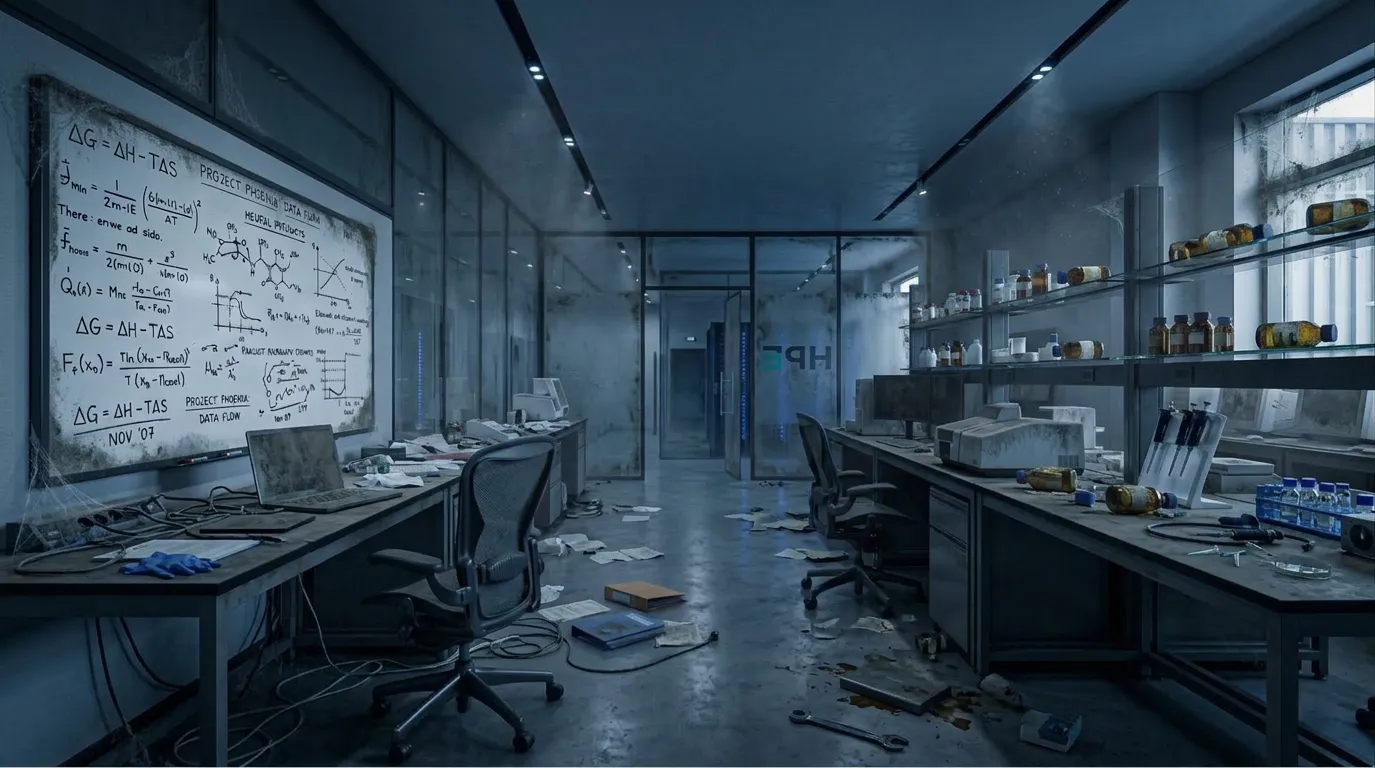
On the whiteboard behind me, a diagram of the MISChip architecture. A dozen instructions. Sixty-five megahertz. The most elegant processor design I'd ever seen. We were going to change everything.
The question was simple: What market should we focus on?
My spreadsheets were ready. Market projections. Competitive analysis. Three different financial models. I'd been gathering data for weeks.
Someone finally broke the silence. "Phil? What's the decision?"
I looked around the table. Engineers who had built something remarkable, who needed me to point them in a direction. Any direction.
"I need to think about it more."
The silence stretched. Someone sighed. The meeting ended the way most of our meetings ended that year. Without a decision.
I was thirty years old, and I was the President of TeraPlex, Inc. My first senior executive role. My first time in the big chair.
I was also destroying the company with every meeting that ended exactly like this one.
How I Got Here
A few years earlier, I was under a tech bench in Naperville. Sleeping on a camping pad. Debugging fingerprint algorithms at 3 AM.
ThumbScan was dying. Three years of my life poured into developing biometric security systems, working with the NSA, building technology that would eventually help catch criminals. All of it bleeding cash. The commercial market didn't exist yet. We were ten years too early.
Advanced Analytics Corporation had originated the ThumbScan concept and secured the venture capital funding to launch the business. Now they offered me the presidency of TeraPlex, their supercomputer subsidiary.
A lifeline.
The company was building a revolutionary microprocessor. MISC, or Minimum Instruction Set Computing. Instead of hundreds of complex instructions like traditional processors, we stripped it down to about a dozen. Atomic operations. Clean. Fast. Running at 65 MHz when competitors were at 25.
The founders were affiliated with the University of Illinois. Brilliant minds. People I knew and trusted. The technology was solid.
What I didn't know was how to be a president.
At ThumbScan, I was the technology guy. Building algorithms. Solving problems with code. When Peter Dignan needed a fingerprint matching system that worked, BlitzMatch delivered. One hundred eighty bytes of signature extraction that outperformed systems costing thirty times more.
Probabilistic thinking at a mathematical level made sense to me. Type 1 errors. Type 2 errors. Confidence intervals. Quantifying uncertainty in algorithms felt natural.
But sitting in that boardroom? Making decisions with money and people's jobs on the line? Explaining myself to a board of directors I barely understood? Facing angel investors who expected returns?
That was a different kind of uncertainty. And I had no framework for it.
The Paralysis
Every decision felt irreversible.
The options spread before us like a buffet where everything looked good and choosing wrong meant starvation. Government and academic research, where the budgets were bigger but the sales cycles were glacial. The commercial market, where the volume was higher but we'd be competing against giants. We could be a component supplier to systems companies, or build our own computers to capture the whole margin. We could ride the rapidly expanding supercomputer wave, where our massively parallel architecture could shine.
Lots of choices. Too many choices.
The story I told myself? I was being thorough. Responsible. Diligent.
The reality was I was treating every decision like it was permanent. Like choosing wrong meant instant collapse. Like 100% certainty was required before I could move.
Most of those decisions were two-way doors. We could have targeted government research, learned from early customers, expanded from there. We could have picked one systems company partnership, used it as a proof point. We could have chosen something and adjusted.
But in my head, every door was one-way. Every choice was final. Every mistake would prove I didn't belong in that chair.
Impostor syndrome doesn't announce itself. It doesn't walk into the room and introduce itself so you can deal with it directly. It whispers. And the whispers sound like wisdom.
You're not smart enough for this.
You don't actually know what you're doing.
Everyone else in this room sees through you.
If you make a mistake, they'll know you're a fraud.
You need to be certain. Every decision must be perfect. More data. Study the options longer. Schedule another meeting.
The whispers feel like prudence. Like careful leadership. Like the responsible thing to do.
They're not. They're fear dressed up in a suit.
So the waiting continued. And the company waited with me.
The Ego That Made It Worse
We were getting incredible press. BusinessWeek ran a major story on us. Technology journalists were fascinated by what we were building. A processor that could run MS-DOS software five to six times faster than an 80386, using an architecture so simple it seemed impossible.
We started believing our own headlines.
TeraPlex wasn't just a startup. We were positioned as supercomputer technology that would outperform any CISC processor like Intel's 80386, any RISC processor like HP's PA-RISC. We were the ones who would take over everything.
Talk about ego.
The press coverage fed a dangerous delusion: wait for the market to come to us. See which customers show up most enthusiastically and let that drive the focus.
Why make a hard choice when clearly everyone would want what we had?
Board meetings became predictable. I'd present the options. Walk through the analysis. Show the projections. The board would ask questions. I'd promise to research them. We'd schedule another meeting.
The chairman, a patient man who'd led our small group of angel investors, finally asked the question that should have woken me up.
"What specifically would change your decision?"
I had no answer. Nothing would change the decision. Looking back, it was complete abdication of leadership disguised as being careful.
The Death of a Thousand Postponements
TeraPlex didn't die in a dramatic explosion. It died in conference rooms. In "let me think about it" and "we need more data" and "schedule another meeting."
Every delayed decision was a delayed opportunity. Potential partners moved on. Engineers who wanted to join us took other offers. Market windows opened and closed while we were still analyzing whether to walk through them.
By late 1990, we were in serious trouble. Not because the technology failed. The MISChip worked beautifully. Not because the market disappeared. The concept would prove itself eventually, just not with us.
Decisions didn't happen fast enough to matter.
Without focus, we never built customer relationships, never built a sales pipeline, never built a market position that could sustain us. By the time I finally accepted we needed to do something, only one option remained: licensing intellectual property to semiconductor companies.
I got a deal done with Atmel. The technology would live on in their chips. But it wasn't a company anymore. It was a salvage operation.
All that innovation meant nothing because we couldn't decide what to do with it.
The End
March 1991. TeraPlex shut down.
The board meeting was short. The numbers were clear. Out of runway, out of options, out of time.
TeraPlex didn't go down alone. It took Advanced Analytics Corporation, the parent company, with it. Two companies. Gone.
Fired as President. Cleaned out my desk. Drove home.
Then seven months unemployed.
Seven months replaying every decision not made. Every meeting that ended without action. Every "I need to think about it" that really meant "I'm afraid to be wrong."
Seven months calling everyone in the industry, explaining what happened, asking if anyone knew of anything.
Seven months while my wife held things together.
The Resurrection
The next job didn't come from a recruiter or a networking event or an impressive interview where failures got spun into growth opportunities.
It came from someone at my church who took pity on me.
He went to bat with his company. Talked them into taking a chance on a guy who'd just bankrupted not one but two companies. The role was a return to technology management. Pure execution. No big chair. No board meetings. No strategic decisions.
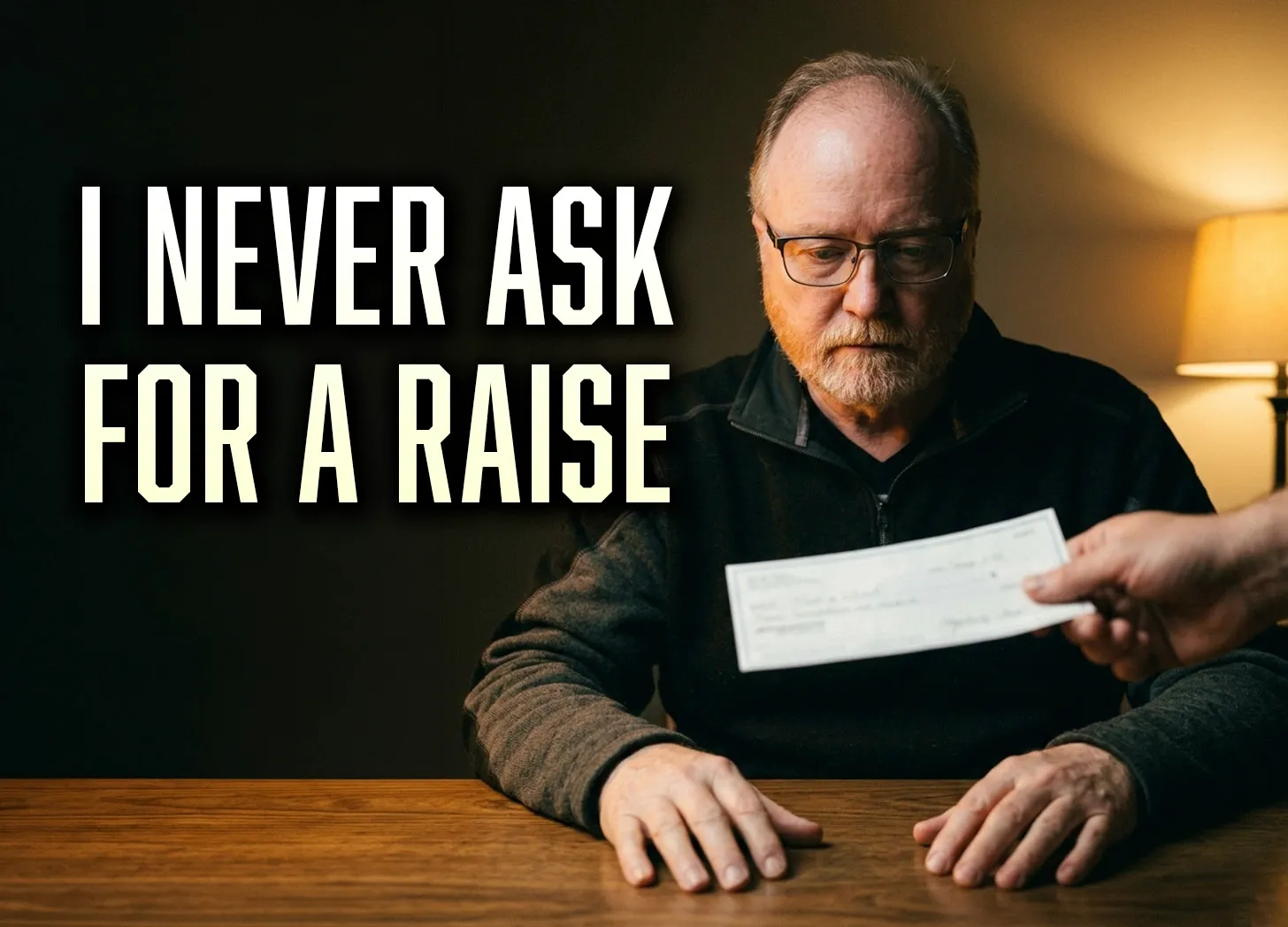
Salary: 30% less than before. No equity.
I took it in a heartbeat.
Some people might see that as a step backward. I saw it as proof that failure isn't the end of the story. Someone believed in me when the evidence said they shouldn't. I wasn't going to waste that.
What the Wreckage Taught Me
The cost of not deciding is almost always worse than the cost of deciding wrong. Failure teaches that. Success never does.
Most decisions are reversible. Walk through the door, look around, and if you don't like it, walk back out. The paralysis at TeraPlex, treating every choice like a one-way door, was the real mistake. Not any individual decision that might have been wrong.
There's a point where gathering more information stops helping and starts hurting. Probably around 40-70% of what you'd ideally want. Past that point, you're not preparing. You're hiding. And everyone can see it except you.
Focus matters. You cannot be everything to everyone, and you cannot wait for the market to tell you who you are. Pick a customer. Pick a problem. Pick a direction. Adjust later, but drifting indefinitely is not an option.
That discomfort you feel when you don't have enough information but you have to decide anyway? That's not a warning sign. That's exactly what good decision-making feels like.
If deciding feels completely comfortable, you've probably waited too long.
Dinner in Texas
A few years back, my wife and I were in Texas. We'd arranged dinner with one of the former interns from TeraPlex.
His girlfriend back then, now his wife, had been a student and babysitter for our kids during the Champaign years. She was the one who approached me about getting her boyfriend an internship. He was a graduate student working on the MISC architecture. They got married soon after she graduated nursing school.
Decades later, we sat across the table from them. Their own kids were about to head off to college.
He became a software engineer. She became a nurse.
The realization hit me mid-conversation. Exactly like my wife and me. When we were dating, she got me my internship at Anchor Industries. Software engineer. Nurse.
Two couples. Same pattern. Same origin story.
And both marriages survived TeraPlex.
Between Advanced Analytics and TeraPlex, about a dozen employees lost their jobs when we went under. A handful of university interns. Their spouses and kids. Nine investors who believed in what we were building and looked to me to turn their confidence into returns.
For seven months, that failure felt like the end of everything. The weight of it. The shame. The certainty that I had permanently damaged people's lives.
But there we were. Decades later. Sharing a meal. Telling old stories. Watching their kids grow up the way ours had grown up.
The catastrophe I replayed for seven months had become a dinner story.
Failure is not the disaster we make it out to be in the moment. It's education. Expensive, painful, humiliating education. But education.
Relationships survived. Careers got rebuilt. Life went on.
It just took thirty years and a dinner in Texas to finally see it.
On Weds, watch the companion episode: Episode 10: How to Stop Overthinking Your Decisions reveals the frameworks I wish I'd known in that Champaign conference room, including the Two-Door Framework for knowing which decisions deserve serious deliberation, the 40-70 Rule used by military leaders and executives, and four tests to distinguish productive research from hiding behind information.
Studio Notes reveals the real stories behind innovation successes and failures. The human costs, political battles, and personal consequences that never make it into official narratives. Subscribe for the messy reality behind the lessons.