
Innovating with Nanobots: What You Need to Know

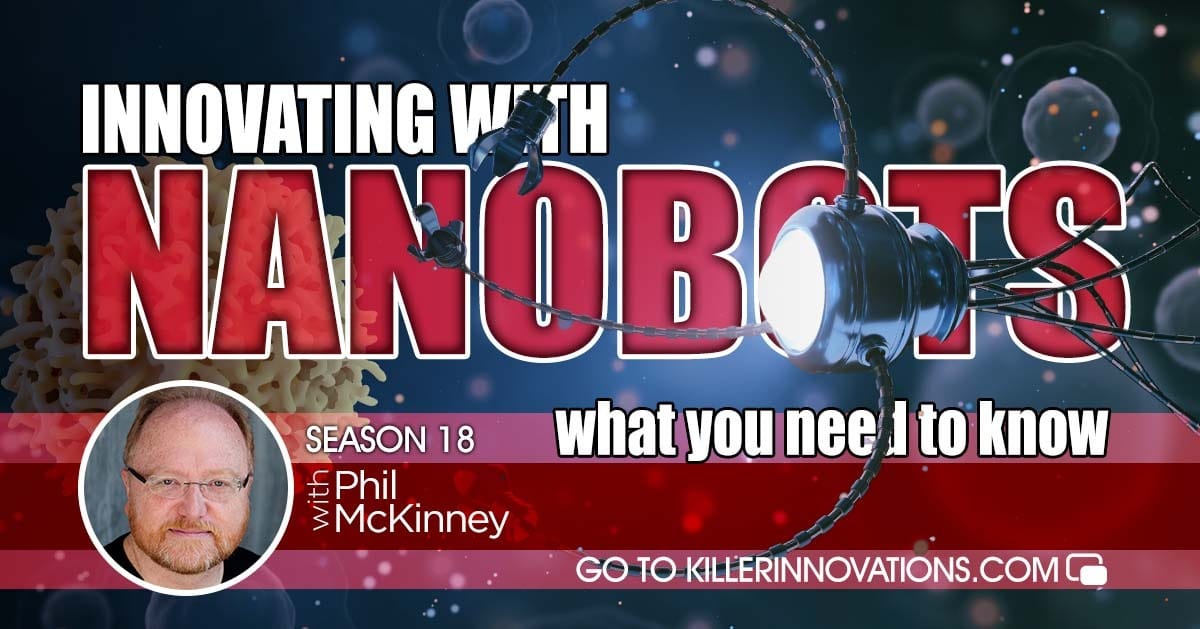
During the Cold War, Nobel Prize winner Richard Feynman investigated the possibility of science on a microscopic scale. He wanted to create machines that could assemble molecules atom by atom. While this sounds like science fiction, the "nanoscale" exists. Nanobots exist. Nanotechnology is growing rapidly, and I believe its impact will be significant.
The Nanoscale
In 2016, IBM researchers announced they had created the world's smallest motor, just 1x1x4 nanometers in size. A nanometer is one-millionth of a meter. The motor is made of a single carbon nanotube, spinning at up to 60,000 rpm. The nanobot technology trend focuses on making these tiny machines fast, strong, and precise. While IBM's motor is not yet practical for real-world applications, it shows how far nanotechnology has come.
7 Use Cases for Nanoscale Robots
1. Cancer treatment
Nanobots can help in the early diagnosis of cancer cells and can destroy them.
2. Brain-computer interface
Nanobots could read electrical signals in the brain and translate them into commands for a computer.
3. Surgical procedures
Nanobots can help improve the accuracy of surgery and reduce healing time, risk of infection, costs, etc.
4. Drug delivery
Nanobots can target cells or tissues to deliver drugs with more precision.
5. Environmental cleanup
Nanobots can aid in the environmental cleanup of spills and other disasters by targeting pollutants.
6. Manufacturing
Nanobots can be used in manufacturing to create small, intricate parts or products.
7. Computing
Nanobots can create ultra-fast processors that store more data.
The Future of Nanobots
Successful innovation with nanobots can improve the efficiency of many industries and create new ones altogether. Government organizations like the National Science Foundation (NSF) invest in nanotechnology research for improved energy sources, materials, electronics, etc.
The global market growth for nanorobotics is from $6 billion in 2020 to $14.3 billion by 2028. The secondary economic impact of nanorobotics on industries that adopt them is a projected $3.1 trillion by 2035. Because of the competitive advantage nanobots can bring, leaders should consider how they leverage them. This feat can be challenging to do on your own, which is why many companies turn to an innovation agency for help in innovation scouting.
To know more about nanotechnology, listen to this week's show:
Innovating with Nanobots: What You Need to Know.
[irp posts="4392" name="Subscribe to Podcast"]