HP Won Innovation Awards. Then Killed What Made It True.
Three years on the Most Innovative list. Thirteen years absent. Here's what changed—and what it proves about causation.

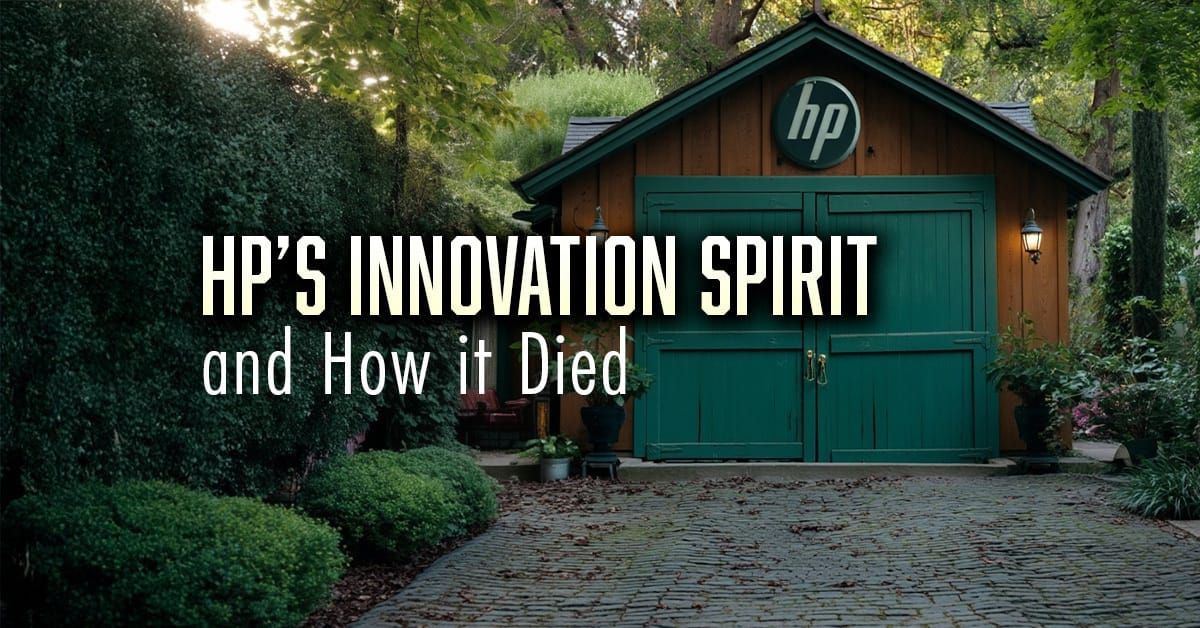
I was about to make a multimillion-dollar mistake.
It was 2007. Three VPs had sent me the same proposal: HP should implement 20% time like Google. Give engineers one day a week for passion projects. Innovation would follow. The logic was seductive, the precedent was proven, and I was ready to approve it.
Then Chuck House and I were chatting.
“Before you do anything,” Chuck said, “you need to talk to Art.”
Chuck and I served together on the Board of Directors for the Computer History Museum. He’d worked at HP for decades, reporting directly to Dave Packard. We’d share Bill and Dave stories, which I loved. But I’d never heard him speak with this kind of urgency.
“Art Fong. He was there at the beginning. Employee number nine. If you want to understand what actually drives innovation at HP—not what you think drives it—you need to hear his story.”
I almost said I was too busy. I had a company to help run, strategies to formulate, policies to implement.
Thank God I didn’t.
The Photo
Art Fong’s living room in Palo Alto. Cal football on the TV. He was in his eighties, still sharp. He could weave a Bill and Dave story into any conversation, no matter the subject. Chuck had prepped me: “Art’s not just history—he’s living proof of what made HP work.”
I explained why I was there. The 20% time proposal. Google’s success with it. How it seemed like exactly what HP needed.
Art smiled. Not the warm smile of agreement. The knowing smile of someone who’s seen this movie before.
He pulled out a photograph in a protective sleeve. Black and white. 1950s.
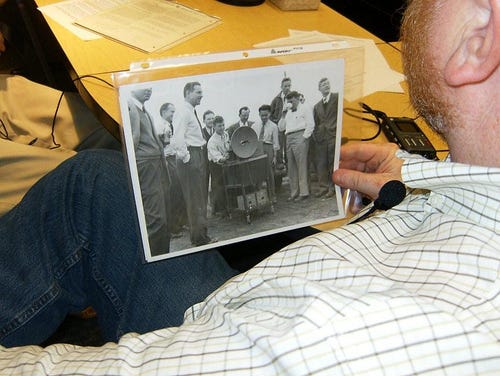
A young Art standing beside a tower of radar equipment nearly as tall as he was. To the right: Bill Hewlett, taking a sip of coffee.
“This is when they thought they’d figured it out,” Art said.
I looked closer. “What am I seeing?”
“Friday afternoon. I’m tracking the speed of Dave Packard’s pickup truck using military radar I built from surplus X-band gear I found in San Francisco. Bill’s watching. Everyone thought this proved the concept.”
“Proved what concept?”
“20% time,” Art said. “HP invented it. In the 1950s. Decades before Google.”
I felt my stomach drop. “Wait—what?”
The Error Revealed
Art told me the story methodically, the way an engineer explains a design flaw.
HP saw Art and a few other engineers innovating during Friday afternoons—after “official work” ended at noon. Art would be up in San Francisco at surplus stores, getting ideas, building prototypes. Some of these projects became breakthrough products.
HP leadership observed a pattern:
Friday afternoon projects → Successful innovations
So they instituted a policy: Everyone gets Friday afternoons for side projects. Use the model shop. Use the parts. Innovate.
“It made perfect sense,” I said. “If side projects produce innovations—”
“Then giving everyone side project time produces more innovations,” Art finished. “That’s exactly what Bill and Dave thought.”
“But it didn’t work?”
“No.” Art said it simply, matter-of-factly. “That’s what I’m trying to tell you. HP invented 20% time based on faulty reasoning. We saw correlation and assumed causation. Then we quietly abandoned it when the results didn’t follow.”
“What went wrong?” I asked.
Art shrugged. “People would sit around on Friday afternoons not knowing what to do. Or they’d just work on their regular projects anyway. The ones who were going to innovate—like me—were already doing it. The mandate didn’t change behavior. It just created a bureaucratic checkbox.”
He paused. “Worse, it made innovation feel like an obligation instead of an opportunity. You don’t mandate passion.”
I sat back. “So Google—”
“Copied 3M’s 15% time, who unknowingly copied our abandoned policy. And now Google’s quietly phased it out too. Most people in the Valley don’t even know they stopped doing it. But they did. For the same reason we did.”
“Because it doesn’t work.”
“Because it was never what actually caused the innovation in the first place.”
What Actually Worked
I was still processing what Art had told me. HP invented 20% time. Based on a causation error. Abandoned it. Google repeated the same mistake.
“Okay,” I said, trying to understand. “But if structured project time didn’t cause innovation, what did? Something made HP successful. What was the actual mechanism?”
Art leaned back. “You want to know what caused the innovation? Let me tell you how Bill recruited me.”
He paused, making sure I was following. “This matters because you’re about to make a policy decision. You need to understand what actually works.”
During World War II, Art was working at MIT’s Radiation Laboratory—part of the team developing microwave radar technology that helped win the war. Bill Hewlett was in the military doing radar work. He’d seen some of Art’s creations.
One evening in 1946, Bill showed up at Art’s apartment near the laboratory, still in uniform.
“He’s just a real nice guy,” Art remembered. “Took off his hat, his jacket, his tie, and just sat down like a normal guy.”
Art and his wife lived in a tiny place with their baby daughter, not quite one year old.
“Next thing, Bill picks her up and bounces her around. Just loves kids. We talked shop all evening. One idea building on another. My wife was making dinner—everything was rationed back then, you know. Meat, coffee, gasoline. But Bill stayed late.”
Art looked at me. “Bill didn’t send HR to recruit me. He didn’t have me fill out an application. He came to my apartment near the lab, bounced my baby on his knee, and we talked radar until late into the night. That’s the first thing—personal investment in people.”
I was starting to see it. This wasn’t policy. This was relationship.
“Bill offered me the job that night,” Art continued. “’Art,’ he said, ‘I’d like to have you come join us. We’re just a small company starting, and we want to get into the microwave business.’”
Art gestured around his living room. “But there was a problem. No one would sell me a house in Palo Alto. Discrimination. So you know what Bill and Dave did?”
I shook my head.
“They bought this house from the seller. Then sold it to me.” He let that sink in. “This house. I lived here for 66 years. That’s the second thing—trust so deep they’d put their own names on the line.”
I thought about the 20% time proposals in my inbox. Three VPs asking for a policy. Not one of them talking about trust.
“Let me tell you another story,” Art said. “This one’s about Dave.”
1960s. Art was working late on the 803, a unique piece of equipment. Dave wanted to show it at a sonar convention in San Diego, and Art was rushing to get data. He’d been staying late for a couple nights.
About 6:30 PM, Dave Packard walked in. He’d just come back from a meeting in San Francisco.
“How’s it going?” Dave sat down next to Art, looked at his notebook. “Looks pretty good. I’ll tell you what—I’ll write it down while you take the readings.”
Art demonstrated for me, mimicking writing in a lab notebook. “The president of the company became my lab tech.”
Half an hour later, Dave asked: “You had dinner yet?”
“No, not yet.”
“You’re going home. Take your time, get something to eat, and come back.”
Art lived two miles away. When he returned, Dave was still there, taking data, writing it down.
“Dave, you go home, get something to eat,” Art told him.
“No, no, I’m not hungry. I had some snacks in San Francisco.”
They worked side by side until almost midnight. Two days later, Dave carried the equipment down to San Diego himself.
“That’s the third thing,” Art said. “Leaders who didn’t just talk about the work—they did the work. Dave Packard staying until midnight to help me meet a deadline. That’s what created the culture.”
I was scribbling notes now, but Art wasn’t done.
“Bill and Dave spent long hours in the labs when we had about ten engineers. They’d sit with each one, understand what they were working on, what the problems were. They’d make suggestions. ‘Have you tried this?’ We knew they cared. We loved it.”
“Let me tell you about the tool room,” Art said. “This was later, maybe the ‘60s. Some manager decided to padlock the storeroom where we kept tools and parts. Probably thought he was being responsible—keeping track of inventory, you know.”
Art smiled. “Bill discovered it on a weekend. Came back with bolt cutters. Cut the lock right off. Left a note on the door, signed it. ‘Never lock this again.’”
“The message was clear,” Art continued. “At HP, we trust people. You need tools? You need parts? Take them. Use them. That’s how innovation happens—when you have access and we trust you to use it responsibly.”
He looked at me. “That’s the fourth thing—removing barriers, not creating them.”
Art looked directly at me. “So here’s what I’m telling you, Phil. Bill bouncing my baby on his knee—that caused innovation. Buying me a house when discrimination prevented the sale—that caused innovation. Dave staying until midnight to write in my lab notebook—that caused innovation. Bill cutting the lock off the tool room when some manager tried to restrict access—that caused innovation.”
He paused.
“Friday afternoon project time? That was adjacent to innovation. It was correlated with innovation. But it didn’t cause innovation.”
The distinction crystallized for me. “You would have innovated anyway.”
“Exactly. Whether there was official ‘20% time’ or not, I acted the same before and after. The policy didn’t create me. If anything, I created the illusion that the policy worked.”
I thought about my tenure at HP. How many times had I focused on policy when I should have been focused on people? How many times had I mistaken correlation for causation?
“By the 1960s,” Art continued, “HP had quietly shifted away from mandated Friday project time. Not officially—we just stopped emphasizing it. We established HP Labs to challenge people to work on ideas not directly tied to roadmaps. But it wasn’t structured time blocks. It was trust and access.”
He smiled. “If you had an idea, you pursued it. You used whatever you needed. That was the policy: we trust you.”
 Phil McKinney
The Pattern I Almost Repeated
On the drive back from Palo Alto, I started seeing it everywhere.
We see Google succeed. We see they have 20% time. We assume causation.
But Google succeeded because of brilliant people, strong culture, trust, access to resources, leadership that cared deeply about the work. The 20% time was adjacent to success—not causal to it.
Just like Art’s Friday afternoons.
I thought about all the companies right now implementing “20% time” to copy Google. Google had quietly phased it out. They were copying 3M. 3M had unknowingly copied HP. And HP had abandoned it 50 years ago when they realized their causation error.
The pattern keeps repeating because we keep confusing correlation with causation.
What I Did Instead
But I couldn’t shake what Art had told me.
HP was in trouble. Not financially—Mark Hurd had stabilized that. But culturally, we were coming apart.
We’d just lived through the Carly Fiorina years. Chaos. Major acquisitions—Compaq, DEC, Tandem, and others—all mashed together. Each merger brought a different culture, different values, different ways of working. We’d integrated them—which really meant we’d diluted what HP used to be until nobody could remember what made us special in the first place.
Then Carly was removed, and the board brought in Mark Hurd. Another outsider. The first two CEOs in HP’s history who hadn’t grown up in the company. Leaders who didn’t understand the culture Bill and Dave had built.
More concerning: they had no interest in learning it.
I realized, sitting in my office after that day with Art, that I was watching something die. The culture that had made HP extraordinary—the trust, the access, the personal investment in people—was being lost. Not because anyone was actively destroying it, but because nobody remembered what it was.
Except Art. And a few other old-timers still around.
I made it my mission. If HP was going to re-ignite innovation, it wouldn’t be through copying Google’s abandoned policies. It would be by rebuilding the culture Bill and Dave had created.
I started spending Saturday afternoons in Art’s living room. Cal football on TV. Hours of stories. Those became my tutoring sessions. Art was teaching me what HP used to be. What it could be again.
At the next leadership meeting, I didn’t just reject the 20% time proposal. I presented an alternative.
“We’re not implementing 20% time,” I said. “Here’s what we’re doing instead.”
First: We’re going to reconnect with our history. I started bringing Art to HP Labs. I’d send a car to his house in Palo Alto, and he’d spend hours in the Building #3 cafeteria with young engineers. Art still carried his original employee badge—number 9—in his wallet. He’d tell them about Bill bouncing his baby on his knee. About Dave staying until midnight to write in his lab notebook. About the tool room lock.
These weren’t nostalgia sessions. They were cultural transmission. Most of these engineers had joined during or after the acquisitions. They’d never known what HP was. They thought HP was the chaos, the mergers, the confusion.
Art showed them something different. He showed them there were real people behind the “H” and “P” in our name. People who’d built something extraordinary based on trust.
I remember one session. Art in the cafeteria, surrounded by young engineers. One of them asked, “How did you come up with your best ideas?”
Art thought for a moment. “I was usually trying to solve a problem nobody told me to solve. Dave wanted to show the 803 in San Diego, so I stayed late. Bill needed better microwave test equipment, so I bought surplus parts and built something. The ideas came from caring about the work, not from having free time.”
An engineer raised his hand. “But don’t we need permission to do that now?”
The question hung in the air. Art looked at me. That’s when I realized how far we’d fallen. These engineers were asking permission to care.
I didn’t stop with Art. I started finding other HP retirees, people who’d lived the culture. I brought them back. I introduced them to Mark Hurd and the leadership team. Some of those meetings were uncomfortable. Art had strong opinions, and he wasn’t shy about sharing them. “Here’s what you need to focus on,” he’d tell Mark.
But that was the point. These weren’t consultants giving generic advice. These were people who’d built the company telling us what we’d lost.
Second: We established the Innovation Program Office. Not as “20% time,” but as an “off the radar” source of funding for raw ideas—things too early, too weird, too risky for the normal processes that had calcified during the acquisition years. Small amounts. Fast decisions. No bureaucracy.
We weren’t mandating when people could innovate. We were removing the barriers that years of integration and outside management had created.
Not everyone bought it. The VP of Engineering cornered me after the meeting. “You’re letting sentimentality cloud your judgment,” he said. “Google’s proving this works right now. We don’t need history lessons from retirees—we need results.”
He wasn’t entirely wrong to be skeptical. I was asking them to trust me that the absence of a policy was better than having one. In a company drowning in process, that sounded like chaos.
The Innovation Program Office took heat every quarter. We funded ideas that went nowhere. Raw ideas fail—that’s the point. But I had to defend those failures to the CFO while watching eyes roll around the table. “Another quarter, another batch of failed experiments,” one executive said. “When do we see returns?”
I thought about Art. About Dave Packard staying until midnight not because it was guaranteed to work, but because it was worth trying. About Bill cutting the lock off the tool room before anyone could prove it was the right call.
Three years later, Fast Company named HP one of the 50 Most Innovative Companies. Then they did it again the next year. And the year after that. Three years in a row. They specifically credited the Innovation Program Office, the new products it created, and the culture of innovation we were rebuilding at HP.
I wish I could say that vindicated the approach. That everyone saw it worked.
I retired in December 2011. Shortly after, HP killed the Innovation Program Office.
HP hasn’t appeared on Fast Company’s Most Innovative Companies list since. Thirteen years and counting. Neither has HPE after the split.
Third: I took Art’s lesson about the tool room lock as my operating principle. My job wasn’t to manage innovation. My job was to cut the locks off wherever they’d appeared.
Trust people. Remove barriers. Get out of the way.
It was an uphill battle. The momentum of the company was in the other direction—more process, more control, more “best practices” imported from whatever companies our outside CEOs had worked at before. But I had Art. And I had the stories. And slowly, in pockets of the company, we started rebuilding what had been lost.
The Real History
Art passed away in 2012, in that same house in Palo Alto that Bill and Dave had bought for him 66 years earlier.
He worried until the end that the real history of Silicon Valley was being lost. “Everyone gets the history wrong,” he’d say. “They’re missing the opportunity to learn from HP’s experience—the successes and the failures.”
He was right to worry. By the time Art died, HP had endured years of chaos—the acquisitions, the cultural collisions, the outside CEOs who didn’t understand what Bill and Dave had built. The culture he’d helped create was already fading. Three years after his death, HP would split into two companies. The final fracture of what had once been whole.
But here’s what really haunts me: HP invented the policy, learned it didn’t work, and abandoned it. Then, decades later, when HP was in crisis and desperately needed to re-ignite innovation, we almost repeated the same mistake. We’d forgotten our own history.
That’s the real cost of losing culture. You don’t just lose what made you great. You lose the knowledge of what doesn’t work. You’re condemned to repeat your own mistakes because nobody remembers making them the first time.
Wikipedia still says Google invented 20% time. Business schools still teach it as gospel. Companies still implement it, not knowing they’re copying a policy that’s been quietly abandoned twice—by the company they’re copying and by the company that invented it.
The causation error compounds with each repetition, but it’s worse than that. The cultural amnesia means each generation has to learn the same lessons—if they’re lucky enough to find someone like Art who remembers.
You can’t mandate innovation through policy. You can’t bottle Art’s magic by giving everyone Friday afternoons. You create innovation by showing up at someone’s apartment near their lab in uniform and bouncing their baby on your knee. By sitting down at midnight to write data entries as their lab tech. By buying them a house when discrimination prevents the sale. By cutting locks off tool rooms. By trusting deeply and removing barriers.
Art didn’t innovate because of Friday afternoon policies. Art innovated because Bill saw his genius at MIT’s Radiation Laboratory and built a relationship. Because they trusted him completely. Because he had unrestricted access to resources. Because Dave Packard would stay until midnight helping him meet deadlines.
The photo Art showed me that day—young Art with his radar tower, Bill with his coffee cup—doesn’t prove Friday afternoons cause innovation.
It proves that when you trust brilliant people and remove barriers, magic happens.
And it proves that even geniuses mistake correlation for causation.
And it proves that culture, once lost, is almost impossible to rebuild.
What Are You Missing?
I almost made a multimillion-dollar strategy decision based on a causation error. If Chuck House hadn’t insisted I talk to Art, I might have implemented a policy that HP had already tried and abandoned, that Google tried and abandoned, that wouldn’t have addressed the real problem.
The systematic process for spotting these errors—before you build your entire innovation strategy around them—is what Episode 3 teaches.
You’ll learn the three criteria that must be present for genuine causation. How to identify confounding variables that create false patterns. Why our brains are wired to see causation where none exists. The step-by-step process for determining what actually causes what.
Because if Bill Hewlett, Dave Packard, and Google’s founders all fell for this causation error, what are you missing right now? What patterns are you seeing that aren’t actually cause and effect? What policies are you about to implement based on correlation, hoping to manufacture outcomes that only come from culture?
Master causal thinking, and you’ll stop wasting time and money on solutions that don’t address the real problem.
Watch Episode 3: How To Master Causal Thinking (released Wednesday) to learn the systematic framework for spotting causation errors before they become strategy.
This is Studio Notes - where I share the real story behind innovation and leadership decisions. Not the sanitized version you read in business books, but what actually happened: the political battles, the mistakes, the uncomfortable truths that never make it into official narratives.
Art taught me that history is worth preserving—especially the failures. Every episode of Thinking Skills 101 has a companion Studio Notes article revealing the messy reality behind the lesson.
 Phil McKinney
Additional Resources:
Art Fong interview on the Killer Innovations Podcast (Aug 2, 2009)
https://killerinnovations.com/interview-with-art-fong/