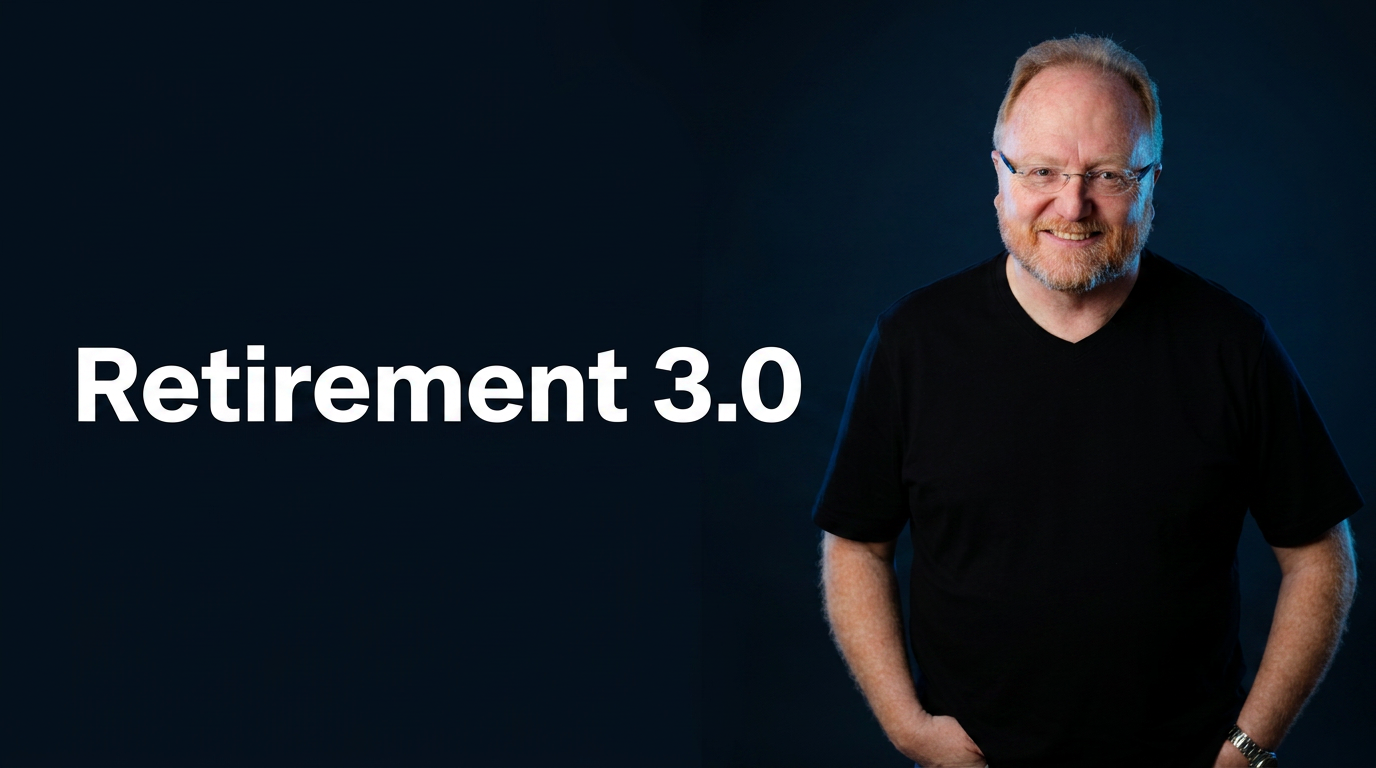
Retirement 3.0
My third retirement is different. On Jan 1, 2027 I retire as CableLabs CEO and hand the reins to Mark Bridges. Why now, and what's next?
Earlier today, CableLabs announced my retirement as President and CEO on January 1, 2027.
If you have followed my career, you know I have done this before. Teligent was the first. Hewlett-Packard was the second. This is number three, so I'm calling it Retirement 3.0.
But this one is different. The other two times, the next role came looking for me. CableLabs called one week after my last day at HP. This time, if that call comes, the answer is no.
How do you top being CTO of Hewlett-Packard (HP) and CEO of CableLabs? You don't.
So why retire now? Because it is time. I never wanted to be the leader who grips the desk and refuses to let go. The best thing you can do for an organization you care about is leave it stronger than you found it and hand it to someone ready to take it further. That is where CableLabs is right now.
This is a two-stage succession plan, built to make the handoff to the next generation of leaders smooth and complete. Good transitions are not single events. They are deliberate, and they take time. CableLabs has run a world-class succession planning process for nearly a decade. Four of the seven members on our executive team advanced through this exact process.
The CEO succession plan centers on Mark Bridges. Mark has been our Chief Technology Officer since 2023 and has been at the heart of our technology strategy for more than a decade. He helped lead our move into cloud-native architectures, network convergence, and AI.
On August 1, Mark takes on the role of President in addition to his work as Chief Technology Officer. From there through the end of the year, Mark and I will work side by side. As he steps further into our Board engagement, I will begin handing off the member and partner relationships I have built over the years, so that by January, they are his. On January 1, 2027, Mark becomes President and CEO, and I retire.
Mark knows this organization, he knows our members, and he knows what it takes to lead at this level. The Board is united behind him. So am I. He is ready.
I will not run through everything we built over the last fourteen years. If you want the numbers and the timeline, CableLabs put them in the announcement, and it is worth a read. Here is the part that matters most to me. None of it happened because of one person. It happened because of the people in that building, the members we serve, and the vendor partners who innovate alongside us as we work to make this industry a leading provider of broadband services. That is what I will miss, and that is what I am proudest of.
So what comes next? Not just yet. Until the end of 2026, I have a company to run and a handoff to get right, and it has my full attention.
After that, my grandkids. I have five of them, and the oldest will be heading off to college in just a few years. I know how fast that clock runs. I want to spend that time impacting their lives, not watching it go by. My wife and grandkids come first.
I also want to take what a career of making the hard calls on innovation has taught me, and pass it on to the next generation of innovators who are going to change all of our lives.
To the members, the Board, and everyone at CableLabs: thank you. Leading this organization has been the greatest privilege of my career. You are the reason I can step away knowing CableLabs is in good hands.
I am not disappearing. You will still find me every week at philmckinney.com and on Youtube. The address does not change.
Phil