Tim Bajarin on Future Innovation Platforms #CES2020

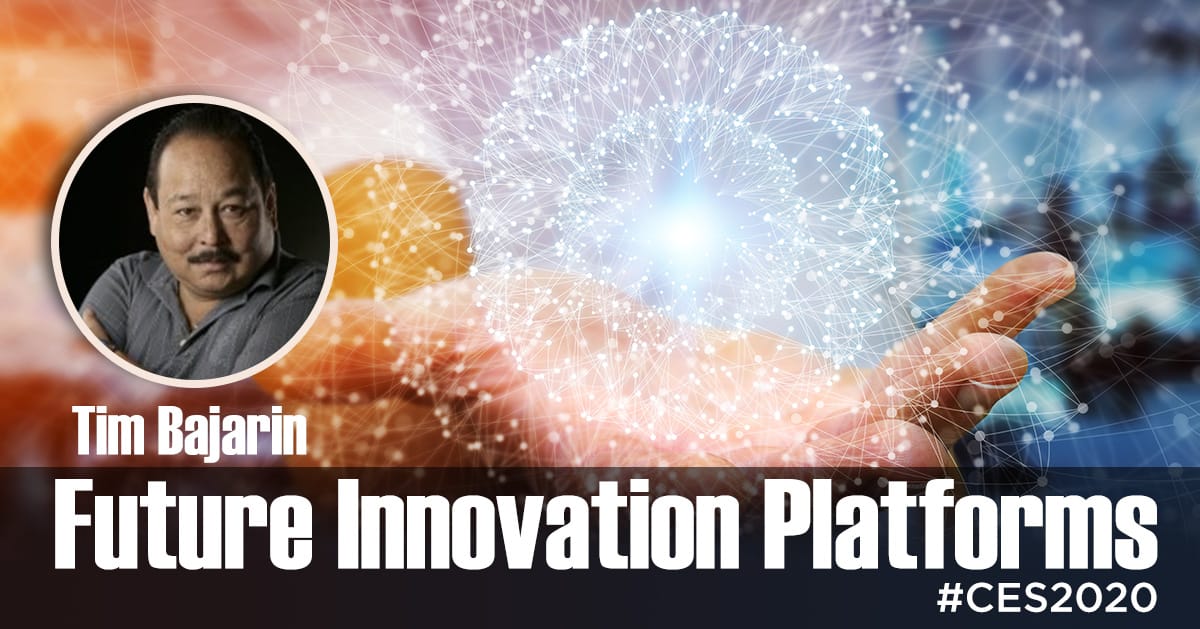
Today’s guest is one of the top technology industry analysts, well known in Silicon Valley and globally. When he talks about your company or products, you hope it is more positive than negative as his word moves the markets. Our guest is here with us at the Consumer Electronics Show (CES), which is his 50th. This week on Killer Innovations, Tim Bajarin joins us to discuss what is real and becoming a future innovation platform.
How’s it Shaping Up
CES has evolved over the years from a heavy focus on video and audio to every product category that touches technology. From cosmetics, toilets to autonomous cars, and smart televisions. We have seen it all say's Phil, who is in his twenty-fifth year at CES. The evolution over these years has generated innovation and technology in our everyday lives that was once a fantasy you saw in movies. Now turned into reality. One area is in transportation and the progression of the vehicle becoming, as one Fortune 500 CEO told Phil, a “Cell Phone on Wheels.” The smart vehicle today is now turning into your entertainment room and productivity station – Transportation As A Platform (TAAP).
The glass on vehicles and your house is transforming into the smart visual platform that keeps you communicating wherever you are. These glass displays today are amazingly more connected, but just now tipping the iceberg of potential. Companies like Corning are doing amazing things by focusing on the smart glass and its unlimited possibilities.
AI Everything
Catch-all term?? When it comes to Artificial Intelligence (AI), it is everywhere, but used as a loose term – for most a feature I need to have and tout. We have AI in our soap. You don’t need to rub soap all over your body, it now finds the dirty spot and rubs it for you. Really what is practical and real AI? It has been around for many decades in different lingo and forms. Now, AI has more market form and will be in anything electronic. You need to understand AI and not just use the term or application loosely. The intelligence aspect of AI has to be applied to more effectively utilize the full potential.
Where is the critical impact on AI that can hurt or help you, it’s ethics. Most organizations are inserting AI into their common language and products; however, the impact is not all that obvious. If you are not thinking of the ethical and various risk impacts, you are just a follower in the buzz word bingo. It's crucial to establish your AI governance. Setting up an AI ethics Board is what is going to keep your risk low and your value high.
Computing will Drive Innovation
AI is one of the advancing technologies that rely on high-performance computing and silicon. However, demand shifts, availability, and advancement can generate problems for the next generation of innovation. Computing power advancement does come with the balancing of the cost versus rapid progression that companies are grappling with today. Impactful innovations and expectations of new products and technologies are reliant on industry players making the right call and investing.
Without the exponential growth of computing power, we will stall in our progression of innovation. IoT, sensors, AI, Cloud, Drones, Autonomous, and all the latest trends will come to a halt unless the dynamics are aligned and balanced from cost, pricing, and R&D for those providing the computing power. The demand is at such a high pace at this stage of technology expansion. It takes a tremendous commitment from the major players such as Intel and AMD. It also makes the PC players keep providing productivity tools. One of which is still the PC. Many think the PC is dead, but that is not reality as it is still the most productive platform.
Will Form Factor Make a Difference
Foldables at CES was a big attraction, as they moved towards mobile devices and displays for entertainment and productivity. Manipulated to the contour you desire, these intelligent displays are starting to gain traction and turning into reality. For the players, it comes down to a component that can give the industry a big boost, a refresh, and generate new channels and opportunities for innovation. Phil was pioneering foldable/bendable displays 10+years back when at HP, and his prediction has taken form. The foldable players are building all the intelligence in a complete screen that bends at will. What does this give the consumer – more straightforward communication, lighter smartphones, increased productivity and creative possibilities beyond the obvious.
About our Guest: Tim Bajarin
Tim Bajarin is one of the most recognized and sought after global technology analysts, futurists, and consultants. His fifty years in Silicon Valley has made him a voice that moves the market.
Been with Creative Strategies since 1981, Tim has served as a consultant to most of the leading hardware and software vendors in the industry (IBM, Apple, Microsoft, Nvidia, AMD, HP, Xerox, Compaq, Dell, AT&T, Microsoft, Polaroid, Lotus, Epson, Qualcomm, Toshiba, and numerous others).
Tim Bajarin is on the technology advisory boards of IBM, Compaq, and Dell. (from Wikipedia)
Let’s connect; I am on LinkedIn, Facebook, Twitter. If we do connect, drop me a note and let me know. The email address is feedback@philmckinney.com, or you can go to PhilMcKinney.com and drop me a note there. If you are looking for innovation support, go to TheInnovators.Network or want to be challenged to develop the next big idea, check out our Disruptive Ideation Workshops. Don’t forget to join our Innovators Community to enjoy more conversations around innovation.
To learn more about what's real and becoming a future innovation platform, listen to this week's show: Tim Bajarin on Future Innovation Platforms #CES2020.
[irp posts="4392" name="Subscribe to Podcast"]