Why I Never Negotiate My Salary
Never asked for a raise. Never negotiated an offer. For 25 years, fear and craft told the same story. Mindjacking at its finest.

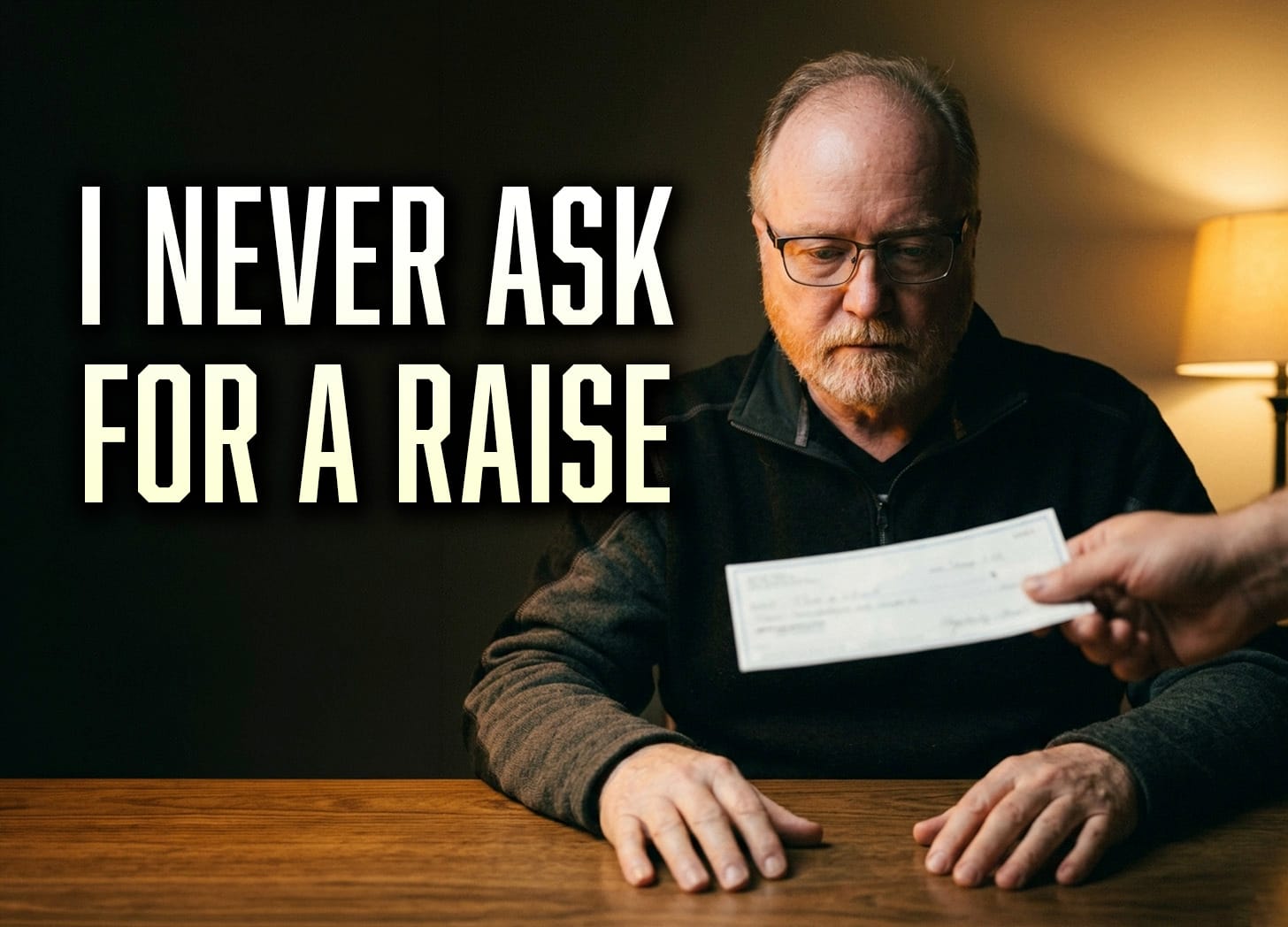
I have never negotiated a salary. Not once. Every job offer I've ever received, including CTO of Hewlett-Packard, I either accepted or declined. I never asked for a raise. I've actually turned down a handful of raises when I didn't think they were appropriate. People hear that and assume I'm being humble. Or strategic. I'm neither. Money was just never the thing driving me. And it took me a long time to figure out what was.
The Secret I Carried for 25 Years
I've talked about this publicly, in my TEDx talk, to a room of two thousand people, so I'm not revealing anything new here. But I'm being more specific about it than I usually am in print. The secret I carried for 25 years, the one that fueled my impostor syndrome, was that I never graduated from college. CTO of Hewlett-Packard. CEO of CableLabs. Innovation speaker on stages around the world. The whole time, convinced I was one background check away from being exposed.
That fear drove me. I worked harder than everyone around me because I believed I had to. Over-preparing for every meeting, taking on every impossible project, volunteering for anything difficult enough that nobody would stop to question my credentials. The fuel wasn't curiosity or vision. It was the kind of terror that whispers you don't belong here, and the only answer I had was to outwork it.
On my résumé, that reads as "relentless work ethic." The honest version is simpler: I was afraid. And fear is a hell of a fuel, until you find out what it's actually burning.
Enjoying this? Studio Notes delivers innovation decision insights to your inbox.
What Broke the Pattern
For years, that was the whole engine. Fear in, work out. Then, in the late '80s, I stumbled into a feeling I didn't have a name for.
I was twenty-eight, working at a company called Thumbscan, and they asked me to evaluate a small firm called Gordian Systems for acquisition. Gordian had one product: a token security device popular with government agencies but no commercial customers. They were about to go under. I spent twenty-four hours looking at what they had and came back with a concept called PCBoot, which took Gordian's government-grade security technology and repackaged it for the business PC market. PC World named it Security Product of the Year at COMDEX in Las Vegas.
The impostor fear didn't disappear. But something else arrived alongside it. A buzz, a rush, an almost physical charge from seeing something I'd built go from concept to shelf to recognition. I hadn't expected that feeling. And once I had it, I wanted more. At the time, I was sure this was something new, something healthier than the fear. I'm less sure now. Maybe it was. Or maybe the need to prove myself just found a more respectable outlet.
Years later, at HP, it came back bigger. The Blackbird gaming PC swept the industry in 2007. PC Gamer's highest score ever. CNET 9.3 out of 10. Fifteen awards total. But none of those reviews are the moment I think about.
The moment was walking into a Best Buy with my family, pointing at a product on the shelf, and saying: "That's mine. I built that. And it kicks ass." Standing there with your kids, pointing at something real you made, knowing it works and that someone chose it off the shelf. I've chased that feeling my entire career. It never made it into a bio or a board meeting. But it's the truest thing I can tell you about why I do the work.
That instinct shaped how I led, too. When I ran HP's innovation teams, the most powerful thing I could do for an engineer wasn't a raise or a title. It was making sure their work would ship. That a real person would hold it. That their neighbor might buy it and love it.
So now I had two engines running: the fear of being exposed and the thrill of building something real. For a long time, I thought they were pulling in the same direction.
Two Stories Wearing the Same Clothes
If I line all of that up honestly (the impostor syndrome, the shipping addiction, the Best Buy moment, the salary I never once negotiated) what story am I actually telling myself about why my work matters?
When I finally wrote it down, the answer surprised me.
It isn't one story. It's two, pretending to be one. The fear story: proving I belong, outworking the doubt, running from exposure. The craft story: the deep satisfaction of building something real that works in someone's hands. For most of my career, I couldn't tell them apart. The fear powered the craft. The craft numbed the fear. They were so tangled together that I genuinely believed they were the same thing.
They're not.
When I started pulling them apart, I realized the fear story had been steering most of it. Projects I took on because they'd prove something, not because they were the right call. Risks I avoided because failure would confirm what the impostor voice had been whispering all along. Opportunities I chased for the validation, not the work.
The craft story makes good decisions. The fear story makes desperate ones. And they wear the same clothes.
That's the answer to the salary question, by the way. I never negotiated because both stories agreed I shouldn't. The fear story said don't draw attention to yourself, don't give them a reason to look closer, just be grateful you're in the room. The craft story said the work is the point, the money was never the thing. Same behavior. Completely different reasons. I couldn't have told you which one was talking.
I talk a lot about mindjacking, how media and algorithms and political narratives capture your thinking by fusing beliefs to your identity. I never considered that I'd been doing it to myself for decades.
The hijacking starts earlier than you think. It starts with the story you tell yourself about why you do the work at all. Get that story wrong, or leave it unexamined, and every decision downstream carries a distortion you can't see.
Your Turn
This question is one of roughly 150 that started in my own journals. For thirty years, I've kept a daily practice of sitting with hard questions about who I am underneath the titles, what I believe about innovation and leadership, and where I'm fooling myself. Most came from moments where I caught myself operating on autopilot and needed to understand why.
Over time, I started using them with the executives and innovation leaders I mentor. They work on other people the same way they work on me: they get past the veneer and into what's actually driving your thinking, your decisions, and your relationship to the work.
What do you tell yourself about why your work matters, and is that story true?
Not the version you've refined for investors or board meetings or your LinkedIn bio. The unpolished version. The reason that would sound less impressive but feel more honest. Write that one down.
That shift, from performing the story to examining it, took me 25 years. Don't wait 25 years to start.
If you want to go deeper with innovation journaling prompts/questions, paid subscribers have early access to the full Philosophy of Innovation Journal, including preview chapters and the chance to shape the final book.
Don't wait. Get your journal out or open your notes app. Start writing before you mindjack yourself.
What do you tell yourself about why your work matters, and is that story true?
Never miss a post from Studio Notes
Get innovation decision insights delivered to your inbox. Free or paid — your choice.