
Apollo 11 Moon Landing: the Innovation that gave NASA and the World the View

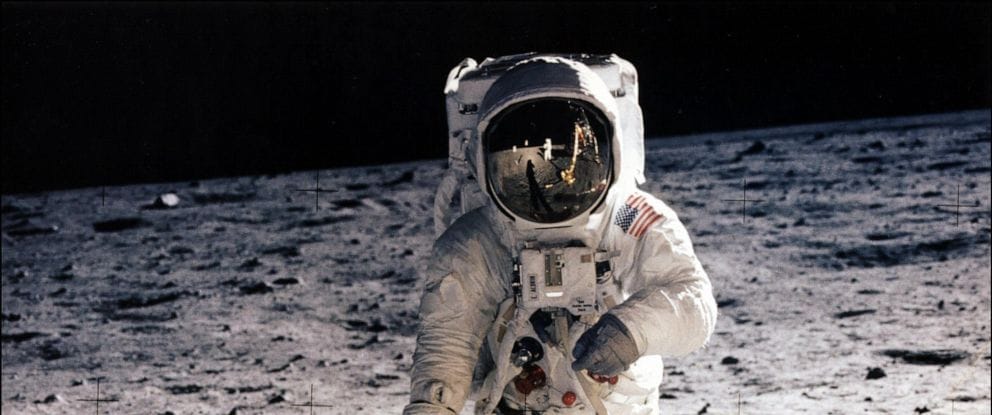
The success of the Apollo 11 mission, the first moon landing, inspires our innovative passions and pursuits. With the 50th Anniversary of Apollo 11 landing on the moon, I’ve been looking back at all of those that impacted and supported an incredible journey. In this episode of Killer Innovations, I had the pleasure of interviewing the inventor of the early display technology that ultimately resulted in the creation of the moon monitor. It was the moon monitor that allowed NASA and the rest of the world to watch Neil Armstrong walk on the moon. An IEEE Fellow for Logic Analysis technology, he also was President of ACM, the world’s largest Computer Science society, and is an ACM Fellow. He holds HPs only Medal of Defiance, awarded by David Packard for “extraordinary contempt and defiance beyond the normal call of engineering duty”. Other awards include Engineer of the Year, Smithsonian Wizard of Computing, Top 50 inventions of the 20th century, CNN top 25 inventions of the past 25 years, Entrepreneuring Honor Roll.
Past in HP
Long before the Apollo 11 success, Chuck House was a physics major at CalTech when he had an interview with HP. He went on to work at HP for 28 years. It was there that he was challenged by the CEOs and directors to be on top of innovation. House says that every year at HP there was an oral exam to review each project. They would ask questions such as:
- What contribution does it make?
- Why is it ahead?
- What is the next step after this?
- What is the science underneath it?
The notion at the company was that you had to be part of a team and the team must understand the science behind what you are working on. House discusses a number of insightful practices in a book he co-authored about his time at HP.
Impactful Successes & Awards
House’s second project at HP, which ultimately led to the moon monitor for NASA, was to figure out how to stabilize a scope screen. The project appeared to have been a waste of time. It even failed the technical evaluation. House was told to cancel the project and remove it from the lab. Instead of abandoning the project, House and his team decided to put the product in production. Within ten months it was finished. Who would have known about this project’s pivotal role in the Apollo 11 mission? The project turned out to be a huge success with sales to many leading companies and NASA. Sixteen years later, in April of 1982, House was awarded a going away gift…the Award of Defiance. House speaks more of this in his HP memoir. House also received the Innovative Applications in Analytics Award (IAAA). Other awards include Engineer of the Year, Smithsonian Wizard of Computing, Top 50 inventions of the 20th century, CNN top 25 inventions of the past 25 years, Entrepreneuring Honor Roll.
Words of Advice
Lastly, I asked House: What advice would you give people who really have a passion to be inventors, to be innovators, to really change the world? What advice would you give them? What should they do to get ready? House believes in a lot of experimentation. What you learn are not formulas, it is a way of thinking. And the way of thinking is a logical, ordered, structure of cause and effect or of relationships that work. And that ordered, structured way of thinking is crucial to being able to work through to a solution. The curiosity and the enthusiasm and the drive is essential to the creativity side. But unless you can take that creativity and harness it so that you can make traction and get something in a resultant way, you are going to be slowed down. You cannot be afraid to try new things and make mistakes.
Giving in to corporate antibodies and giving up at the first signs of failure could seriously limit the out of this world opportunities. Had Chuck giving up when he was told to shelf his project, we may never have seen the Apollo 11 moon landing.
If you have questions or comments on this week’s show, I’d love to hear from you. Do you have failures that lead to success you’d like to share with us? Spark the conversation at The Innovators Community.
To learn more about Chuck House, the inventor that let us see the first step on the moon, listen to this week's show: Apollo 11 Moon Landing: the Innovation that gave NASA and the World the View.