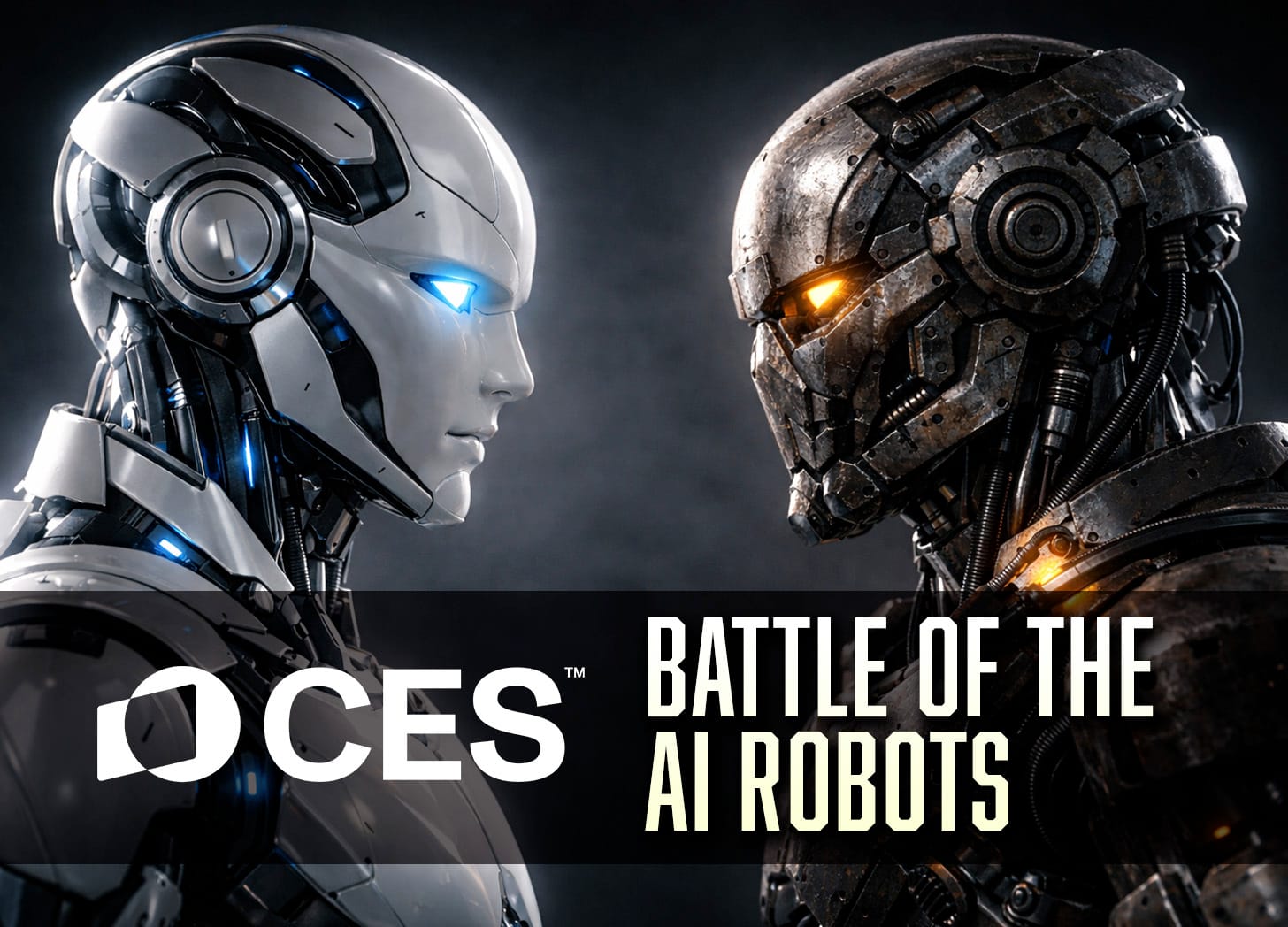
CES 2026: Battle of the AI Robots
From AI toilets to fire trucks that shave seconds off response times, here's what 50,000 steps on the show floor revealed about where tech is headed.

This weeks, I'm in Las Vegas, Nevada, at the annual Consumer Electronics Show 2026.
If you've been following me for long, you know I do this every year. This is 20-plus years I've been coming to the Consumer Electronics Show. Normally, I don't cover tech and new products here (I cover tech over on The Innovators Network) —except for once a year at CES. And it's less about specific companies and what they've announced. You can find that on thousands of channels on YouTube or podcasts.
What I will share with you are the trends—the trends that are emerging—and give you my view and opinion on what they really mean for the innovation space. Are we really innovating, or are we just regurgitating the same thing year after year?
... or listen to the audio podcast at:
The Show's Legacy
First, let's recognize that the Consumer Electronics Show is now in its 59th year. It's a spin-off from the old Chicago Music Show back in the late 1960s. Yes, the late '60s. It's gone through some gyrations over the decades and remains one of the few big shows that survived COVID.
Traditional Consumer Electronics
As usual, one of the big emphases is TVs, displays, home automation, new refrigerators, new washers and dryers—true consumer electronics, things you would find and put into your home. This year was no different. The big manufacturers were here, along with a number of new smaller manufacturers showcasing new TV technologies. Micro LED is the new buzzword bouncing around the show, and there were plenty of displays to see.
I'm a big TV guy, so I definitely had to check that out and see what could be the next TV I put into my house.
The AI and Robotics Takeover
The one thing about this year's show that was just overwhelming was robots and AI. They were everywhere. I couldn't even tell you how many times we saw AI applied to things that make no sense—though some applications were actually pretty smart. But how many AI toilets do you really need at any given show?
On the robotics side, we saw all the familiar ones—like lawn mowers that automatically find your boundaries. One was actually selling the feature that you could program in graphic designs, and it would cut your yard in such a way that the design would appear in your lawn.
We also saw humanoid robots, robots doing backflips, robots dancing with people, dancing hands where the fingers are moving. You could buy just the hands or the arms or the elbows and assemble your own robots. It was pretty crazy.
Then we started seeing the combination of AI and robots—interactive robots where you could stand there, talk with them, point, and they would follow your commands. Pick up this item. Move this item somewhere else. Not programming through some controller, but simply pointing and talking to direct the robot to do what you want.
The Evolution of Electric Vehicles
One thing we've seen in past shows was the big emphasis on electric vehicles. This year, the EV car market—which we've seen slow down—also slowed down here at the show.
However, what we saw in its place were:
Commercial EVs and Hybrids: There was significant attention on commercial use of EVs, particularly hybrid electric vehicles with combustion engines.
Emergency Response Innovation: One exhibit that really impressed me was a fire truck supplied by Dallas Fort Worth Airport. This massive Oshkosh fire truck is a hybrid that uses electric motors for high torque and high acceleration—literally shaving seconds off response time. Given the limited distance on airport property, if there's a disaster or fire requiring quick reaction, the electric motors can accelerate very quickly.
There are only about 15 of these trucks in the world, and something like six or seven are just at Dallas Fort Worth Airport. I spent a fair amount of time with that team. This is a perfect example of smart innovation—innovation that isn't just because something is shiny and new. They thought carefully about how to use it, when to apply the right design, leveraging the benefits of electric while using the combustion engine to run the water pumps.
Electric Motorcycles: The other area with significant EV presence was motorcycles, particularly dirt bikes. When you're going out for the day to have some fun, the low noise of an electric motor means you're not disturbing rural areas with a combustion engine. Another example of good, smart innovation.
Autonomous Vehicles in Commercial Applications
The other big area for the show was autonomous vehicles—not just EVs, but vehicles that can operate themselves, particularly in commercial use like farming.
John Deere has a long history of autonomous farming with very accurate planting using GPS technologies.
Caterpillar had a really interesting exhibit where they were live streaming Caterpillar machines doing autonomous mining from spots all over the world right into the booth. You could see autonomous technology in action.
A lot of people think of autonomous vehicles as something new, with Tesla being the innovator. Just to give you a data point: Caterpillar has offered autonomous vehicles since 1995. That's right—1995. What we all think is new is really the perfect example of what's old becoming new again as progress is made.
Kubota: I'm a big Kubota fan, so I had to stop in there. They had an interesting tractor demo that was using technologies you can use around a small ranch like what I own in northern Colorado, where I'm trying to harvest hay. It's something that fits smaller operations. You don't have to be a big farm to take advantage of these technologies.
Other Notable Technologies
Obviously, there were all the other normal things at the Consumer Electronics Show—thousands and thousands of rows of different types of Bluetooth speakers. Battery technology was a big thing, though a lot of it was just more efficiency from lithium-ion.
There was an interesting booth on what they call paper batteries—literally paper where you print the battery and then roll it up into whatever form factor you want.
The Bottom Line
The show this year was overly dominated by AI—AI everything—and robotics. Those would be the two fundamental themes. That's my walk-away after spending three days and something like 45,000 to 50,000 steps covering all the show floor space.
This is my one time a year that I geek out on all the technologies. If you have questions or your own thoughts—if you were there and saw something different you'd want to share—go ahead and put a comment down below, or pop over to PhilMcKinney.com and post a comment to the post there.
Next week we'll be back, kicking off Part Two of the Thinking 101 series. We did Part One and wrapped that up right before the holidays. Now we're kicking off Part Two—you don't want to miss it.
If you find value in this content, consider becoming a subscriber on Substack for Studio Notes and subscribing to the YouTube channel to watch the Studio Sessions. Your support helps keep the show going and gives you access to behind-the-scenes stories from each episode.