How To Quit Defending Decisions You Know Are Wrong
The reason you can't let go isn't logic. It's that quitting would threaten who you believe you are.


Ron Johnson was one of the most successful retail executives in America. He'd made Target hip. He'd built the Apple Store from nothing into a retail phenomenon. So when J. C. Penney hired him as CEO in 2011, expectations were sky-high.
Johnson moved fast. He killed the coupons. Eliminated the sales events. Redesigned the stores. When his team suggested testing the new pricing strategy in a few locations first, Johnson said five words that explain everything that happened next: "We didn't test at Apple."
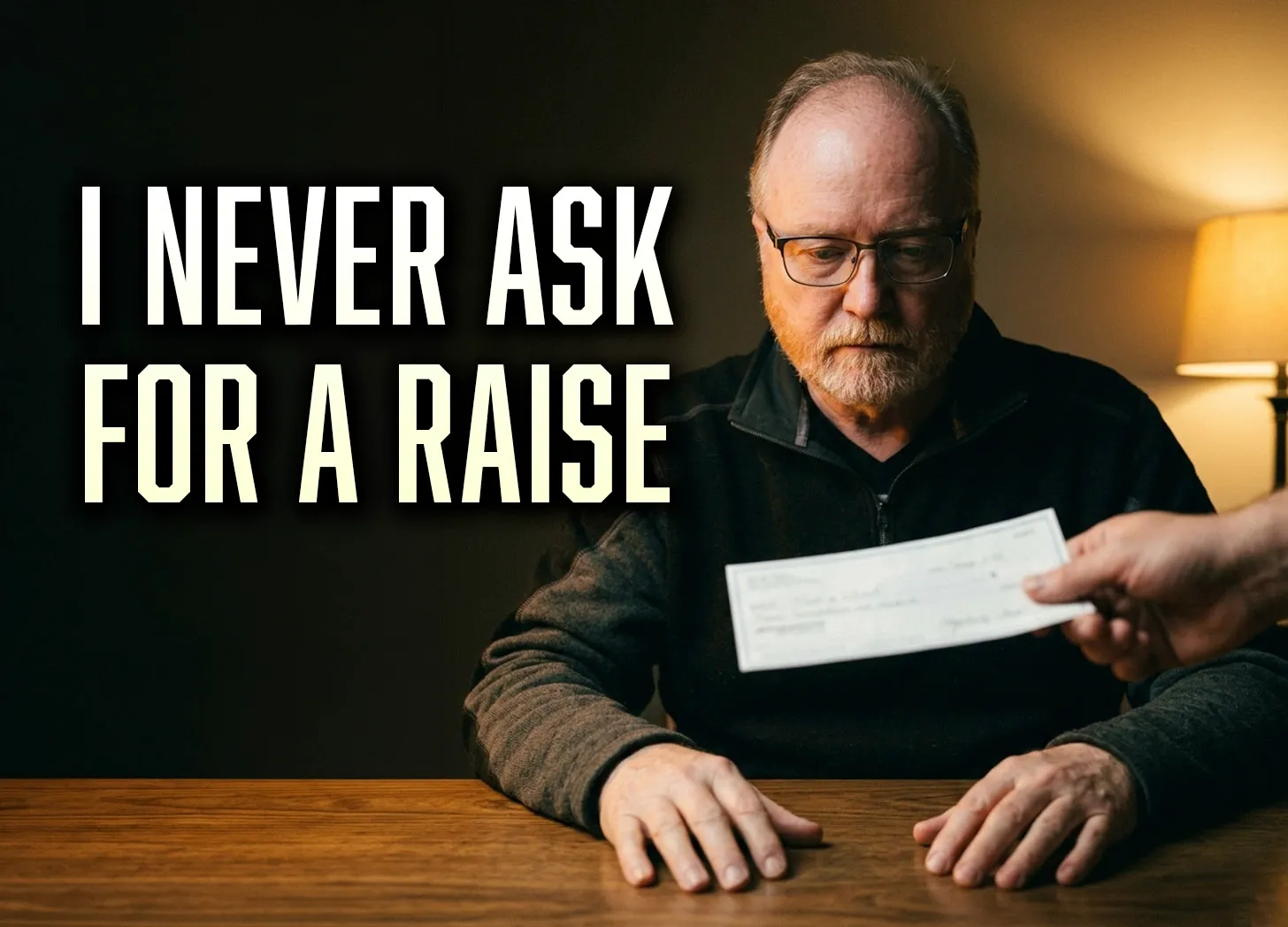
Within seventeen months, sales dropped twenty-five percent. He was fired. And here's the part nobody talks about: Johnson had access to all the data. Every week, the numbers told the same story. Customers were leaving. Revenue was collapsing. The board was getting nervous. He could see it all. He just couldn't act on it. Because changing course would mean he wasn't the visionary who reinvented retail. He wasn't making a business decision anymore. He was protecting who he believed he was.
That's the identity trap. And it doesn't just happen to CEOs.
What if changing your mind didn't have to feel like losing yourself?
Let's get into it.
.. or listen to the podcast at:
Why Identity Bias Looks Like Your Best Qualities
The trap doesn't target bad thinkers. It targets good ones.
Think about the entrepreneur who poured three years and her life savings into a startup. The data says it's failing. The metrics are clear. Her advisors are suggesting it's time to pivot or shut down. She has every analytical tool to evaluate this accurately. And she can't do it. She's plenty smart. The problem is that admitting failure would mean she's "a quitter." And she is not a quitter. That's not who she is.
Johnson wasn't stupid either. He was brilliant. His identity as the retail visionary just happened to make him blind to the one thing that could save his company: the possibility that what worked at Apple wouldn't work at Penney's. He experienced his blindness as conviction. As leadership.
And that's the disguise. Every other thinking error in this series, uncertainty, depletion, time pressure, social pressure, you can feel those happening. You know when you're tired. You know when you're rushed. But identity fusion is invisible from the inside. It disguises itself as your best qualities. The entrepreneur calls it perseverance. Johnson called it vision. The investor who won't sell a losing position? He calls it discipline.
Your ego doesn't announce that it's taking over. It puts on a costume that looks exactly like your strengths.
And your brain? Your brain is in on it.
Enjoying this? Studio Notes delivers innovation decision insights to your inbox.
Why Changing Your Mind Feels Like a Threat
When a belief becomes part of your identity, your brain defends it as it would defend your body.
Challenge that belief, and your brain responds the same way it would to a physical threat. Not metaphorically. The same neural circuits that protect you from danger activate to protect you from being wrong. That's why arguments about strategy or direction can generate so much heat and so little light. You're not debating a position anymore. You're defending territory.
And sometimes you defend it long past the point where the evidence says stop. A project you've poured months into. A strategy you championed. A hire you fought for. The data says cut your losses, but you keep going because walking away would mean all that time, all that effort, all that money was wasted. That's the sunk cost fallacy. And most people think it's about the money or the time. But it's not. Sunk cost is about identity.
Think about that manager who spent eighteen months building a new system. The team knows it's not working. She knows it's not working. But scrapping it doesn't just waste eighteen months of budget. It means her judgment failed. It means she led her team down the wrong road for a year and a half.
"I've invested too much to quit" sounds like a financial calculation. It's not. It's an identity statement. What she's really saying is: "If I quit, I'm the kind of person who wastes eighteen months of people's lives." The sunk cost isn't financial. It's existential. And suddenly you can see that every time you've held on too long, stayed in something past its expiration date, defended something you knew wasn't working, the force holding you there wasn't logic. It was your self-image refusing to absorb the hit.
So how do you loosen the grip once you realize it's there?
Three Warning Signs Your Ego Has Taken the Wheel
Here's what to watch for.
1. Emotional Intensity That Doesn't Match the Stakes
Someone suggests a different approach to a process you built. Not a criticism. Just an alternative. And you feel a flash of heat in your chest. Defensiveness. Maybe irritation. The reaction is way out of proportion to the suggestion. Pay attention to that gap. The intensity isn't about the process. It's about what being wrong would say about you.
2. How You Argue
When someone pushes back on your position, watch what happens. If you find yourself attacking the person instead of engaging their argument, that's identity talking. "You don't understand our industry." "You haven't been doing this as long as I have." The moment you shift from "here's why the evidence supports my position" to "here's why you're not qualified to question it," you've stopped defending a conclusion and started defending yourself. The tell is subtle: you'll feel righteous, not curious.
3. The Evidence Filter
When you're evaluating something objectively, new information can move you in either direction. But when identity is involved, watch what happens. You accept supporting evidence quickly, uncritically, almost with relief. Contradicting evidence? You tear it apart. You find flaws in the methodology. You question the source. You say, "That's just one study." When you're applying completely different standards depending on which direction the evidence points, that's not critical thinking. That's identity protection wearing a lab coat.
How To Loosen the Grip
So what do you do once you recognize the grip?
Early in my career, I championed a technology direction that I was convinced was right. The evidence started coming back that it wasn't working. And I was doing exactly what I just described. Scrutinizing the bad data, embracing the good data, and getting irritated when people questioned me. It wasn't until a colleague looked at me and said, "You're not evaluating this anymore. You're defending it," that I realized my identity had completely hijacked my judgment.
What helped was a shift in language that sounds simple but changes everything.
Stop holding beliefs as part of your identity. Start holding them as a working thesis.
The Reframe
Listen to the difference between these two statements. First: "I believe this company will succeed." Second: "My working thesis is that this company will succeed."
The first version fuses the belief to you. If the company fails, you were wrong. You made a bad bet. The second version builds in the expectation that your thinking will evolve. New data doesn't make you wrong. It makes you better informed.
The Proof
That colleague I mentioned? After that conversation, I started framing every strong opinion as a working thesis in my own head. Not out loud at first. Just internally. And the effect was immediate. I stopped feeling attacked when contradicting data came in. I started treating it as an update instead of a threat. The position I was defending? I reversed it completely. And the thing I was most afraid of — looking like I'd wasted everyone's time — never happened. The team was relieved.
The Practice
Next time you find yourself defending a position with more heat than it deserves, pause and restate it starting with "My working thesis is..." Then ask yourself: "What would I need to see to change this?" If you can't answer that question, if there's literally no evidence that could change your mind, that belief has become part of your identity. And your brain will protect it like one.
The Door
The goal isn't to be wishy-washy. Commit fully to your working thesis. Act on it with confidence. The difference is that you've built a door in the wall, and you've given yourself permission to walk through it if the evidence changes. That door is the difference between updating when you're wrong and doubling down until it costs you.
Why Identity Is the Amplifier
The identity trap doesn't operate alone. It recruits every other force we've covered in Part Two of this series.
Facing uncertainty? Identity says, "You're not the kind of person who hesitates." Someone manufactures a deadline to pressure you? "Leaders are decisive. Act now." The whole room disagrees with your position? Identity whispers "I'm a team player" — or digs in with "I'm the one who sees what others miss."
Identity is the amplifier. It takes every vulnerability from Episodes 10 through 13 and cranks up the volume. That's why we saved it for last. Everything else we've covered in Part Two? Necessary. But not sufficient. Because if you haven't dealt with your identity's grip on your beliefs, those skills have a backdoor that ego walks right through.
And this is exactly what mindjacking exploits. I go much deeper into an article I wrote and in my dedicated mindjacking episode, links below. But the core mechanism is this: mindjacking doesn't just offer you convenient conclusions. It attaches those conclusions to who you are. "People like us think this." "Smart people choose this." Once a belief becomes a badge of identity, you'll convince yourself. No external persuasion required.
From Seeing the Trap to Building the Escape
Here's your challenge this week.
Pick one belief you hold that you've never seriously questioned. Something professional. Your management philosophy. Your investment thesis. Your view on how your industry works. Something you'd describe as "just who I am."
Now find the strongest argument against it. Not a straw man. The real, best case the other side would make.
Sit with it.
See if you can engage with it without your threat response kicking in.
If you can? You've just proven that your thinking is bigger than your identity. And that is the most important skill in this entire series.
If this episode shifted something for you, share it with someone who needs to hear it. And in the comments, tell me: what's a belief you held that you later realized was more about identity than evidence? I think we can all learn from each other on this one.
Episode 15 is about designing your decision environment. Not tips. Systems. Structures that protect your thinking, so willpower becomes optional. Now you can see the trap. Next, we build the escape route.
Make sure you subscribe so you don't miss it.
Never miss a post from Studio Notes
Get innovation decision insights delivered to your inbox. Free or paid — your choice.
Endnotes — Episode 14
How To Quit Defending Decisions You Know Are Wrong
- "He'd made Target hip. He'd built the Apple Store from nothing into a retail phenomenon": Brad Tuttle, "The 5 Big Mistakes That Led to Ron Johnson's Ouster at JC Penney," TIME, April 9, 2013, https://business.time.com/2013/04/09/the-5-big-mistakes-that-led-to-ron-johnsons-ouster-at-jc-penney/. Johnson is credited with creating Target's "cheap chic" brand positioning in the early 2000s and subsequently designing and launching Apple's retail stores, which became the highest-grossing retail outlets per square foot in America.
- "We didn't test at Apple": Tuttle, "The 5 Big Mistakes" (cited in note 1). When Johnson's team proposed testing the new pricing strategy on a limited basis before rolling it out chain-wide, Johnson reportedly shot down the idea with this statement. The quote has been widely attributed in retail industry reporting. See also James Surowiecki, "Why Ron Johnson Is Struggling at J.C. Penney," The New Yorker (The Financial Page), March 25, 2013. The article is archived under The New Yorker's legacy URL format; for a summary of Surowiecki's argument, see Derek Thompson's coverage in The Atlantic and Quartz: https://qz.com/58487/jc-penneys-ceo-wasnt-the-one-who-killed-it.
- "Within seventeen months, sales dropped twenty-five percent. He was fired.": Multiple sources confirm these figures. Sales fell $4.3 billion in 2012 — a 25 percent decline — and same-store sales dropped 31.7 percent in Q4 2012, which analysts called "the worst quarter in all retail history." Johnson was terminated on April 8, 2013, seventeen months after taking over. See Tuttle, "The 5 Big Mistakes" (cited in note 1); Sean Williams, "This May Be the Worst Quarter in Retail History," The Motley Fool, February 28, 2013, https://www.fool.com/investing/general/2013/02/28/this-may-be-the-worst-quarter-in-retail-history.aspx; and the Ron Johnson entry at Wikiwand, which aggregates and cites the primary financial reporting, https://www.wikiwand.com/en/articles/Ron_Johnson_(businessman).
- "When a belief becomes part of your identity, your brain defends it as it would defend your body": Jonas T. Kaplan, Sarah I. Gimbel, and Sam Harris, "Neural Correlates of Maintaining One's Political Beliefs in the Face of Counterevidence," Scientific Reports 6, 39589 (December 23, 2016), https://www.nature.com/articles/srep39589. doi:10.1038/srep39589. Using fMRI on 40 participants with strong political beliefs, the researchers found that challenges to identity-linked beliefs activated the amygdala and insular cortex — brain structures involved in threat detection and emotional processing — while also engaging the Default Mode Network, associated with self-referential thinking. Participants who resisted changing their minds showed the strongest activity in these areas. Lead author Kaplan noted: "The amygdala in particular is known to be especially involved in perceiving threat and anxiety." A 2026 replication by an independent European team confirmed these findings. See Kossowska, M., Szwed, P., Czarnek, G. et al., "Neural Correlates of Belief Change in Political and Non-Political Domains Among Left-Wing Individuals Confronted with Counterarguments," Scientific Reports 16, 4895 (January 8, 2026), https://www.nature.com/articles/s41598-026-35397-6. doi:10.1038/s41598-026-35397-6.
- "That's the sunk cost fallacy": Hal R. Arkes and Catherine Blumer, "The Psychology of Sunk Cost," Organizational Behavior and Human Decision Processes 35, no. 1 (February 1985): 124–140. doi:10.1016/0749-5978(85)90049-4. Available via ScienceDirect: https://doi.org/10.1016/0749-5978(85)90049-4. Arkes and Blumer defined the sunk cost effect as "a greater tendency to continue an endeavor once an investment in money, effort, or time has been made" and demonstrated across multiple experiments that the effect is driven by the desire not to appear wasteful — a fundamentally identity-protective motive rather than a financial calculation.
- "Sunk cost is about identity": The connection between sunk cost escalation and self-concept draws on Barry M. Staw, "Knee-Deep in the Big Muddy: A Study of Escalating Commitment to a Chosen Course of Action," Organizational Behavior and Human Performance 16, no. 1 (1976): 27–44. doi:10.1016/0030-5073(76)90005-2. Available via ScienceDirect: https://doi.org/10.1016/0030-5073(76)90005-2. Staw's central finding was that individuals committed the greatest resources to failing investments when they were personally responsible for the initial decision — an "intra-individual process in which people tend to act in ways to protect their own self-image." This reframes sunk cost escalation as identity protection rather than mere financial irrationality. See also Hal R. Arkes and Catherine Blumer, "The Psychology of Sunk Cost" (cited in note 5), whose findings complement Staw's by emphasizing the role of waste-avoidance norms tied to self-presentation.
- "To consider an alternative view, you would have to consider an alternative version of yourself": Jonas T. Kaplan, quoted in Emily Gersema, "Hardwired: The Brain's Circuitry for Political Belief," USC Press Room, December 23, 2016, https://pressroom.usc.edu/hardwired-the-brains-circuitry-for-political-belief/. This quote from the lead author of the fMRI study (cited in note 4) captures the identity-belief fusion mechanism described throughout this episode. Kaplan added: "Political beliefs are like religious beliefs in the respect that both are part of who you are and important for the social circle to which you belong."