Shell Had Six Years to Prepare. I Had Four Months.
Outstanding leaders under pressure aren't making great decisions. They're executing decisions they already made. The difference is preparation. And most leaders skip it.


I woke up to a text from someone still inside HP. Three words: “Enrique is leaving.”
Within minutes, my phone started lighting up. Current employees. Retirees. People I hadn’t heard from in years. The messages had a familiar tone. Not shock exactly, but something heavier. A resigned exhaustion. Here we go again.
By that morning, the news was confirmed. Enrique Lores was stepping down as CEO of HP to take the top job at PayPal. Bruce Broussard, a board member, would serve as interim CEO while the board launched a search.
From scratch. Again.
Six CEOs in twenty-five years. Every time, the board scrambles. Compressed timelines. External headhunters. Options evaluated under exactly the conditions least likely to produce a good choice.
I’ve written about what HP’s board should do differently: the case for internal candidates, for cultural voice on the board, for structural changes that protect what makes HP unique. I stand by all of it.
But this piece isn’t about HP. It’s about a pattern I’ve watched wreck organizations, careers, and families for forty years.
The pattern: people who don’t do the hard thinking when they have time end up making the hardest decisions when they have none.
The Clock You Don’t Control
The worst decisions don’t happen when people face difficult choices. They happen when people face difficult choices on someone else’s timeline.
When the clock isn’t yours, your options shrink. Your thinking narrows. The analysis you’d normally bring to a consequential decision gets replaced by something faster, more reactive, and almost always worse. This is true whether you’re a board selecting a CEO, a manager fielding a sudden resignation, or a family facing an unexpected medical diagnosis.
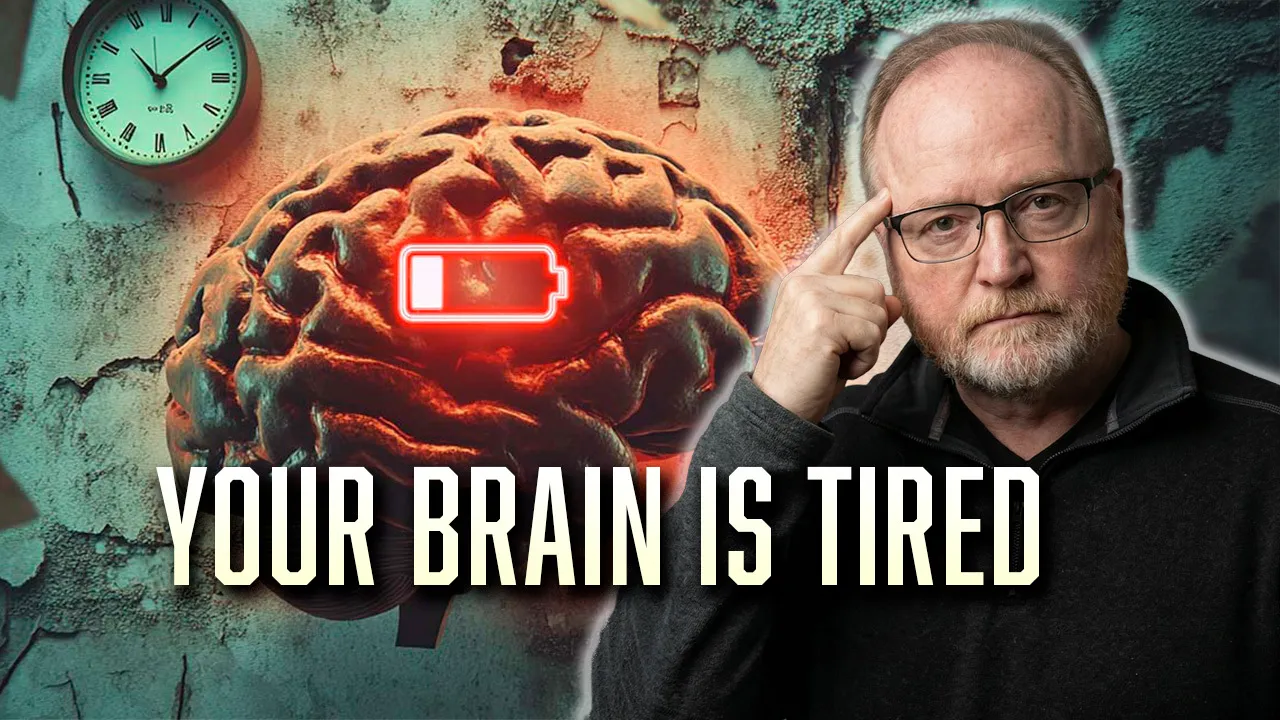
In Episode 12, I break down what happens under time pressure: how your confidence goes up while your accuracy goes down, how manufactured urgency exploits the gap between feeling right and being right. I share five tests for distinguishing real deadlines from fake ones, and a framework for calibrating your speed to the stakes.
Those tools matter. But they’re the second line of defense.
The first line? Don’t get surprised.
Enjoying this? Studio Notes delivers innovation decision insights to your inbox.
The Oil Company That Saw It Coming
October 1973. The Arab members of OPEC imposed an oil embargo in response to Western support for Israel during the Yom Kippur War. Crude prices quadrupled in weeks. Western economies plunged into recession. Every major oil company scrambled.
Except one.
Royal Dutch Shell had spent the previous six years building a scenario planning capability led by Pierre Wack, a French planner influenced by Herman Kahn’s work at the RAND Corporation. Wack’s team didn’t try to predict the future. They built multiple plausible futures, including one where oil-producing nations restricted supply and prices spiked, and then walked Shell’s senior managers through each scenario until those managers had genuinely internalized the implications.
Shell didn’t predict the embargo. Wack’s team expected the disruption to come later, triggered by a different mechanism. What mattered was that Shell’s leaders had already thought through a world where cheap oil disappeared. They’d already debated which refineries to keep and which to sell. They’d already shifted their mental models.
When the crisis arrived, Shell didn’t panic. While competitors made reactive decisions about assets, contracts, and strategy under a clock they didn’t control, Shell executed moves they’d already rehearsed. The company went from one of the weaker “Seven Sisters” oil majors to one of the two strongest, a position they held for decades.
Their competitors weren’t stupid. They had access to the same geopolitical intelligence and many had sophisticated planning departments. But their planning was built on extrapolation. Extending past trends forward, assuming tomorrow looks like a slightly modified today.
That’s not preparation. That’s a wish with a spreadsheet attached.
I Know What It Costs
I’m not writing about this from the outside.
In the late 1990s, I co-founded Teligent and helped take it public. We were doing everything right, building a competitive local exchange carrier in a market that was exploding. Four months after I retired (my first retirement) the CLEC crisis hit. The telecom market didn’t just dip. It collapsed. Funding evaporated overnight. Teligent’s share price cratered.
I had tens of millions of dollars in shares. I was blocked from trading.
Alex Mandl, former president of AT&T, co-founder and CEO of Teligent, one of the sharpest leaders I’ve ever worked with, asked me to come back. I joined him and a small group to try to save the company. We worked through every option. We were unsuccessful.
I watched, from the inside, what happens when something completely outside your control wipes out everything you built. I watched a team doing the right things get overwhelmed by a market that didn’t care about execution or strategy or talent. And I watched someone with Alex’s experience and leadership ability get caught off guard by a timeline nobody owned.
I lost tens of millions of dollars.
Combine that experience with what happened at Teraplex, another company I helped build that didn’t survive, and you learn something that no business school teaches you. You learn it in your gut: do everything in your power to see it coming. Do the thinking while you still can. Because once the clock starts, the options you didn’t build don’t exist.
That lesson shaped everything I did afterward. At HP, at CableLabs, in every negotiation and every boardroom. It’s why I react the way I do when I see boards scrambling, leaders improvising, families caught flat-footed by events they could have anticipated. I’ve been on the wrong side of that equation. The cost isn’t abstract to me.
What Preparation Actually Looks Like
Most people draw the wrong lesson from the Shell story. They think it’s about scenario planning as a methodology. Build scenarios, run workshops, produce reports.
The methodology was just the vehicle. The real lesson is about willingness to think through outcomes you’d rather not face, while you still have the luxury of thinking clearly.
Andy Grove understood this at Intel. “Only the paranoid survive” wasn’t a bumper sticker about anxiety. It was a philosophy of perpetual preparation. When Japanese manufacturers began decimating Intel’s memory chip business in the mid-1980s, Grove and Gordon Moore had already been asking an uncomfortable question: “If we got kicked out and the board brought in a new CEO, what would that person do?” The answer was obvious and painful: exit memory. So that’s what they did, pivoting to microprocessors and building what became the most valuable chip company on earth.
The pivot nearly broke Intel. But it wasn’t a surprise. Grove had done the thinking before the clock started.
Here’s the part that doesn’t get told enough: Intel learned the lesson, then unlearned it. By 2024, the company had fallen behind TSMC and Nvidia, missed the AI wave, and was burning through cash. The board brought back Pat Gelsinger, a thirty-year Intel veteran, the company’s first CTO, a technologist who understood the culture, to execute a turnaround that would take years. Less than four years later, the board lost patience and pushed him out. They replaced him with Lip-Bu Tan, a former board member. Wall Street cheered. The stock jumped 12%.
But is a rising stock price the same thing as a sound decision? Intel’s board responded to Wall Street’s clock, the quarterly cycle, the analyst calls, instead of the clock the actual work required. Grove built Intel’s culture around thinking ahead of the crisis. Four decades later, his own board made a crisis-speed decision because they couldn’t tolerate the pace of a turnaround they themselves had approved. Grove would have recognized the pattern. He wrote an entire book warning against it.
Johnson & Johnson in 1982 shows what culture does when strategy can’t help you. When cyanide-laced Tylenol capsules killed seven people in Chicago, J&J didn’t have a playbook for product tampering. Nobody did. There was no scenario plan, no crisis manual, no precedent.
What J&J had was culture. The company’s credo, written decades earlier by Robert Wood Johnson, explicitly placed customer safety above shareholder profits. It wasn’t a poster on the wall. It was how people at J&J understood their jobs. When CEO James Burke had to decide whether to recall thirty-one million bottles at a cost exceeding $100 million, the culture had already resolved the hardest question. He didn’t have to figure out his values under pressure. They were already clear.
Tylenol recovered its full market share. The tamper-resistant packaging J&J pioneered became an industry standard. The lesson was powerful: when crisis strips away your strategy and your plans and your carefully constructed timelines, culture is what’s left. Culture is what makes the decision when there’s no time to deliberate.
Is J&J of today the same company? I don’t know. The J&J that shielded customers in 1982 has spent recent years fighting tens of thousands of talc-related cancer lawsuits, creating subsidiary companies to absorb the liability, and navigating opioid settlement agreements worth billions. Whether the credo still functions the way it did under Burke, as a living decision-making framework rather than a historical artifact, is a question only people inside J&J can answer. But it’s a question worth asking, because culture isn’t something you build once. It’s something you maintain, or lose.
The Succession Problem Is a Preparation Problem
HP’s board has had twenty-five years to learn this. They haven’t.
Bill Hewlett and Dave Packard didn’t build a formal succession pipeline. The next two CEOs, John Young and Lew Platt, were insiders who’d absorbed the culture organically. It worked because of proximity and luck, not because of a system. When the board pushed Platt aside and started hiring outsiders, there was no bench. And so began the cycle: Carly Fiorina, Mark Hurd, Léo Apotheker, Meg Whitman. Every time, urgency compressed the search into a process optimized for speed over fit.
Compare that with Disney. When Bob Iger announced his retirement timeline, the board ran a multi-year succession process. They evaluated more than a hundred candidates. When their first choice, Bob Chapek, failed (technically an insider, but one who couldn’t connect with the creative DNA) they brought Iger back and tried again. This time they chose Josh D’Amaro, a twenty-eight-year veteran, and created a new role for Dana Walden to ensure the other top candidate stayed. People inside Disney are thrilled. Not because of his resume, but because he gets what it means to be Disney.
Disney invested years of preparation so that when the moment arrived, they had options. They owned the clock.
Before the Clock Starts
Shell, Intel, J&J, and Disney all learned some version of the same lesson, though not all of them held onto it. The honest truth is that preparation isn’t a one-time achievement. It’s a discipline you either maintain or lose. But you don’t need a scenario planning department or a multi-year succession process to start. You need the discipline to think about what’s coming while you still have room to think.
Here are five places to start. At work, at home, or both.
1. Name the decisions you’re avoiding
Write down three decisions you’re likely to face in the next two years that you haven’t thought through yet. Not the ones already on your plate. The ones in your peripheral vision. The leadership departure you hope won’t happen. The market shift you’d rather not contemplate. The family transition you keep pushing off.
Naming them is the first step toward owning them.
2. Close the preparation gap
For each one, ask: if this happened next Monday, what would I wish I’d already figured out?
Not the full plan. The first few moves. Who would you call? What information would you need? What values would guide the choice? If you don’t know the answers, you’ve found the gap. Close it now, while the thinking is free.
3. Run pre-mortems
Before major commitments, whether a hire, an investment, or a big family decision, ask everyone involved: “Assume this went badly. What happened?”
This is Shell’s scenario planning in miniature. It forces uncomfortable futures into the conversation while your thinking is still clear and the stakes are still hypothetical.
4. Build your bench
If you lead people, your most important job is making yourself replaceable. Identify the two or three people who could step into your role. Give them the experiences and exposure they’d need. Do this while it’s a choice, not after it’s an emergency.
The same principle applies at home. Does your spouse know how to handle the finances, the insurance, the critical logistics if you suddenly can’t? Could your family function if you were unavailable for a month?
5. Save your deliberation for what matters
Practice deciding faster on things that are low-stakes and reversible. Where to eat, which vendor to try, what format to use. Build that muscle so you have capacity left when the irreversible decisions arrive.
The Real Lesson
Episode 12 gives you the tools for when pressure arrives: the five tests for manufactured urgency, the Stakes-Reversibility Grid, the neuroscience of what time pressure does to your brain. Those frameworks work.
But the best version of you under pressure is the one who prepared before the pressure existed.
Shell didn’t survive the oil crisis because Pierre Wack was a genius forecaster. His timeline was wrong by years. Shell survived because its leaders had already lived through the disruption in their minds. When it arrived in reality, they recognized it. They had moves ready.
HP’s board didn’t get surprised by Enrique’s departure. CEOs leave. That’s predictable. What surprised them was that they hadn’t prepared. That gap, between what they could have done and what they actually did, is the real cost.
It always is.
The companion episode, How to Make Better Decisions Under Pressure (Studio Sessions, Episode 12 released on Weds), goes deep on frameworks for handling time pressure when it hits. If this piece made you think about preparation, that episode will give you the tools for execution. Watch it here Weds.
Share this with someone who needs to hear it. We all know someone who keeps getting surprised by events they should have seen coming.
Never miss a post from Studio Notes
Get innovation decision insights delivered to your inbox. Free or paid — your choice.
Related: